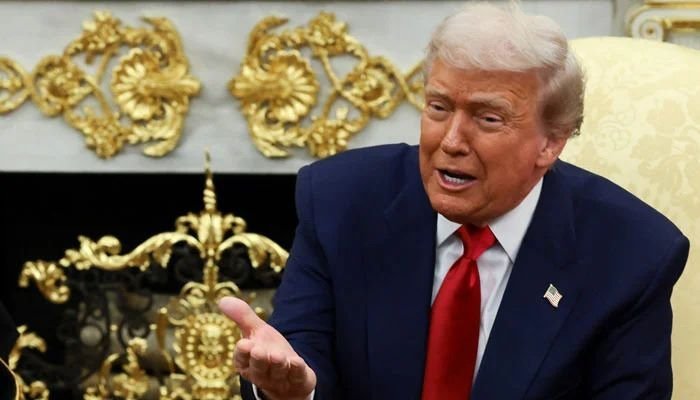
Washington (TDI): US President Donald Trump said on Sunday that he remains hopeful of reaching a deal with Iran, following a warning from the Iranian supreme leader that any US military action could trigger a regional conflict.
The warning comes in the wake of a deadly crackdown on anti-government protests in Iran last month. Trump has previously threatened military action and ordered the deployment of an aircraft carrier group to the Middle East in response to the unrest.
Ayatollah Ali Khamenei described the protests as a “coup” attempt and told Iranians not to fear Trump’s rhetoric. “The Americans should know that if they start a war, this time it will be a regional war,” he said, adding that the uprising had been suppressed.
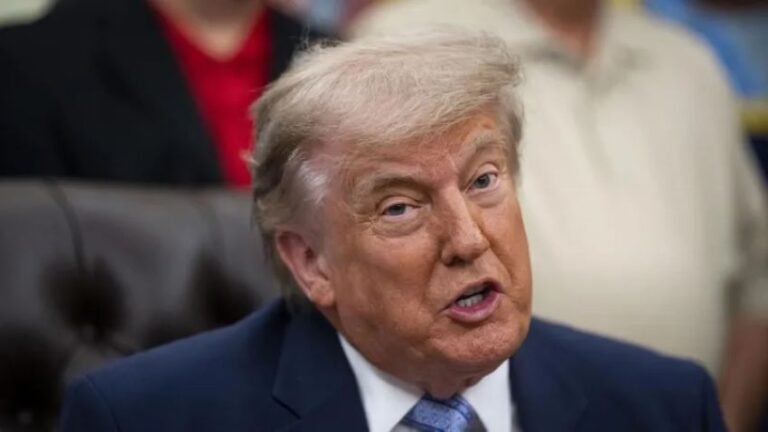
Responding to Khamenei’s warning, Trump told reporters, “Of course he is going to say that. Hopefully we’ll make a deal. If we don’t make a deal, then we’ll find out whether or not he was right.”
Read More: Trump Signals Deadline for Iran to Enter Nuclear Talks
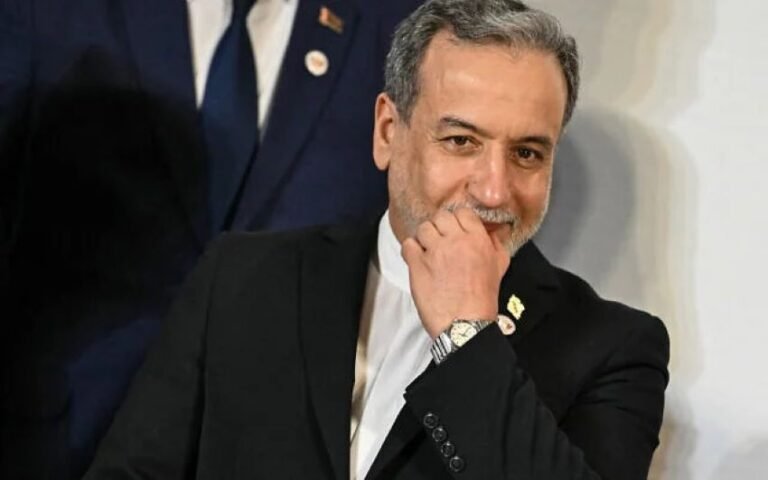
Tensions have prompted concern from Iranian Foreign Minister Abbas Araghchi, who expressed worry over “miscalculations” but said he believes Trump is “wise enough to make the correct decision.” Araghchi added that Iran’s trust in the United States has been weakened, but some regional countries are acting as intermediaries to rebuild dialogue. He suggested that another round of negotiations could be possible if the US adheres to Trump’s commitment to a “fair and equitable deal” to prevent nuclear weapons proliferation.
The protests in Iran have reportedly caused thousands of deaths. The Iranian presidency published a list of 2,986 names of those killed, while acknowledging that 131 remain unidentified. Authorities maintained that most casualties were security personnel and bystanders, blaming “terrorist acts” for the violence. In contrast, the US-based Human Rights Activists News Agency (HRANA) has documented 6,713 deaths, mostly among protesters.
The unrest has also led to heightened international tensions. The European Union designated Iran’s Islamic Revolutionary Guard Corps (IRGC) as a terrorist organization, prompting Iranian lawmakers to reciprocate by labeling European armies similarly. Lawmakers displayed solidarity with the IRGC, wearing green uniforms and chanting slogans against the US, Israel, and Europe during a parliamentary session.
Read More: Trump Hopes to Avoid Military Action Against Iran
Despite the heightened rhetoric, some Iranian officials have signaled readiness for dialogue. Ali Larijani, head of Iran’s Supreme National Security Council, stated that “structural arrangements for negotiations are progressing,” while IRGC official Ahmad Vahidi warned that “enemies” were trying to create a “war atmosphere.”
Trump confirmed that discussions with Tehran are ongoing but did not retract previous threats, noting, “We’ll see what happens.” He has previously expressed confidence that Iran may reach a deal on its nuclear and missile programs rather than face military confrontation. Tehran has indicated willingness to engage in nuclear talks, provided its missile and defense capabilities are not included on the agenda.