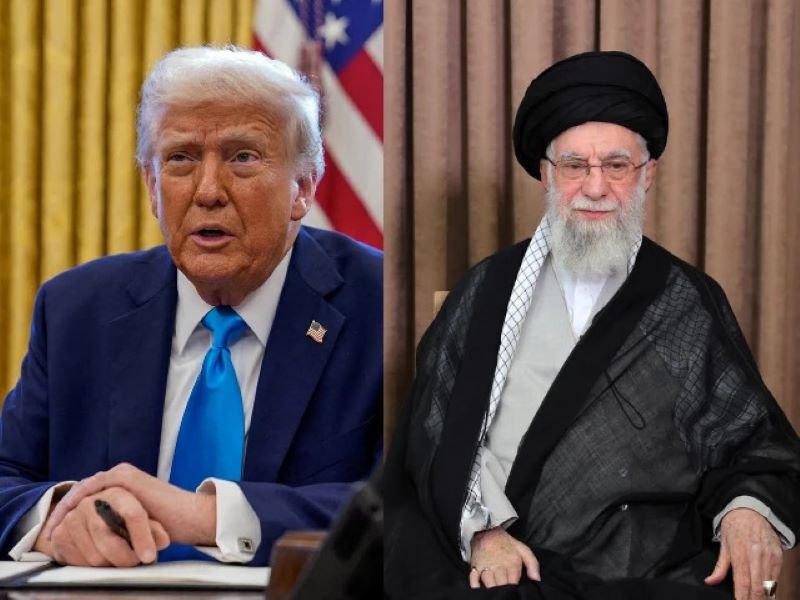
Washington (TDI): US President Donald Trump on Friday suggested that Iran has been given a deadline to return to negotiations over its nuclear program, predicting that Tehran would ultimately choose talks over a potential military confrontation.
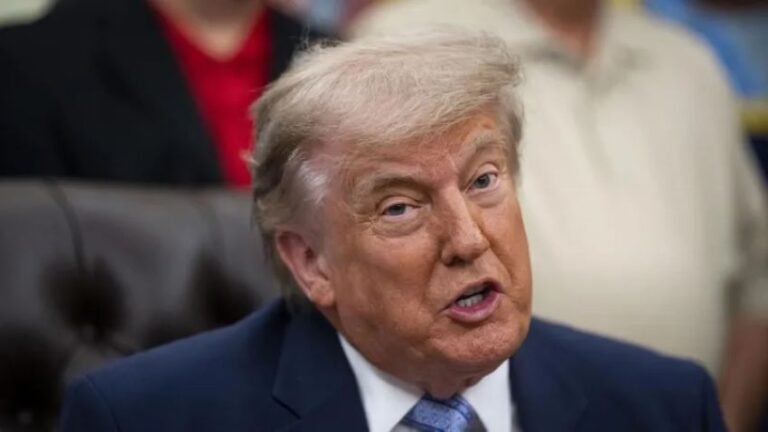
Speaking to reporters in the Oval Office, Trump said he believed Iran was ready to strike a deal. When asked whether a specific timeline had been set for Tehran to come to the table, he replied, “Yeah, I have,” but declined to provide further details.
Trump also pointed to the growing US military presence in the region, referencing an American naval carrier group deployed in waters near Iran.
“We have a large armada, flotilla, call it whatever you want, heading toward Iran,” he said. “Hopefully we’ll make a deal. If we do, that’s good. If we don’t, we’ll see what happens.”
The US president cited what he described as Iran’s decision to halt executions linked to recent protests as a sign that Tehran may be open to negotiations. Human rights groups estimate that more than 6,000 people were killed during the crackdown.
Read More: Big Guns, Big Stakes: US Approves Arms Sales to Israel, Saudi Arabia
Regional allies have expressed concern that any US military strike on Iran could trigger instability and economic disruption. A senior Gulf official familiar with discussions with Washington said the administration has been highly guarded about its next steps.
“We hope whatever happens leads to stability,” the official said, speaking anonymously. “That could happen if the Iranians choose to do the right thing.”
Meanwhile, Iran’s top security official, Ali Larijani, secretary of the Supreme National Security Council, met Russian President Vladimir Putin in Moscow. Although details of their discussions were not disclosed, Russia has offered to act as a mediator between Washington and Tehran.
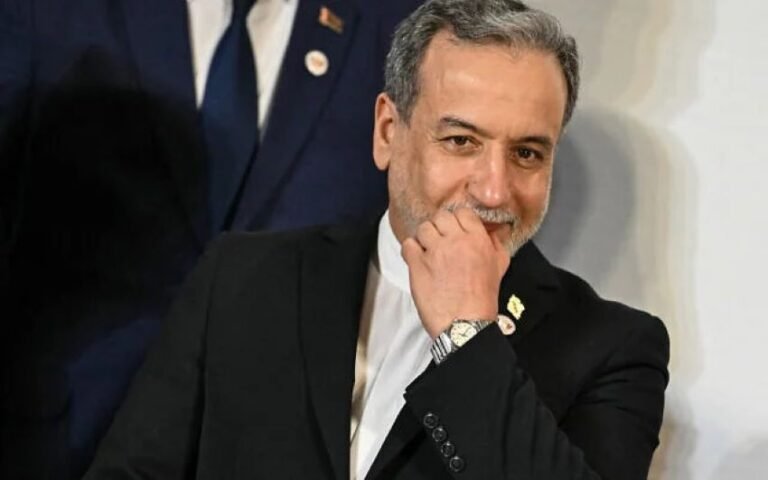
Iranian leaders have reiterated that the country’s missile and defense capabilities are non-negotiable. Foreign Minister Abbas Araghchi said Iran was willing to engage in talks only if they are conducted on equal terms and with mutual respect, adding that there are currently no plans for meetings with US officials.
In a separate statement on social media, Larijani warned that European countries backing recent EU action against Iran’s Islamic Revolutionary Guard Corps (IRGC) would face consequences. He said Iran’s parliament had passed a resolution under which the armed forces of those countries could be designated as terrorist organisations.
Read More: Iran Stands Firm on Missiles as Turkiye Tries to Defuse US Tensions
Tensions have also risen in the Strait of Hormuz, where the IRGC has announced a two-day live-fire naval exercise starting Sunday. US Central Command (Centcom) urged Iran to conduct the drills safely and professionally, warning against actions that could threaten international shipping.
“The Strait of Hormuz is an international waterway and a critical global trade route,” Centcom said, noting that around 100 commercial vessels pass through the narrow passage daily. The command warned it would not tolerate unsafe or provocative actions by Iranian forces near US or allied assets.
Amid the escalating rhetoric, former International Atomic Energy Agency (IAEA) chief and Nobel Peace Prize laureate Mohamed ElBaradei criticised US threats of military action against Iran. Drawing parallels with the lead-up to the 2003 Iraq war, he warned against repeating what he called a tragic and unlawful course driven by false claims.