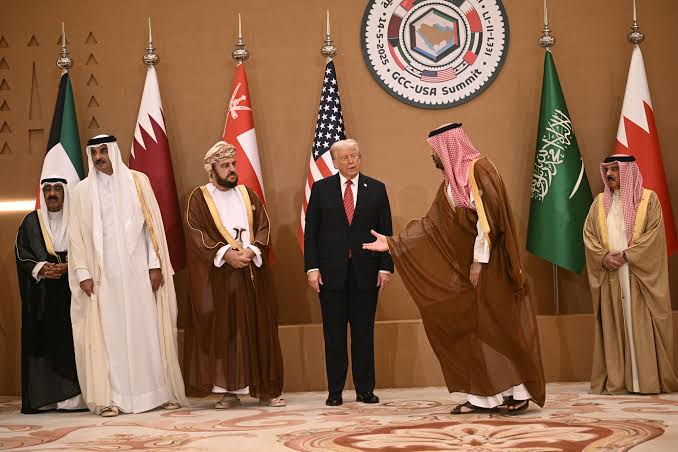
United States President Donald Trump’s planned meeting with Gulf leaders on the sidelines of the United Nations General Assembly is expanding beyond the six Gulf Cooperation Council states, with Iraq and Jordan now expected to take part and Egypt also likely to join.
The expanded format reflects growing efforts by Washington and regional governments to shape a coordinated Arab position on the Iran conflict, Houthi activity, maritime security and the wider balance of power across West Asia.
The meeting had initially been framed primarily as a US-GCC consultation, but the inclusion of Iraq and Jordan gives it a wider regional character.
Iraq brings particular strategic weight because of its deep political, economic and security ties with Iran, while Jordan sits at the intersection of Gulf, Levant and Israeli security concerns.
Egypt’s possible participation would further expand the discussions into Red Sea and Suez security, adding another state directly affected by disruption to regional trade and energy routes.
UAE presidential adviser Anwar Gargash has also argued that the future of the region should not be discussed only between Washington and Tehran, but must include a parallel dialogue between Iran and Arab states.
Read More: Egypt Opens Parallel Iran Channel as Sisi and CIA Chief Discuss Regional Settlement
The expanded meeting comes as the Iran conflict enters a sensitive diplomatic phase. Washington has continued to leave both military escalation and negotiations on the table, while Tehran has publicly outlined conditions for renewed talks and Gulf states have intensified efforts to prevent the confrontation from expanding further.
At the same time, the Houthis’ growing military role around the Red Sea and Bab Al-Mandeb has increased concerns that any settlement focused only on the United States and Iran would fail to address the wider network of regional security threats.
For Arab governments, the central concern is increasingly not just how the current conflict ends, but what comes after it. Any new arrangement involving Iran could affect missile and drone deterrence, maritime security, non-state armed groups, US military deployments and the future of relations between Tehran and Arab capitals.
The widening of Trump’s meeting therefore signals that Washington is beginning to treat the Iran issue as a regional security problem requiring broader Arab participation rather than a narrowly bilateral US-Iran dispute.
Whether the meeting produces a common position remains uncertain, particularly because participating states have different relationships with Tehran and different levels of exposure to the conflict.
Still, the inclusion of Iraq and Jordan suggests that Arab governments want a direct role in shaping the regional order that follows any ceasefire or diplomatic settlement, rather than simply accepting terms negotiated elsewhere.
Anoush Taimur is an International Relations graduate from DHA Suffa University, Karachi, currently based in Doha. Her research interests include Gulf politics, small-state diplomacy, Global South studies and conflict
mediation. Her work examines how states create influence through connectivity, institutions and strategic relationships. She can be reached at [email protected]