The Qatari offer of an airliner to President Trump, in May last year, served as a reminder that throughout history, diplomatic gifts have invariably been intertwined with political objectives.
The Qatari royal family’s idea of offering President Trump ‘a palace in the sky’ echoed a practice documented even in ancient Egypt, when exchanging gifts was a political ritual.
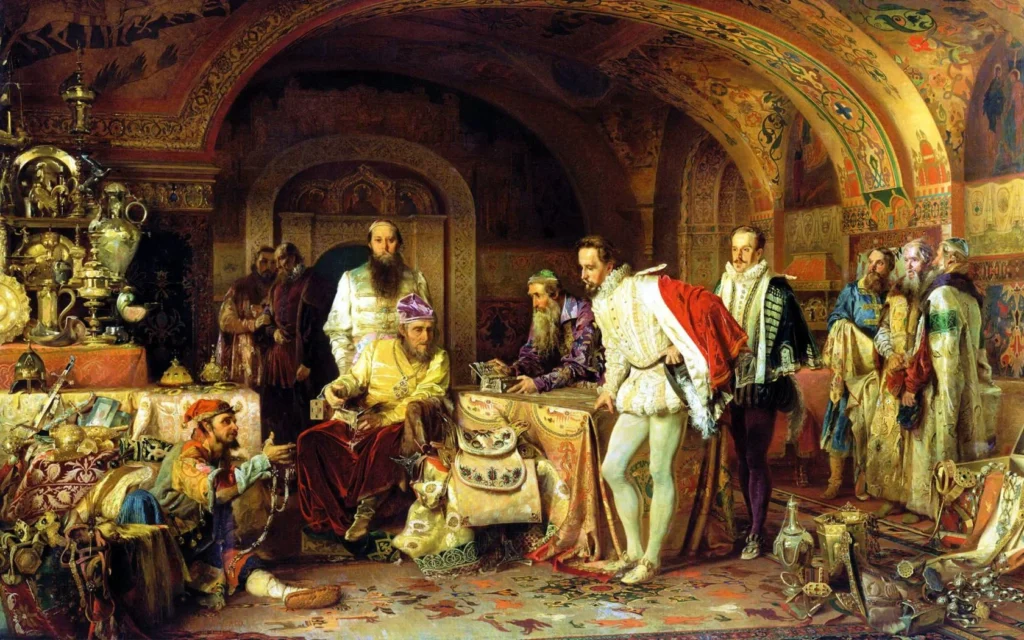
Gifts have been part of international relations since ancient times. The kings of Egypt and Mesopotamia, northern Syria and Cyprus among others, competed to convey their image and aspirations to one another. Whether given in tribute to a real or potential conqueror, or to welcome or congratulate a fellow royal for a marriage or conquest, it wasn’t just the thought that counted.
Lavishness was key, to demonstrate the status of the giver while flattering the prestige of the receiver. The protocol would be to reciprocate with a gift of similar or greater import, ideally in some creative, customized form.
Speaking of creativity, living animals were among the earliest diplomatic gifts.
In the early 1400s, when the first giraffe imported to China was presented to the emperor, he interpreted its strange beauty as an endorsement of his authority, calling the giraffe the most auspicious of auspicious signs. Similarly, Mao Zedong sent a panda pair (Ping Ping and Qi Qi) to Moscow in 1957 to congratulate the Soviet Union on the 40th anniversary of the October Revolution.
The gifts could serve as tokens of friendship, apology or authority; as taunts, bribes, boasts or tricks. Of course, the diplomatic gifts these days are low-key. Ministers tend to bring a small gift for their counterparts, and when you go to a local town, you might get a picture book or the city key from the mayor.
Although press coverage of diplomatic gifts tends to focus on examples which highlight cultural differences between the giver and receiver; where a present is perceived as excessive, sometimes with connotations of bribery; or where the gift poses particular challenges.
Gifts have useful purposes as well: They represent a tool of soft power, embodying the efforts to showcase the culture or food or talent of the giving country.
They serve as a form of diplomatic communication, employed in a simultaneous and complementary manner, with the objects aligned in purpose, sometimes taking precedence over texts, orality, and ritual performance. Particularly in the absence of a linguistic common ground, the material dimensions of diplomacy serve to establish and express a language of honor, magnificence, hierarchy, and brotherhood.
They create some bonds that last through history, as an example we have the The Resolute Desk, an iconic piece of furniture that has graced the Oval Office since 1880 – a gift by Queen Victoria of England to President Rutherford B. Hayes in 1856. This gesture marked another chapter in the “Special Relationship,” the strong diplomatic ties between the United Kingdom and the United States.
What are some other remarkable or historically significant diplomatic gifts you have come across?

Catalina Bora
Catalina Bora is the founder of the Institute of Etiquette and Protocol. She can be reached at catalinabora@gmail.com