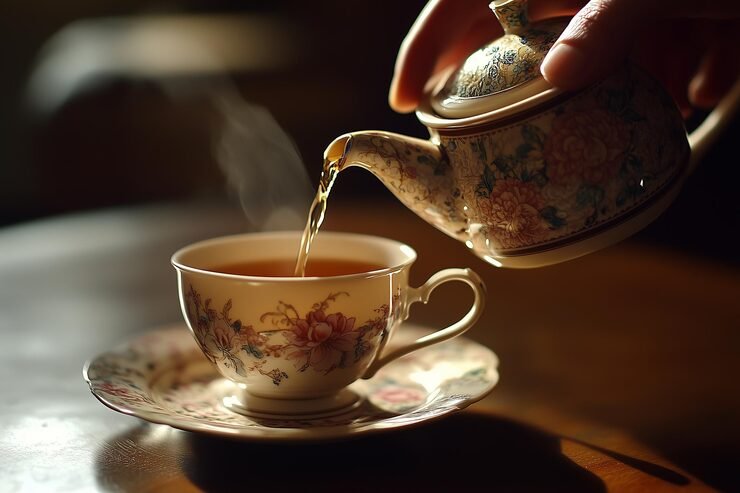
When we picture afternoon tea, we often imagine silver teapots, porcelain cups, dainty sandwiches, and scones with cream. A ritual that feels timeless. But here’s the twist: the history of afternoon tea is far more surprising , and not at all the neat story we like to imagine.
Tea first arrived in Europe from China via Portuguese and Dutch traders in 1570 through Venice. It reached Portugal and Holland before winning the heart of England, helped by King Charles II’s marriage to Portuguese princess Catherine of Braganza, who brought her love for the drink (and fine porcelain cups) to court. At the time, tea was rare, costly, and a visible symbol of status.
Its cost was astronomical, and to make it even more exclusive, tea was heavily taxed. At one point in the 17th century it was even taxed as a liquid, meaning it had to be inspected at coffee houses before being consumed. This odd tax policy made it nearly impossible to enjoy at home, unless you were the Queen herself, exempt from the levy.
Only later, when the tax shifted to the tea leaf itself, did aristocratic ladies begin brewing it in their salons. Invitations to “take tea” weren’t only about friendship; they were occasions for influence, gossip, and subtle power.
And yet, the famous story we all know that Anna Maria Russell, Duchess of Bedford, invented afternoon tea in the 1840s because she felt hungry between meals, is only part of the truth. Long before her, afternoon tea had been served in Bath and Harrogate (spa towns), advertised in newspapers, as well embraced in Parisian salons.
Read More: A Country That Exports Coffee to the World: Rwanda’s Own Coffee Culture
The Duchess didn’t create the ritual, but she made it fashionable.
From there, tea spilled out of private salons and into public life. Railway “refreshment rooms” in the 1840s, Victorian tearooms like Lyons and Bettys, and grand hotels such as The Langham and The Ritz turned afternoon tea into a cultural performance. It became a place where women could gather respectably, where elegance was staged, and where business and society mixed over cups of Darjeeling and slices of cake.
What we call “traditional afternoon tea”: the scones, patisserie, and tiered stands, is in fact a modern reinvention, revived in the late 20th century when hotels rediscovered the potential of empty dining rooms between lunch and dinner. Champagne was added, menus grew extravagant, and what began as a Duchess’s afternoon craving became a global ritual of indulgence.
So next time you lift a porcelain cup, remember – you’re sipping on centuries of global trade, royal influence, social fashion, and a dash of smart marketing.

Catalina Bora
Catalina Bora is the founder of the Institute of Etiquette and Protocol. She can be reached at [email protected]