Tajikistan has declared an open‑door policy to develop mechanisms for bilateral and multilateral cooperation with partner and friendly countries, and is a strong advocate of dialogue. Recently, global and regional superpowers have incorporated dialogue diplomacy into their foreign policies, recognizing that achieving their goals in international relations is impossible without dialogue.
Japan is one of the Asian countries that prioritizes dialogue diplomacy in its foreign policy. It was the first to establish a dialogue format with Southeast Asia, and later with Central Asia. After the collapse of the Soviet Union, the Japanese government established diplomatic relations with the five Central Asian countries and has been gradually developing bilateral and multilateral ties among them. In 2004, Japan pioneered the Japan–Central Asia Forum at the level of foreign ministers and other government agencies. The Central Asian countries and Japan have built stable, multilateral relations to foster cooperation across various fields.
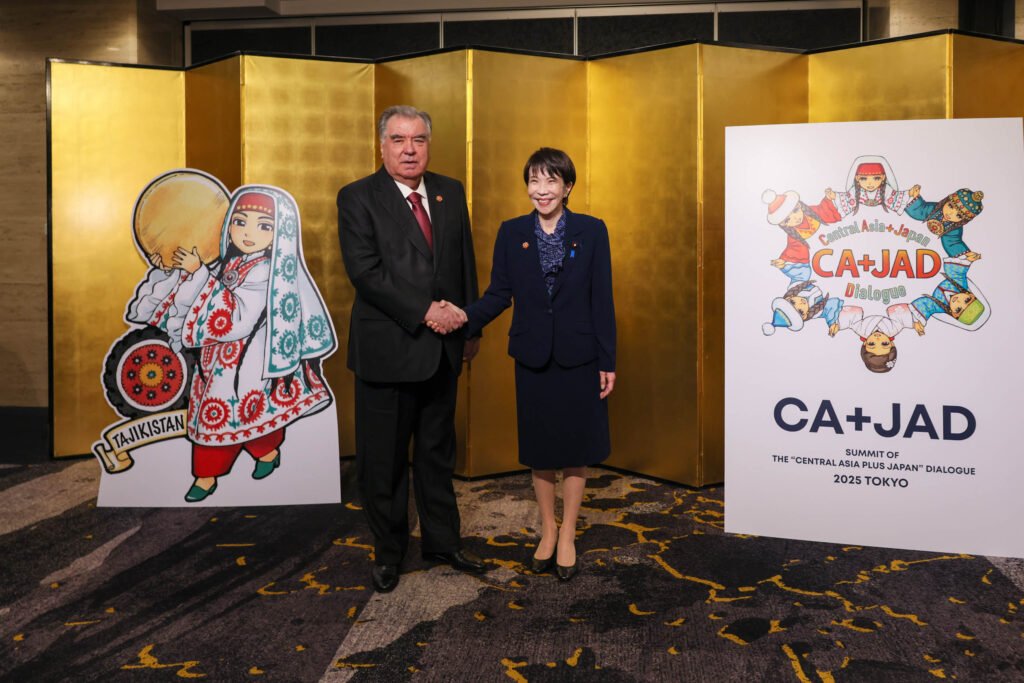
From 18 to 20 December 2025, President of Tajikistan Emomali Rahmon made an official and working visit to Japan. Twenty years later, Japan hosted its first high‑level dialogue forum. Leaders from the five Central Asian countries participated in the forum. During the visit, bilateral meetings were held between President Emomali Rahmon, Japanese leadership, and the Japanese delegation. On 20 December, a summit of the six countries took place, where the Leader of the Nation delivered a speech and proposed long‑term cooperation mechanisms.
It should be noted that the Central Asia and Japan summit in Tokyo was a unique example of dialogue diplomacy, where highly specific and pressing issues were discussed — including water resources, climate, energy, technology, and the future of humanity in the region. One of the most conceptually rich and substantive speeches at this meeting was delivered by President of Tajikistan Emomali Rahmon, who unified the position of the country and the entire region within the global sustainable development agenda.
Read More: Foreign Economic Relations Between Tajikistan and Russia
Emomali Rahmon first expressed sincere gratitude to the Government of Japan for supporting the implementation of projects in the fields of economy, transport, energy, agriculture, ecology, healthcare, education, and sanitation. Japan is not a donor or external player in Central Asia but holds a special place as a development partner.
In the context of new economic realities, the Tajik President emphasized that industrial and trade cooperation should focus not on one‑off projects but on long‑term economic stability for the countries of the region. He highlighted the importance of Japan’s experience in implementing small and medium‑sized initiatives and large infrastructure projects at both national and regional levels.
In his speech, Rahmon presented Tajikistan’s green policy as a strategic choice. It was noted that Tajikistan, with its vast hydropower potential, views the transition to green industry and the adoption of environmentally friendly technologies as the foundation for future economic development.
The President of the Republic of Tajikistan called for attracting Japanese investment and technology in renewable energy — particularly hydropower — as well as in the economic sector. He outlined priority sectors including hydropower, mining, metallurgy, automotive manufacturing, light industry, and food processing. Continuing his speech, he noted that Tajikistan is ready for broad cooperation with Japanese partners not only in the extraction of natural resources but also in their advanced processing.
Emomali Rahmon emphasized the importance of water and climate issues, noting that floods, droughts, dust storms, ecosystem destruction, and heavy rains are no longer hypothetical scenarios but realities of the region. The President stated: “We are fully aware of the importance of protecting water resources as the foundation of food security, energy, and sustainable development.”
Read More: Tajikistan to Receive $50m from ADB for Green Economy
Tajikistan’s focus on water diplomacy, green energy, and the use of artificial intelligence — among other areas — forms the basis for further cooperation.
Thus, in an era of global political crises, the Central Asia and Japan dialogue diplomacy is timely, and integration into global instability can shape the real future of the region. The Central Asia and Japan format could become a unique example of sustainable partnership in the world.
The future of Central Asia depends not only on resource dependency but also on resource management, knowledge, and risk management. For Japan, this dialogue is not just an opportunity for investment but also a chance to jointly create a new model for Eurasia’s development. At this summit, future directions for the six countries were identified and proposed. We hope that the initiatives — from the Dushanbe Water Process to joint environmental and digital projects — will be implemented in the near future.
It is proposed that the Central Asian states organize a mechanism for their foreign policy concept within the framework of Central Asian consultations based on principles of mutual interests. Since dialogue forums with countries around the world — including Japan, China, South Korea, Russia, India, the United States, the European Union, Germany, and Italy — have been established in recent years, the Central Asia + 1 foreign policy concept is timely.
*The views presented in this article are the author’s own and do not necessarily reflect the views of The Diplomatic Insight.

Sohibi Bahrulo
Sohibi Bahrulo is a Research Fellow at the Department of Southeast Asia, Institute for the Study of Asian and European Issues