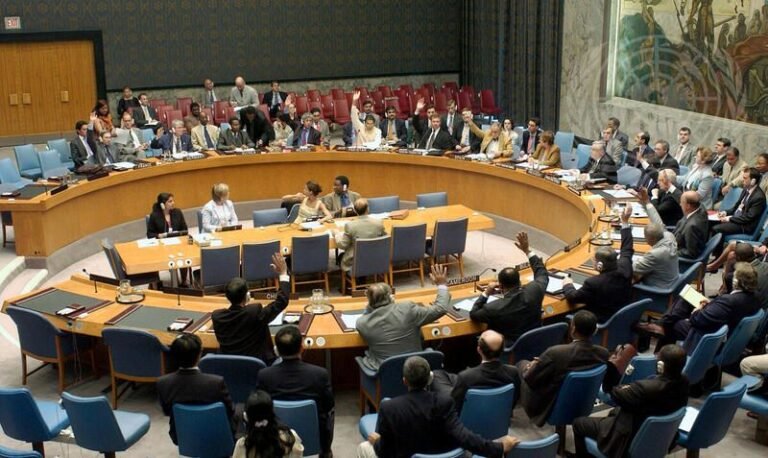
Today, the world is experiencing a period of international political complexity, aggravated geopolitical and military situations, security threats, and financial and economic crises. Currently, the clash of superpower interests has engulfed political crises between Ukraine and Russia, Israel and Palestine, Lebanon, Iran, and other regions.
The current situation has negative consequences. From this perspective, it can be said that the consequences of the next escalation of tensions between countries will lead to an economic crisis. At the same time, the world is facing challenges related to climate change, food shortages, and drinking water shortages. Some countries still lack a unified position on these issues.
On the other hand, some countries are indifferent to the international system. Global problems are issues that significantly affect the vital interests of the entire planet’s population. Their solution also requires the joint efforts of all countries.
In this process, Tajikistan is recognized as a peace-loving country and a pioneer in addressing the challenges facing human society worldwide. It should be noted that the state policy of the Republic of Tajikistan is aimed at addressing global issues, primarily climate change, drinking water, melting glaciers, and strengthening peace in the modern world.
With extensive experience in peacekeeping, Tajikistan responds to political conflicts, regional and global armed conflicts, and advocates constructive dialogue in addressing all global issues, which can be broadly divided into domestic, international, and regional diplomacy aimed at establishing peace.
First, this is domestic peace diplomacy, and the Tajik peacebuilding experience is now recognized by the international community and has become a school of knowledge. The General Agreement on the Establishment of Peace and National Accord (1997) contributed to the further establishment of peace.
This agreement enabled the Republic of Tajikistan to end the war and begin the path to strengthening peace. The Tajik negotiations, although difficult and lengthy, became a fateful milestone for the Republic of Tajikistan. During the negotiations, which lasted more than 40 months and during which the parties sat at the negotiating table 21 times, 40 documents were signed that were important for the Tajik state and nation.
Read More: Ambassador of Tajikistan to Pakistan Receives Prestigious Global Ambassador Award
Tajikistan’s experience in peacebuilding represents an interesting example for understanding the problem of post-war reconstruction and stability. From the perspective of European researchers, several key ideas emerge from the peacebuilding experience of the Republic of Tajikistan and the peacebuilding model of the Founder of Peace and National Unity, Leader of the Nation, the Honorable Emomali Rahmon:
- The transition of the Republic of Tajikistan from civil conflict to relative stability highlights the important role of dialogue and inclusive negotiations in peacebuilding.
- The success of the peace process in the Republic of Tajikistan underscores the importance of engaging all stakeholders—both political actors and civil society representatives—in peacebuilding efforts.
The United Nations University for Peace program in Costa Rica is taught as a unique peacebuilding experience for diplomats, and at Moscow State University as a special advanced training course for master’s students. The Institute for Peace and Security of the Organization for Security and Cooperation in Europe in Hamburg, Germany, studied the Tajik peace process based on a multi-year program.
Researcher Dov Lynch, in his study of peace in the Republic of Tajikistan, asserts: “Perhaps, contrary to reality, the restoration of peace in Tajikistan over these years and even decades would never have been possible without the creation of a functioning party system, fair elections, a centralized government, or security sector reform.” Such changes, when they occur, often reflect processes of broader political and economic change conceptualized in local discourses.”
In his other work, “The Real Politics of Peace in Tajikistan” (Journal of Europe–Asia Studies), John Heathershaw emphasizes the central role of the Leader of the Nation, President Emomali Rahmon, in establishing peace in the country.
Heathershaw calls the President of Tajikistan a key historical architect of peace and attributes the successful reconciliation process to his leadership. He particularly notes the President’s important decision to facilitate the return of Tajik refugees from Afghanistan as a significant and courageous step that played a decisive role in ensuring the country’s stability in the fragile post-conflict period.
To implement peace diplomacy, high-level international conferences and forums were held at the initiative of the Republic of Tajikistan. Specifically, from November 23 to 27, the capital of the Kingdom of Cambodia hosted an international interparliamentary conference entitled “In Search of Peace, Reconciliation, and Tolerance.”
At the conference, Faizullo Barotsoda, Chairman of the Ethics Commission of Deputies of the Majlisi Namoyandagon of the Majlisi Oli of Tajikistan, delivered a report on “The Tajik Peace Experience and Its Role in Ensuring Political and Social Coexistence.” It is worth noting that the representative of the Republic of Tajikistan, in his speech, presented the Tajik experience as one of the best examples of achieving peace and national harmony in internal conflicts.
Read More: International Peace and the Contribution of Tajikistan’s President Emomali Rahmon
The second aspect is international peace diplomacy, and the initiative of the President of Tajikistan, the Leader of the Nation, His Excellency Emomali Rahmon, to declare a “Decade of Peacebuilding for Future Generations” and ensure the sustainability of this process for future generations is an important and serious political step.
During the suffering and difficulties in the country following the civil war and the settlement of the border issue in the Republic of Tajikistan, the Leader of the Nation, Emomali Rahmon, once again conveyed to the entire international community the need to strengthen peace.
Peace is recognized as one of the values of national statehood, and the declaration of a “Decade of Peacebuilding for Future Generations” aims to strengthen the political, social, and economic foundations, as well as create a secure and peaceful environment for future generations. To demonstrate to the international community this, the Fergana Peace Treaty was signed in Khujand on March 31, 2025, demonstrating the possibility of diplomatic solutions.
Third, regional peace diplomacy. One such regional example of the Republic of Tajikistan’s activities is the meeting of the heads of state of Tajikistan, Uzbekistan, and Kyrgyzstan, which took place on March 31, 2025, in Khujand. This date became a significant event in the system of international relations, demonstrating that cooperation can ensure lasting peace and foster sustainable economic and cultural development.
Following a special meeting of the heads of state of Tajikistan and Uzbekistan, held in an atmosphere of friendship and brotherhood, a ceremony was held to sign and exchange an important historical document – the Protocol on the Exchange of Ratifications of the Agreement between Tajikistan and Uzbekistan on Allied Relations.
The Protocol on the Exchange of Ratifications of the Agreement between Tajikistan and Kyrgyzstan on the state border of Tajikistan and Kyrgyzstan was also approved. During the visit of the President of Kyrgyzstan to Tajikistan, a special meeting of the heads of state of Tajikistan and Kyrgyzstan was held, at which the following historical documents were approved:
- Protocol on the Exchange of Ratifications of the Treaty between the Republic of Tajikistan and the Republic of Kyrgyzstan on the State Border of Tajikistan and Kyrgyzstan
- Intergovernmental Agreement “On Ensuring Access to Water and Energy Facilities”
- Intergovernmental Agreement “On the Construction and Operation of Highways, Improvement and Operation of Highway Interchanges.”
These documents were signed by His Excellency Emomali Rahmon and His Excellency Sadir Japarov, once again demonstrating our country’s initiative and leadership on the path of peace, mutual understanding, and friendship with neighboring countries.
Read More: Tajikistan’s Green Economy Transition: Development Pathways and EU Partnership
At the same time, one of the key focuses of the Address was the discussion of regional security issues, as well as the full resolution of border issues with Kyrgyzstan, the signing of an agreement on a border crossing point between the three states, and the Khujand Declaration of Eternal Friendship.
These are important results of many years of diplomacy and clear evidence of Tajikistan’s peaceful foreign policy aimed at strengthening trust and good-neighborliness in Central Asia. The Leader of the Nation, Emomali Rahmon, assessed this area as follows:
“Another historic event is the full resolution of border issues between two states – the Republic of Tajikistan and the Republic of Kyrgyzstan – that have remained unresolved for over a century through the signing of an agreement on the delimitation of the state border. An agreement between the Republic of Tajikistan, the Republic of Kyrgyzstan, and the Republic of Uzbekistan on a border crossing point between the three countries and the Khujand Declaration of Eternal Friendship were also signed by the heads of state, providing a solid legal basis for the development of the region and the continuation of mutually beneficial cooperation.”
Thus, the Decade of Peacebuilding for Future Generations Initiative and the resolution of the centuries-old border issues between Tajikistan, the Kyrgyz Republic, and Uzbekistan represent an important milestone in the global diplomacy of the President of Tajikistan.
It is thanks to the will and far-sighted policies of the leaders of these countries that the Fergana Valley has transformed from a zone of conflict into a zone of peace. The President of the Republic of Tajikistan, Leader of the Nation, the Honorable Emomali Rahmon, has been recognized as an outstanding politician and initiator at the global level.
The resolution of border issues with Kyrgyzstan and Uzbekistan is a new model of regional peacebuilding that has attracted the attention of the international community. On September 9, 2025, the Presidents of Tajikistan, Uzbekistan, and Kyrgyzstan were awarded the Leo Tolstoy International Peace Prize.
The Leo Tolstoy Prize is awarded to individuals who have made a valuable contribution to maintaining security based on respect for international law. It should be noted that the concept of the peaceful experience of Tajiks and the Fergana Valley should be developed and presented through the diplomatic corps and international and regional organizations.
*The views presented in this article are the author’s own and do not necessarily reflect the views of The Diplomatic Insight.

Sohibi Bahrulo
Sohibi Bahrulo is a Research Fellow at the Department of Southeast Asia, Institute for the Study of Asian and European Issues