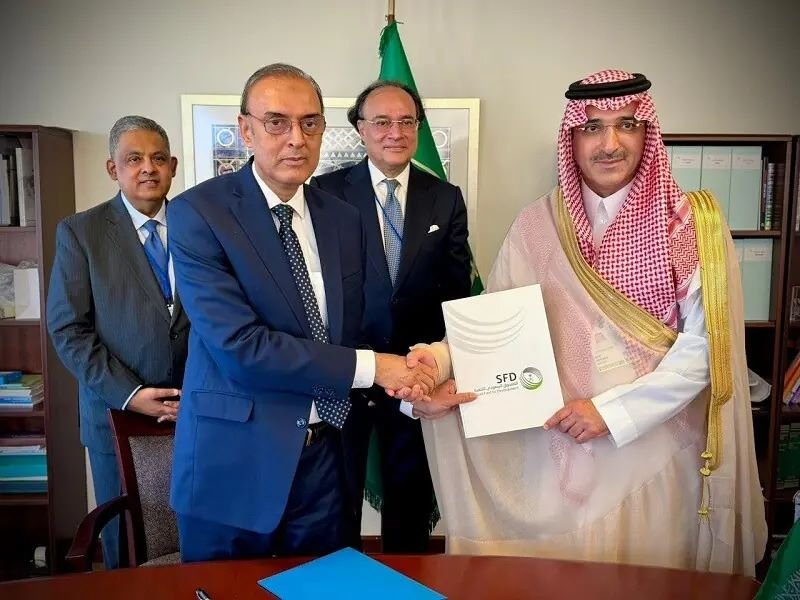
Washington (TDI): Pakistan and Saudi Arabia have signed an agreement to extend a $3 billion deposit placed by the Saudi Fund for Development (SFD) with the State Bank of Pakistan.
According to Pakistan’s Ministry of Finance, the agreement was signed between State Bank Governor Jameel Ahmad and SFD Chief Executive Sultan bin Abdulrahman Al-Marshad. Finance Minister Muhammad Aurangzeb witnessed the signing ceremony in Washington, on the sidelines of the World Bank–IMF Spring Meetings.
The ministry said the arrangement extends the maturity period of the $3 billion deposit and reflects the “longstanding economic partnership” between Pakistan and Saudi Arabia. It added that the extension will help support Pakistan’s external sector stability.
Earlier this week, Saudi Arabia also pledged an additional $3 billion in deposits for Pakistan and extended an existing $5 billion facility for another three years. The Saudi Press Agency said the move aims to support Pakistan’s economy and strengthen its resilience amid global economic challenges.
Read More: Pakistan Receives $2bn from Saudi Arabia as Riyadh Strengthens Financial Support
The development comes at a time when Pakistan’s external financing position remains under pressure. The country is also expected to repay a $3.5 billion loan to the United Arab Emirates this month, adding strain to foreign exchange reserves and raising concerns about IMF program targets.
Pakistan’s foreign exchange reserves were reported at $16.4 billion as of late March, enough to cover roughly three months of imports. However, upcoming repayments and financing gaps have increased pressure on external accounts.
Earlier, Pakistan was unable to secure a rollover of the UAE facility, marking a rare setback after several years of successful extensions.
Read More: PM Shehbaz Hails Saudi Support, Discusses US–Iran Peace Efforts with MBS
Despite these challenges, the country’s external position remains part of ongoing stabilisation efforts under IMF-supported reforms, although analysts warn that vulnerabilities persist due to volatile global energy prices and tight international financial conditions.