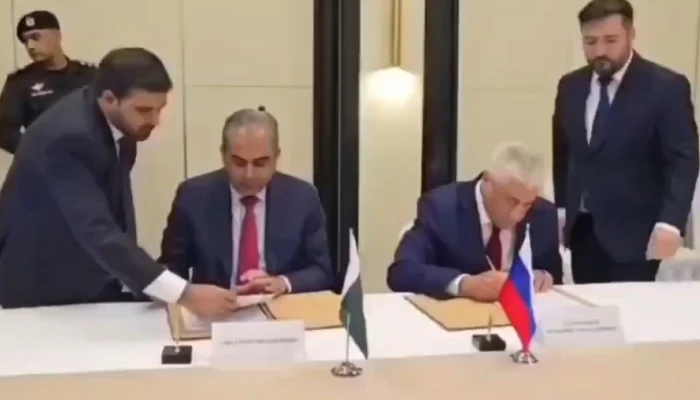
Bishkek (TDI): Pakistan’s Interior Minister Mohsin Naqvi and his Russian counterpart Vladimir Kolokoltsev inked two pacts on the sidelines of the SCO Interior Ministers meeting running from June 4-6 in Kyrgyzstan’s capital city.
The two agreements cover measures to curb illegal immigration and streamline the repatriation of citizens, as well as steps to deepen joint action against narcotics smuggling and drug trafficking networks.
The signing marks a notable expansion of law enforcement ties between the two countries, which have been cautiously warming relations in recent years across trade and energy.
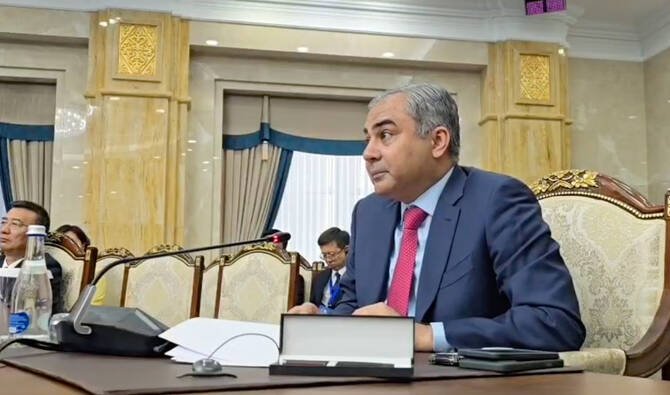
The agreements were far from the only business Naqvi conducted in Bishkek. In a series of back-to-back bilateral meetings, the minister held talks with his counterparts from Tajikistan, Uzbekistan, Kyrgyzstan and Kazakhstan.
The most pointed exchange came during Naqvi’s meeting with Tajikistan’s Interior Minister Rahimzoda Ramazon Hamro.
The two sides agreed that terrorist camps and narcotics production in Afghanistan represent serious security risks for the wider region, and noted that 25 militant organizations are currently operating inside Afghan territory.
Read More: Pakistan Calls for SCO Unity Against Terror, Cybercrime at Bishkek Summit
With Uzbekistan’s Interior Minister Aziz Tashpulatov, talks focused on cooperation between law enforcement agencies and joint training, and a working group is to be established to formalize ties between the two interior ministries.
A similar arrangement was agreed with Kazakhstan, where Naqvi and his counterpart Yerzhan Sadenov also prioritized preventing illegal immigration and committed to setting up a joint ministerial working group.
On the first day of the summit, Naqvi addressed the plenary and reaffirmed Pakistan’s commitment to the “Shanghai spirit,” calling on SCO member states to develop a shared strategy against terrorism, organized crime, drug trafficking, cybercrime and terror financing.
The flurry of meetings reflects Islamabad’s effort to leverage multilateral forums to build practical security partnerships, particularly as instability in Afghanistan continues to generate spillover effects that strain Pakistan’s borders and those of its Central Asian neighbors.
Naqvi had also met Iranian Interior Minister Eskandar Momeni on the sidelines, with the two discussing bilateral relations and the regional security landscape.