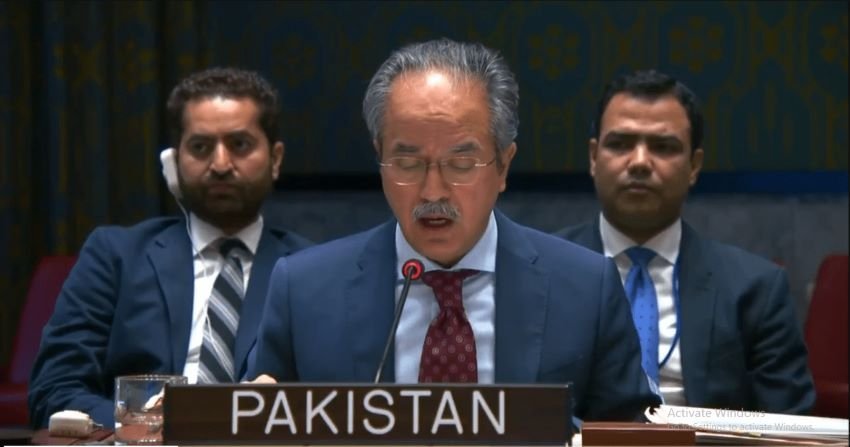
United Nations (TDI): Pakistan on Wednesday urged the United Nations Security Council to swiftly designate the banned Balochistan Liberation Army (BLA) as a terrorist organization under its sanctions regime, noting that the request is already under consideration.
Speaking at a UNSC briefing on “Threats to International Peace and Security caused by Terrorist Acts,” Pakistan’s Permanent Representative to the UN, Ambassador Asim Iftikhar Ahmad, called on member states to act quickly.
“We hope the council will move promptly to list the BLA under the 1267 sanctions framework,” he said. “This would be a necessary step in responding to the serious threats posed by this group.”
Ambassador Ahmad also thanked the UNSC for its recent statement condemning attacks in Balochistan and expressed gratitude for the international solidarity shown toward Pakistan.
He recalled the sacrifices Pakistan has made in the global fight against terrorism, saying, “As a frontline state, we have paid a heavy price, with more than 90,000 lives lost and significant economic losses over the years.”
Highlighting Pakistan’s contributions to earlier counterterrorism efforts, he noted that the core of Al Qaeda had been largely dismantled in Afghanistan thanks to Pakistan’s role, and that Islamabad had also taken part in combatting the regional affiliate of the Islamic State.
Read More: Emerging TTP–BLA Nexus and Its Implications for Pakistan’s Security Landscape
However, he warned that the security situation has worsened since the Taliban takeover of Kabul. “Foreign-backed proxy groups, including the TTP, BLA, and the Majeed Brigade, are operating with near impunity from Afghan soil, often with support from our eastern neighbor, and are responsible for deadly attacks in Pakistan,” he said.
Referring to recent incidents, he noted that the BLA claimed responsibility for attacks across multiple locations in Balochistan, resulting in the deaths of 48 civilians, including women and children. Pakistani security forces reportedly neutralized 145 militants in response.
Ambassador Ahmad also highlighted the regional implications, citing UN findings that show the threat extends beyond Pakistan’s borders, including attacks in Central Asia. He stressed the danger posed by advanced weapons left behind after the foreign forces’ withdrawal from Afghanistan and called for accountability for external actors supporting these groups.
Read More: UNSC Condemns Balochistan Attacks, Urges Accountability
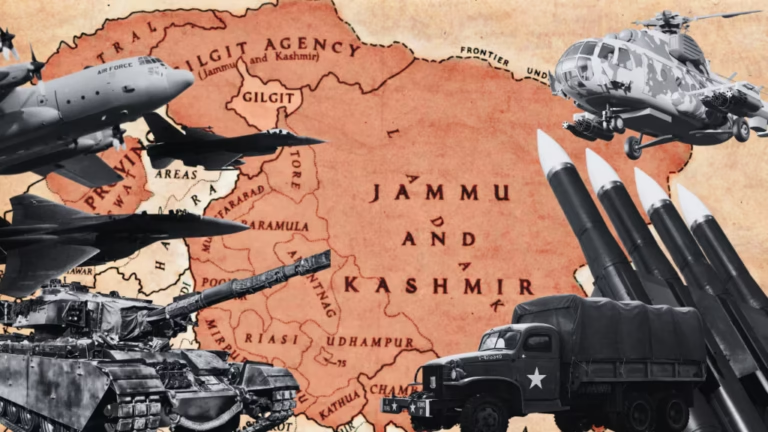
He criticized selective counterterrorism approaches, saying, “Policies have often targeted adherents of a single religion, while state terrorism goes unaddressed,” pointing to the situation in Indian-administered Kashmir.
Ambassador Ahmad concluded by emphasizing Pakistan’s commitment to multilateral cooperation and collective action to fight terrorism, urging the international community to address the threat comprehensively and without double standards.