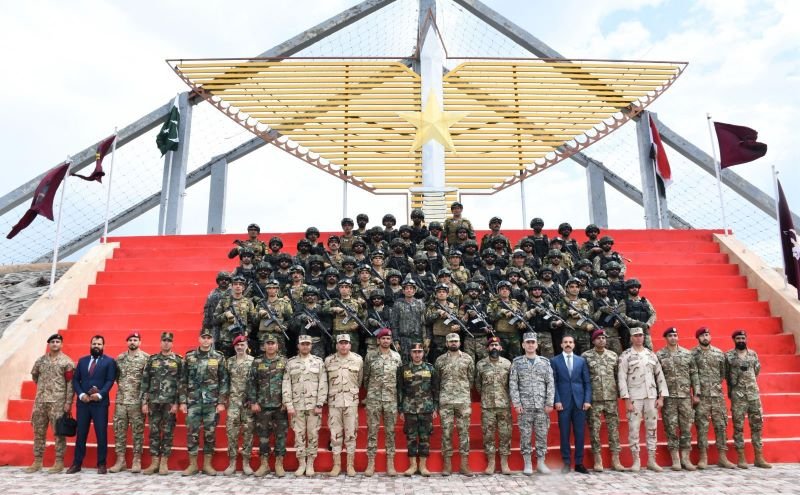
Pakistan and Egypt have concluded a two-week joint counter-terrorism exercise, underscoring deepening military cooperation and shared security priorities between the two countries, the military’s media wing said on Monday.
According to the Inter-Services Public Relations (ISPR), the exercise, Thunder-II, was held at the Special Operations School in Cherat, Khyber Pakhtunkhwa, a premier training facility for Pakistan Army’s elite forces.
The drill brought together troops from Pakistan’s Special Services Group (SSG) and the Egyptian Special Forces, focusing on enhancing operational coordination in counter-terrorism environments.
The ISPR said the primary objective of the exercise was to improve interoperability between the two militaries through joint training in tactics, techniques, and procedures related to counter-terrorism operations.
Over the course of the exercise, participating troops engaged in a range of combat drills designed to sharpen their response to complex security threats and share battlefield experience.
Military officials noted that the exercise also provided an opportunity for both sides to exchange expertise and learn from each other’s operational approaches.
Read More: Pakistan, Egypt Launch ‘Thunder-II’ Joint Drill to Boost Counterterrorism Coordination
Participants were said to have demonstrated “exceptional professionalism and operational skill” throughout the training period, reflecting the high standards of both forces.
The closing ceremony was attended by senior military officials from both countries, including Pakistan’s General Officer Commanding SSG and Egypt’s Commander of Paratroopers, Major General Mohamed Saad Abdel Razik, along with Egypt’s defense attaché.
The exercise is part of a broader pattern of defense engagement between Pakistan and Egypt, which have maintained longstanding diplomatic and military ties.
Joint drills such as Thunder-II are seen as a key mechanism for strengthening bilateral relations while enhancing preparedness against evolving security challenges.
Analysts say such exercises not only improve tactical coordination but also signal a shared commitment to combating terrorism and promoting regional stability.
For Pakistan, which regularly conducts joint drills with partner countries, these engagements are central to maintaining operational readiness and fostering international military cooperation.