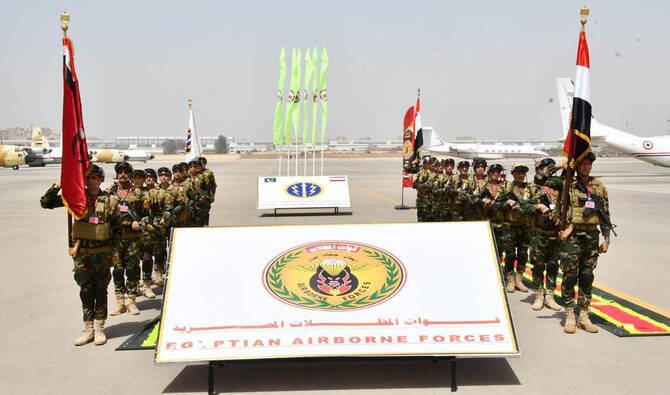
Islamabad (TDI): Pakistan and Egypt have commenced a two-week joint military exercise aimed at strengthening defense cooperation and enhancing counterterrorism capabilities, according to official statements released on Monday.
The exercise, titled “Thunder-II,” is being conducted at the Special Operations School in Cherat, located in northwestern Pakistan. It brings together elite troops from the Pakistan Army’s Special Services Group and Egypt’s Special Forces, marking another step in the growing military collaboration between the two nations.
Pakistan’s military media wing said the drills are designed to sharpen operational skills through joint training while fostering deeper military-to-military ties. The exercise will particularly focus on counterterrorism operations, with participating troops expected to exchange expertise and learn from each other’s battlefield experiences.
Defense cooperation between Pakistan and Egypt has a long history, rooted in diplomatic ties established shortly after Pakistan’s independence in 1947.
Egypt was among the first Middle Eastern nations to formally recognize Pakistan, and relations between the two countries have since evolved across political, economic, and military domains.
Read More: South Korea, US to Hold Joint Drills Amid Rising Tensions with N. Korea
In recent years, both countries have intensified their defense engagement through joint exercises, high-level military visits, and strategic dialogue.
A notable development occurred in October last year, when Pakistan’s Army Chief, Field Marshal Asim Munir, met Egyptian President Abdel Fattah El-Sisi in Cairo. The meeting underscored a shared commitment to expanding cooperation in both security and economic sectors.
Officials say such joint exercises play a crucial role in addressing evolving security challenges, particularly in the realm of counterterrorism. By training together, forces from both countries aim to improve interoperability, coordination, and readiness in complex operational environments.
The launch of “Thunder-II” also reflects broader regional dynamics, where collaboration among allied nations is increasingly seen as essential to maintaining stability and combating transnational threats.
Pakistan’s continued engagement with Middle Eastern partners like Egypt signals its intent to strengthen strategic alliances beyond South Asia. At the same time, Egypt’s participation highlights its interest in deepening defense ties with key partners in the Muslim world.