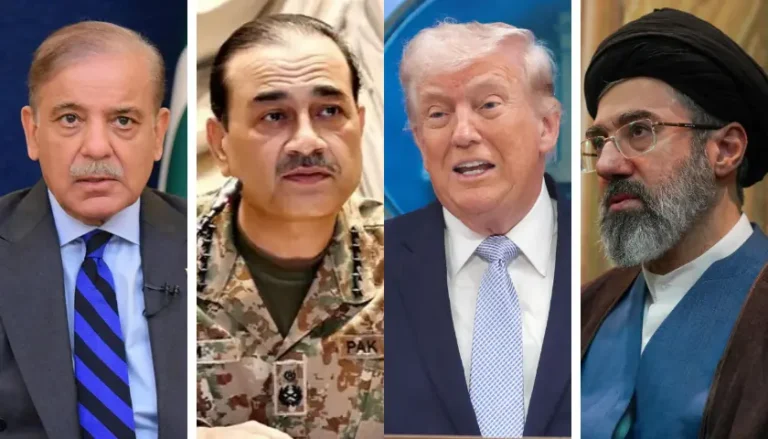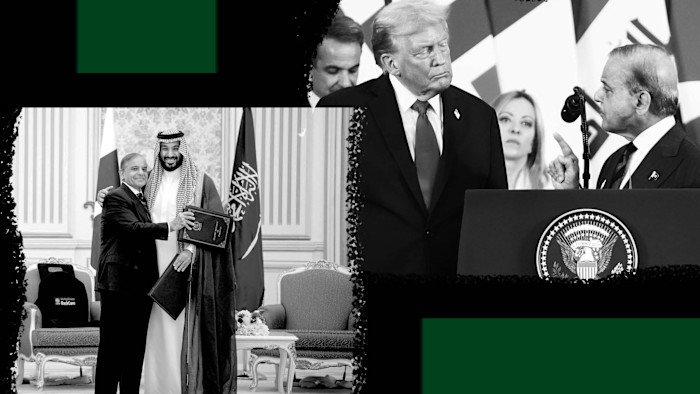
Pakistan today stands at a critical juncture in its foreign policy history, where its diplomatic choices are increasingly shaping its regional and international identity. In a rapidly evolving global order, Islamabad finds itself navigating a delicate balancing act between the United States, Iran, and the broader Muslim world.
Recent developments in US–Iran engagement and Pakistan’s emerging mediatory role have highlighted both its growing relevance and the complexity of its strategic environment.
Pakistan is today playing a leading and increasingly important role in the Muslim world, especially within Asia. In the current shifting geopolitical environment, countries such as China, Russia, Iran, and Turkey are often viewed as more assertive or revolutionary actors in global politics.
However, Pakistan has adopted a different approach based on balance, dialogue, and diplomacy, which makes its role unique and significant. In this context, the performance and diplomatic posture of the Pakistani government is truly admirable, particularly in handling sensitive regional dynamics such as the US–Iran engagement.
Pakistan’s engagement in regional diplomacy reflects its attempt to position itself as a bridge between conflicting powers. While it maintains long-standing strategic relations with the United States, it also shares deep historical, cultural, and geographical ties with Iran.
At the same time, Pakistan remains closely connected to the broader Muslim world, particularly Gulf countries that play a crucial role in its economy through investment, energy supplies, and overseas employment opportunities for millions of Pakistanis. This triangular relationship places Pakistan in a unique but highly sensitive position, where every diplomatic move requires careful calibration.
Read More: Trump Says Iran Deal to Be Inked Today in Pakistan
Recent diplomatic developments suggest that Pakistan has played a facilitating role in encouraging dialogue between Washington and Tehran. In an era where direct communication between adversaries is often limited, Pakistan’s willingness to support indirect engagement reflects its growing aspiration to act as a regional stabilizer.
If Pakistan succeeds in contributing meaningfully to a sustainable peace agreement between the United States and Iran, the consequences could be highly significant, not only for the region but also for Pakistan itself.
The economic implications of such success would be considerable. Regional stability would likely reduce volatility in global oil markets and trade routes, particularly through strategically sensitive areas such as the Strait of Hormuz.
For Pakistan, which remains heavily dependent on energy imports and is already facing economic pressure, any stabilization in global energy prices would provide much-needed relief. It could also enhance investor confidence and improve macroeconomic stability at a time when Pakistan is striving for recovery.
More importantly, successful mediation would enhance regional trust in Pakistan. Neighboring countries and regional powers would begin to view Pakistan as a reliable and responsible diplomatic actor, capable of contributing constructively to conflict resolution.
This shift in perception could strengthen Pakistan’s diplomatic standing across Asia and the broader Muslim world, allowing it to play a more influential role in future regional negotiations and multilateral forums.
From a strategic perspective, Pakistan’s involvement also reflects an effort to transition from a reactive foreign policy to a more proactive diplomatic posture. Traditionally, Pakistan has often responded to regional developments rather than shaping them.
Read More: Pakistan Rising: Mediating the US–Iran Conflict
However, its engagement in mediation efforts indicates a gradual shift toward influencing outcomes through dialogue and engagement rather than mere alignment.
At the same time, Pakistan’s role remains constrained by geopolitical realities. While it may facilitate dialogue, the core decisions in US–Iran relations are ultimately driven by major powers and their strategic interests. This means Pakistan’s influence, though growing, is still limited in terms of determining final outcomes. Nevertheless, even as a facilitator, its contribution carries symbolic and diplomatic weight.
However, such a role also brings significant challenges. Increased diplomatic visibility exposes Pakistan to heightened expectations and potential criticism. If mediation efforts succeed, Pakistan may be expected to continue playing a similar role in other regional conflicts.
If they fail, questions may arise regarding the limits of its influence. Moreover, maintaining neutrality between competing blocs requires consistent diplomatic discipline and careful management of bilateral relationships.
Despite these challenges, Pakistan’s current approach represents a constructive shift in its foreign policy orientation. By prioritizing dialogue over confrontation and cooperation over isolation, Pakistan is gradually redefining its image in the region. This evolution is particularly important in a world increasingly shaped by interconnected crises, where diplomacy is no longer optional but essential.
In conclusion, Pakistan’s balancing act between the United States, Iran, and the Muslim world reflects both opportunity and responsibility. It is an opportunity to enhance its diplomatic stature and contribute to regional peace, and a responsibility to manage complex relationships without compromising national interests.
If handled effectively, this moment could mark a significant turning point in Pakistan’s foreign policy evolution—from a state shaped by regional dynamics to one that actively participates in shaping them.
*The views presented in this article are the authors’ own and do not necessarily reflect the views of The Diplomatic Insight.

Wajahat Ghauri
Wajahat Ghauri is an Islamabad Based Lawyer, and Master’s in Political Science from Punjab University. He can be reached at ghauriwajahat29@gmail.com