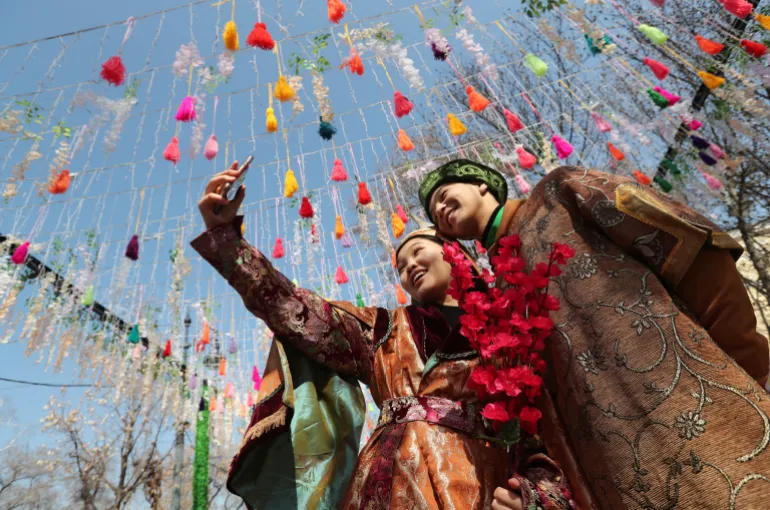
Nowruz, originating among the ancient Aryan peoples of the Persian geographical domain millennia ago, stands as a singular festival observed with unparalleled splendor across diverse tribes, religions, and nations spanning multiple continents.
Symbolizing nature’s renewal, it heralds prosperity and abundance, the ascendancy of light over darkness and good over evil, while embodying compassion, forgiveness, and the dispelling of sorrow to foster communal joy.
Officially recognized in nations such as Tajikistan, Iran, Iraq, Uzbekistan, Kyrgyzstan, Azerbaijan, and others, Nowruz achieved inscription on UNESCO’s Representative List of the Intangible Cultural Heritage of Humanity in 2009.
This milestone resulted from initiatives spearheaded by the President of Tajikistan, Emomali Rahmon, alongside leaders from Nowruz-celebrating states. Presently, an estimated 300 million individuals worldwide commemorate the holiday annually.
Read More: Nowruz: A Global Celebration of Spring
Historically, Nowruz in Iran traces back several millennia, marking the perennial triumph of benevolence over malevolence among Persian-speaking communities. In Arab contexts, precursors exist in ancient Egyptian pharaonic rites, such as the spring festival Shamūʾ al-Nasīm (“scent of spring” or “zephyr of the zephyrs”), characterized by song and dance.
Arab adoption of Nowruz as a formalized observance commenced in the 8th century CE, concomitant with their incursions into Central Asia. During this era, the Persian-Tajik commander Abū Muslim al-Khurasānī forged alliances between Arab and Persian populations, disseminating not only the Persian language but also festivals of Persian provenance, including Nowruz and Mehrgan.
From this juncture, Nowruz has endured among Arab societies, transcending religious and ethnic boundaries—as attested in poetic oeuvres by luminaries such as Muḥammad al-Kūfī and Abū ʿUbayda al-Walīd al-Buḥturī. Contemporary Arab states, alongside other global actors, perpetuate these traditions idiosyncratically, as exemplified below.
Nowruz in Syria
In Syria, Nowruz assumes particular salience, predominantly orchestrated by the Kurdish populace, whose practices mirror those of Lebanese Kurds. Syrian Kurds venture into fields and deserts on the vernal equinox, invoking nature’s rejuvenation.
State-sanctioned ceremonies frame Nowruz dually: as the “Festival of Freedom” and the “Festival of Spring.” Kurdish lore recounts the blacksmith Kawa (or Kaweh) rallying kin against the despotic Zahhak, storming his palace, slaying the tyrant, and igniting beacon fires atop mountains to herald liberation—a motif echoed in pyric rituals among Iraqi and Lebanese Kurds.
Additional etiological narratives link Nowruz to biblical precedents: the ark of Prophet Nūḥ alighting on Mount Jūdī in Turkish Kurdistan, abating the deluge; and Prophet Ibrāhīm (Abraham) emerging unscathed from idolaters’ flames, transmuted into a verdant garden.
Observances encompass donning fresh attire, preparing customary cuisine, and communal excursions to scenic locales, perpetuating spring revelry.
Nowruz in the United Arab Emirates
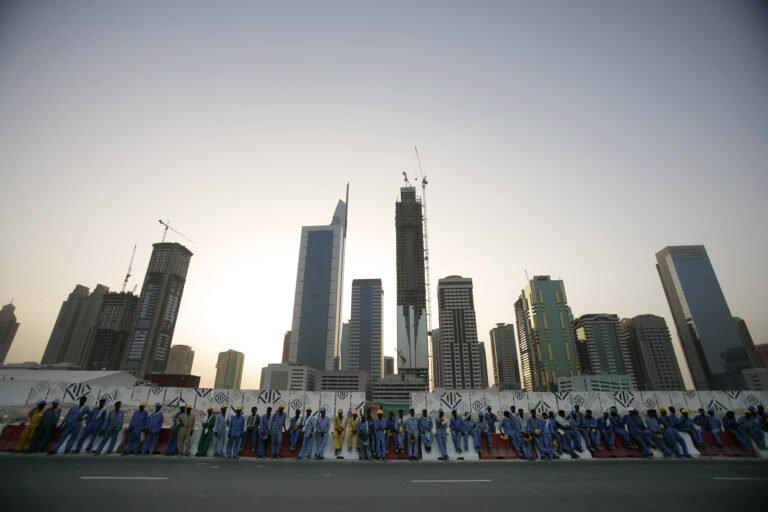
The United Arab Emirates (UAE), particularly Dubai, hosts exuberant Nowruz festivities, propelled by substantial Iranian expatriate and tourist influxes. While predominantly Iranian-led, these events benefit from official endorsement of multicultural expression.
Dubai extends tailored amenities to Iranian visitors, enabling adherence to ancestral rites: the *Haft Sīn* and *Haft Shīn* tableaux, new garb, and reciprocal visitations.
Multicultural convergence amplifies the occasion, as Hindus, Pakistanis, Turks, Afghans, Kurds, and fellow Nowruz adherents join Iranians in shared observance.
In summation, Nowruz’s ambit has transcended its Central Asian cradle, adapting to local idioms worldwide. Far from a mere paean to seasonal renewal, it functions as a nexus of intercultural solidarity and unity.

Farida Davlatzoda
Farida Davlatzoda is a Junior Researcher in the Department of Middle and Near East, Institute for the Study of Asian and European Countries, National Academy of Sciences of Tajikistan.