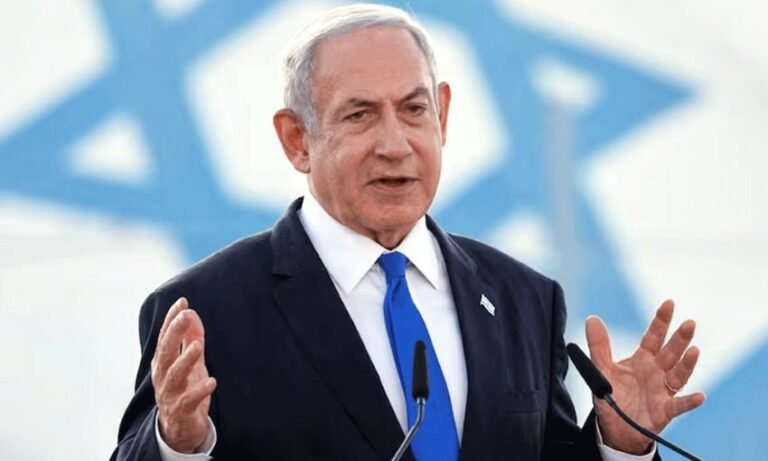
Israeli Prime Minister Benjamin Netanyahu has said Israeli forces will remain along their current positions in the Gaza Strip, placing renewed focus on disagreements over military withdrawal and implementation of the US-backed ceasefire framework.
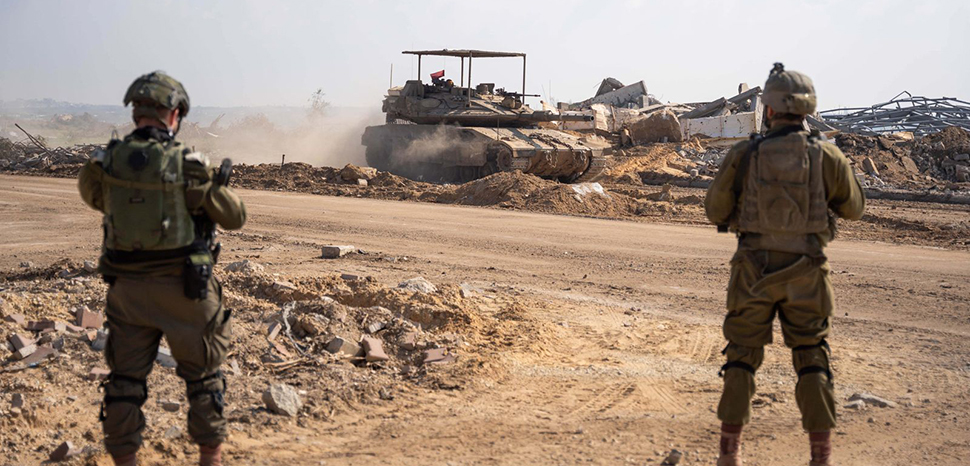
During a visit to Israeli forces near the Yellow Line on Wednesday, Netanyahu said Israel currently controls around 60 percent of Gaza and has no intention of withdrawing from its present positions.
“We control the territory. We are not withdrawing. We are staying on this line,” he said in a video released by his office.
It was Netanyahu’s first visit to Gaza since the ceasefire between Israel and Hamas took effect in October 2025. The Yellow Line was established under the ceasefire as the initial boundary behind which Israeli forces withdrew.
The broader framework envisages additional withdrawals alongside other steps, including the disarmament of Hamas and demilitarization of Gaza.
Read More: At OIC, Ankara Calls For Stronger Action Over Israeli Violations in Gaza
Netanyahu linked any further progress to those security objectives, saying Israeli operations would continue against armed groups that Israel considers a threat.
The Israeli prime minister visited the area alongside military Chief of Staff Lt. Gen. Eyal Zamir and other senior commanders.
He said Israel had largely achieved its objective of preventing Gaza from posing a security threat but maintained that further work was required to dismantle remaining Hamas capabilities.
His remarks come as international mediators continue efforts to advance the ceasefire beyond its current stage. Israeli withdrawal, Hamas’s weapons and Gaza’s future security arrangements remain among the most difficult unresolved issues, with the parties differing over how and when those commitments should be implemented.
The continued Israeli presence along the Yellow Line has consequently become central to the future of the agreement.
Read More: Gaza Ceasefire Risks ‘Point of No Return’ as Implementation Stalls
Hamas has sought further Israeli withdrawal, while Israel maintains that territorial concessions cannot be separated from guarantees over disarmament and demilitarization.
Netanyahu’s declaration adds uncertainty over whether the current military boundary will remain temporary or develop into a longer-term Israeli security line inside Gaza.
Any prolonged deployment would carry implications for Palestinian movement, reconstruction and the territory available for civilian administration.
The dispute also presents a challenge for mediators seeking to move the ceasefire from an initial halt in major hostilities toward a more durable political and security arrangement.
Progress will increasingly depend on whether the parties can agree on the sequencing of Israeli withdrawal, Hamas disarmament and the establishment of a longer-term governance and security framework for Gaza.

Anoush Taimur is an International Relations graduate from DHA Suffa University, Karachi, currently based in Doha. Her research interests include Gulf politics, small-state diplomacy, Global South studies and conflict
mediation. Her work examines how states create influence through connectivity, institutions and strategic relationships. She can be reached at [email protected]