Iran’s closure of the Strait of Hormuz since early March 2026 has effectively shut down 27 percent of the world’s seaborne crude oil trade and 20 percent of its LNG flows. Brent crude has crossed $82 a barrel and is climbing. Qatar’s LNG facilities at Ras Laffan and Mesaieed have been struck by Iranian drones, halting production at one of the world’s largest gas export hubs.
The bypass routes through Oman — Duqm, Salalah, Sohar — have themselves come under drone attack, collapsing the most viable alternative corridor. Shipping companies have rerouted to the Cape of Good Hope, adding weeks and millions in costs to every voyage. This is not a disruption. It is a structural rupture in the global energy system — and the region absorbing its sharpest consequences is not Europe or North America. It is South Asia.
Pakistan imports 99 percent of its LNG from Qatar and the UAE. Bangladesh sources 72 percent of its LNG from the same two countries. India, the world’s third-largest oil importer, draws more than half of its crude from Gulf producers whose export routes now run through a war zone. These are not marginal dependencies that can be managed through short-term substitution.
They are the foundational energy relationships of three of the world’s most populous nations — and they are all simultaneously under stress from a conflict that none of these countries initiated, chose, or were consulted about. South Asia is paying the price for a war fought entirely by others, over objectives defined entirely by others, with consequences that will fall most heavily on populations that had the least say in any of it.
The mechanism of disruption is precise and deliberate. Tehran did not attempt a formal naval blockade — that would have invited the kind of unified international response it cannot absorb. Instead it deployed a combination of vessel attacks, mine-laying, electronic jamming, and drone strikes on port infrastructure to reduce traffic to near-zero while maintaining plausible operational deniability about the closure’s permanence.
The new Supreme Leader Mojtaba Khamenei confirmed on March 12 that the strait would remain closed as a tool of pressure — the first public statement of his leadership, and a signal that the closure is political strategy, not tactical response.
Read More: Tactical Success or Strategic Miscalculation? The Iran Strikes and Asia’s Nuclear Future
The architecture of this campaign reflects a lesson Iran has been absorbing since the June 2025 war: that conventional military confrontation with the United States is a losing proposition, but economic coercion through grey-zone maritime operations operates in a space where American military superiority is largely irrelevant.
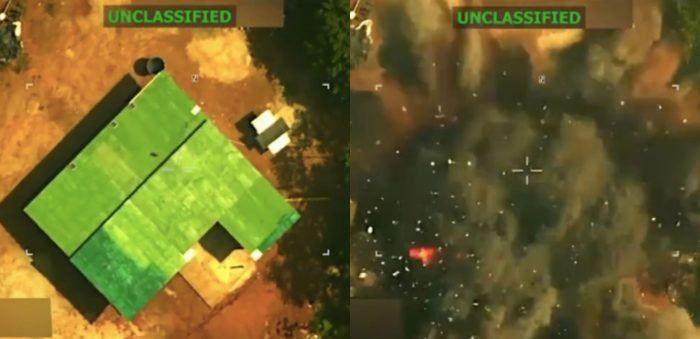
The cost asymmetry embedded in this strategy is worth sitting with, because it is the campaign’s actual strategic innovation. The drone that struck a fuel storage tank at Duqm cost somewhere between $20,000 and $50,000 to produce and deploy. The economic consequences of that single strike — rerouting costs, insurance surges, supply chain delays, emergency procurement at spot prices — run into hundreds of millions across the importing economies of South Asia and East Asia.
Pakistan scrambling to secure emergency LNG cargoes from Atlantic suppliers costs orders of magnitude more than the weapon that made it necessary. This is not incidental. It is the logic of the entire campaign. Iran is not trying to win a naval war. It is trying to make the cost of the conflict fall asymmetrically on parties other than itself — on the Asian importers who have no quarrel with Tehran, on the Gulf exporters whose pipelines bypass nothing, on the shipping companies whose actuarial models were never built for sustained chokepoint harassment.
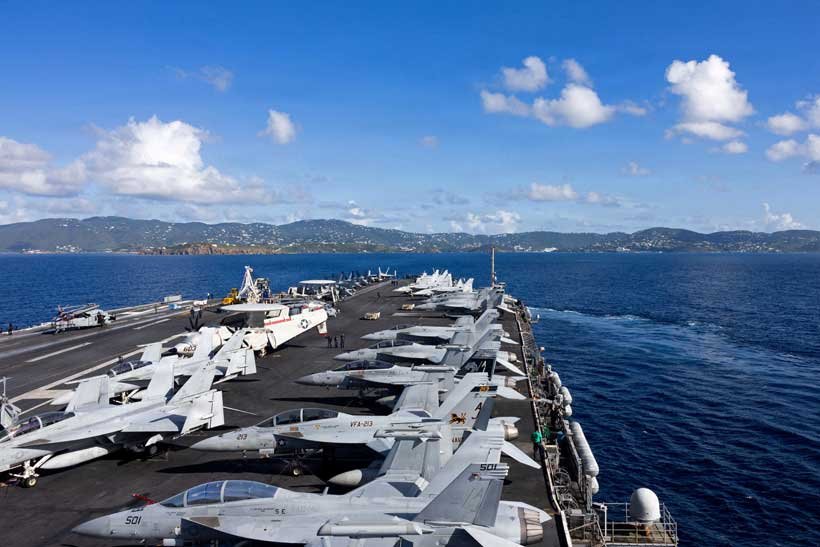
The Fifth Fleet can escort tankers. It cannot make escorting tankers cheap enough to restore normal commercial traffic. And as long as that remains true, the asymmetry works in Iran’s favor regardless of who holds naval superiority in the Gulf.
The South Asian energy crisis that the Hormuz closure has triggered is already generating its own regional dynamics that Western coverage has largely ignored. Pakistan has formally requested that Saudi Arabia reroute crude shipments through the Yanbu Red Sea terminal, bypassing the Gulf entirely — an emergency arrangement that carries higher logistics costs and lower volumes but represents the only viable short-term alternative.
India is drawing on strategic petroleum reserves while racing to secure Atlantic LNG cargoes now being competed for simultaneously by Japan, South Korea, the Philippines, Thailand, and every other Asian economy facing the same squeeze. Bangladesh, with the fewest financial reserves and the least diplomatic leverage of the three, is simply absorbing the price shock. For Dhaka, this is not a geopolitical crisis with a policy response — it is an inflation spike that will fall on the poorest households first and hardest.
Read More: Iran Allows Some Indian Ships Through Strait of Hormuz
What this crisis has exposed is a structural vulnerability that decades of energy policy across the region chose to treat as manageable risk rather than existential threat. The concentration of South Asian LNG dependency in two Gulf producers — Qatar and UAE — was always a single point of failure waiting for a trigger. The trigger has now arrived, and the absence of any regional energy security framework capable of responding to it is glaring.
There is no South Asian equivalent of the International Energy Agency’s coordinated reserve release mechanism. There is no regional LNG spot market with sufficient depth to absorb a supply shock of this magnitude. There are no pipeline interconnections between South Asian nations that might allow supply sharing in crisis. The region is facing its worst energy emergency in a generation with institutional tools built for a calmer world.
The longer-term strategic consequence may be the one that matters most. Every month the Hormuz crisis persists accelerates decisions that were already being made slowly across Asian capitals about reducing Gulf energy dependence. India’s renewable energy transition, already the world’s largest in absolute terms, will receive a political mandate from this crisis that no climate negotiation has managed to generate. Pakistan’s long-delayed domestic gas development — the Reko Diq copper-gold project, the TAPI pipeline, indigenous coal-to-gas conversion — will move from strategic aspiration to operational urgency.
Bangladesh will accelerate its own LNG terminal diversification and renewable buildout. The crisis will not end Gulf energy dependence overnight. But it will compress the timeline for reducing it by years, perhaps decades — and it will do so not through the gradual logic of the energy transition but through the brutal clarity of a supply shock that left no ambiguity about the consequences of dependence.
The Hormuz crisis of 2026 is being narrated in most of the world as a story about Iran, about U.S. naval power, about Israeli strategy, about oil prices. That framing is accurate as far as it goes. But it misses the story that will matter longest: that the populations bearing the heaviest economic burden of this conflict are not the ones who started it, not the ones fighting it, and not the ones whose strategic interests it was designed to advance.
Iran has proved something in the Strait of Hormuz that will outlast this particular conflict — that a middle power under sustained military assault can impose global economic costs through targeted chokepoint coercion at a fraction of what conventional warfare would require, and can make those costs fall on parties with no role in the original dispute. That is not a tactic. It is a doctrine. And it will be studied, adapted, and repeated long after the guns in the Gulf fall silent.
*The views presented in this article are the author’s own and do not necessarily reflect the views of The Diplomatic Insight.

Aleena Saif Ullah
Aleena Saif Ullahis an MPhil Scholar in International Relations at the University of Punjab, Lahore. She can be reached ataleenasaifullah68@gmail.com