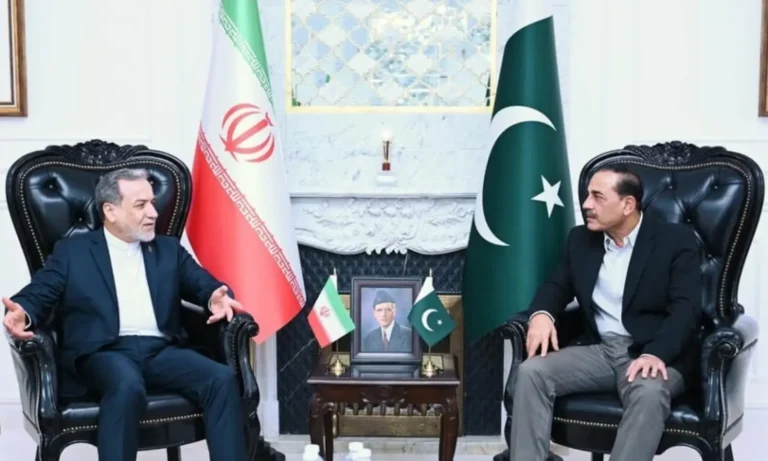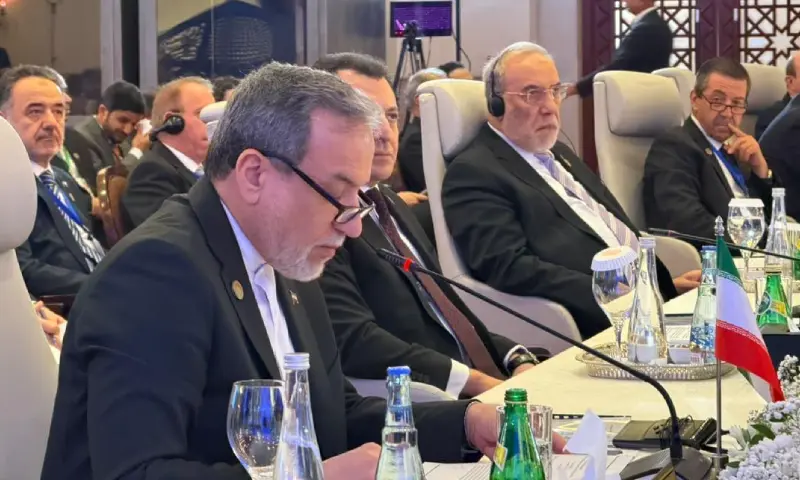
Islamabad (TDI): Iranian Foreign Minister Abbas Araghchi has called for the establishment of a reliable and sustainable regional energy mechanism to safeguard fuel supplies, strengthen economic resilience and reduce external vulnerabilities, as he addressed the 30th meeting of the Economic Cooperation Organization (ECO) Council of Ministers in Islamabad on Monday.
Speaking against the backdrop of the US-Israeli war on Iran and disruptions to critical energy supply routes, including the Strait of Hormuz and Bab al-Mandab, Araghchi said regional countries needed stronger cooperation to protect energy flows from geopolitical shocks.
“Our region needs not only an independent security framework but also a reliable and sustainable regional energy mechanism to safeguard energy flows, ensure stable supplies, reduce external vulnerabilities and enhance collective resilience against geopolitical shocks and disruptions,” he said, according to a transcript of his speech shared by the Iranian Embassy in Pakistan.
Araghchi said the ECO was moving beyond its traditional role towards becoming a more effective platform for collective action, strengthened cooperation and joint initiatives. He argued that closer coordination among member states could help address emerging challenges and contribute to a more inclusive and equitable global economic order.
He also called for a modernized, more inclusive and operational regional trade agreement that could facilitate economic integration and deliver tangible benefits to member countries.
Read More: ECO Ministerial: Pakistan Ties Regional Trade Ambitions to Afghan Action on Terrorism
Addressing Iran conflict, the foreign minister said Tehran had remained committed to diplomatic engagement and peaceful solutions but accused the United States of pursuing a policy of aggression, threats, targeted assassinations, economic coercion and blockades.
He described these actions as violations of international law and the United Nations Charter. Araghchi also sought to clarify Iran’s position towards neighbouring countries, saying Tehran had no inherent dispute with states in the region. He stressed that their territories, airspace and facilities should not be used as platforms for attacks against one another.
He maintained that Iran’s defensive measures were directed exclusively at the military bases and targets of those it considers aggressors, and should not be interpreted as actions against neighbouring governments or populations.
The Iranian foreign minister also highlighted the situation in Palestine, describing it as the most pressing international crisis. Condemning Israeli military operations and expansionist policies in the occupied West Bank and Al-Quds, he urged the international community to move beyond statements and take concrete action.
“This is a moment that calls for concrete action, collective responsibility, and an end to silence and indifference,” he said. Concluding his remarks, Araghchi said Iran’s stability and prosperity were intrinsically linked to those of other ECO member states, stressing the importance of regional cooperation.