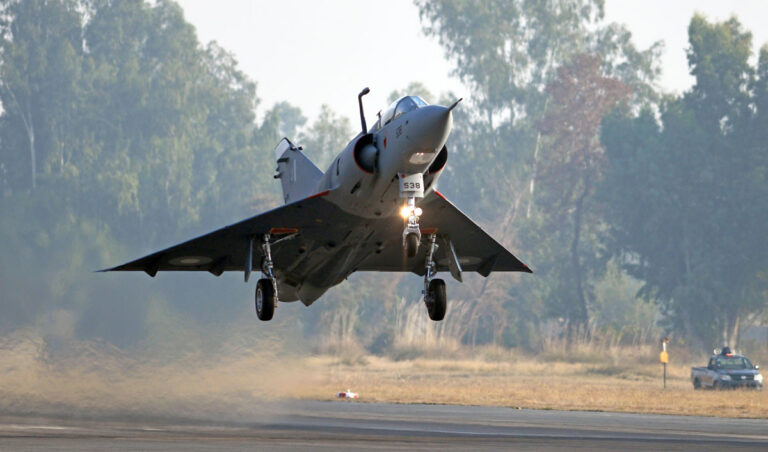
The rapid military buildup in India is not just an issue of national defense planning; it is a destabilizing factor with implications far beyond South Asia. In the latest reporting by SIPRI, India was still the fifth-largest military spender in the world in 2025, spending USD 92.1 billion on defense, which was up by 8.9 percent.
This number alone is noteworthy, but the implications of this number are even more concerning. Such an extreme increase in military spending is destined to escalate insecurity in a region that is already filled with historical suspicion, unresolved conflicts, and weak deterrence balances.
The size of the budget is not, in itself, a concern for the military build-up in India because of the strategic message it conveys. The expansion is an indication of an effort to increase conventional and strategic asymmetry to neighboring states, particularly Pakistan. When a single state dramatically boosts its military capabilities in an unstable region, other states cannot afford to rest.
They are forced to react, although unwillingly, since strategic weakness is not an alternative. The outcome is not surprising: an arms race that is devouring resources, increasing tension, and decreasing the margins of diplomacy. This diversion of resources to militarization is particularly devastating in South Asia, where economic development, poverty reduction, and social stability continue to be burning issues.
Read More: India’s Deployment of Nuclear Warheads, An Alarming Situation
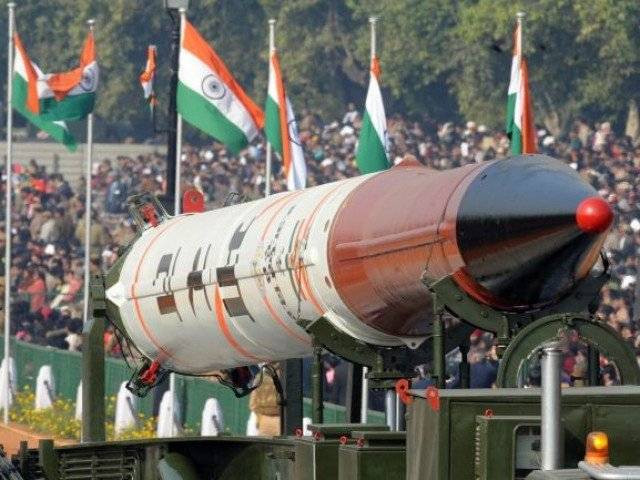
Consequently, India’s growing nuclear expenditure is further intensifying these issues in South Asia. According to the statistics provided by SIPRI, India incurred approximately USD 2.8 billion on nuclear arsenal-related spending that was nearly three times as much as that of Pakistan which stood at USD 1.1 billion.
Such a wide gap does not promote deterrence stability; it instead generates pressure for counter-balance measures. In such cases, even minor shifts in strategic posture can create strategic ambiguity in an already nuclearized environment. An increased investment in nuclear systems can be advanced as modernization, which in actuality can initiate retaliatory measures, enhance doubts, and intensify the risk of escalation and crises.
It is further at risk because India has a broader strategic position. Defense expenditure is not a neutral thing when combined with offensive ideology, hard nationalism, and an ever-aggressive political culture. Under these conditions, increased budgets risk giving decision-makers an illusion of security.
History is full of examples of states that mistook their confidence in their military advantage and paid a much higher price for coercion, like Nazi Germany. In South Asia, where a miscalculation can soon lead to a nuclear threshold being crossed, it cannot be disregarded. The emboldened leadership, with increasing capability, might be tempted to adopt riskier policies on the assumption that military superiority can replace strategic prudence.
That is why India’s military buildup cannot be considered merely a domestic issue, but a regional security challenge with international ramifications. Given this, South Asia remains at the crossroads of nuclear deterrence, great power politics and strategic ambiguity.
Any serious development of military forces in such a setting inevitably has an impact not only on Pakistan but also on China and the international security situation in general.
This scenario, along with regional actors, external players also remain active in the regional balance due to the import of arms, technological agreements, and military modernization, further complicating an already fragile security environment. What started as a national modernization project can thus develop into a broader strategic contest.
The problem is very simple: military power does not necessarily generate security; it actually does the opposite in volatile security regions. That is, the larger the arsenal of one side, the larger the threat to the other side. The more dangerous the environment is, the greater is each actor’s readiness for the worst-case scenario.
Read More: India’s Illusion of Limited War in South Asia
This is a vicious self-reinforcing cycle, and it becomes irreversible once it takes hold. South Asia has been through enough bad times to know that a full-scale war is not necessary to escalate a crisis; it only takes one miscalculation, one threatening stance, or one overconfident political gambit.
This is the reason why a state holds on to restraint, transparency, and dialogue for strategic survival; it need not be perceived as the state’s weakness. Should India persist with its military build-up at the same rate and attempt to project power through offensive doctrines and aggressive political messages, it will further escalate insecurity in the region.
As a state in possession of nuclear weapons and the main opponent of India, Pakistan cannot afford to disregard such developments. It will react in a manner such that it maintains deterrence and strategic balance. Such a reaction might be defensive in nature, yet the overall impact will still be the escalation of an arms race, making the whole region unstable.
Finally, it is safe to say that India’s military build-up displays a higher tendency to pursue coercive policy, leaving no space for regional stability or goodwill. It could bolster India in terms of battlefield and diplomatic bargaining in the short run, but it also heightens the chances of strategic overreach, miscalculation, and crisis.
The acquisition of increased military strength, unaccompanied by political restraint, is a dangerous game in a region already fragile in terms of peace. South Asia cannot afford another thread of insecurity.
It is in dire need of a leadership that encourages sustainable security over expanding military expenses and holds on to excess deterrence build-up, by being responsible, restraining, and having faith in the region’s long-term stability.
*The views presented in this article are the authors’ own and do not necessarily reflect the views of The Diplomatic Insight.

Harsa Kakar
Harsa Kakar is an Assistant Research Fellow at Balochistan Think Tank Network (BTTN), Quetta. The views expressed are personal. She can be reached at [email protected]