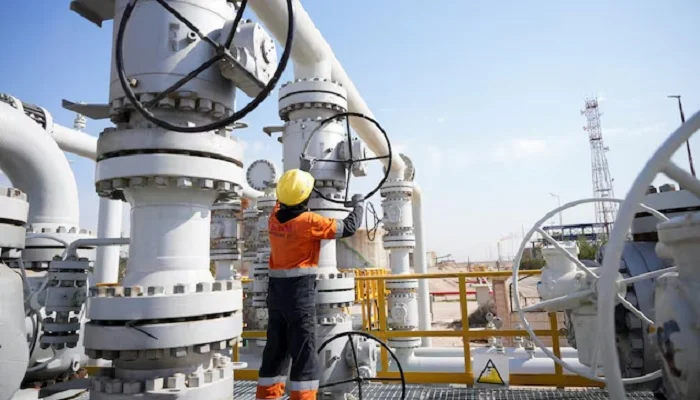
The IAEA has successfully concluded its first International Physical Protection Advisory Service (IPPAS) mission to Pakistan on 9 October 2026. The Pakistan Nuclear Regulatory Authority (PNRA) hosted the mission, during which it discussed nuclear security-related legislation and regulations in Pakistan and visited the KANUPP Decommissioning Project.
The IAEA team expressed appreciation for Pakistan’s cooperation, transparency and responsibility in its nuclear security regime. The endorsement speaks about responsible nuclear power in the two-nuclear-power South Asian region, with India’s record. This endorsement is a huge testament to the fact that Pakistan remains a responsible nuclear state in the region, while having a nuclear irresponsible rival like India in its neighborhood.
IPPAS is a peer-review-based service in which experts from around the world assess a state’s regime against the Convention on the Physical Protection of Nuclear Material and its 2005 Amendment, as well as international good practice. Pakistan invited the mission, opened its regulatory framework to scrutiny and received positive feedback.
States that have confidence in their systems want such review; those with doubts don’t. In contrast, the fact that India has not welcomed a mission of such a nature to assess its nuclear security regime says a lot about their responsibility concerning nuclear systems.
In 2026, Pakistan scored 47 on the NTI’s Nuclear Security Index (NSI), which rates countries on nuclear security from 0 to 100, while India ranked 37th (20th out of 22 countries). Pakistan scored two points higher than the last time it was assessed and placed 18th out of 22 states with weapons-usable materials.
Pakistan scored 58 while India scored 39 on the security and control of facilities. The trajectory matters as much as the score. Pakistan’s performance has been steady, whereas India’s performance has been poor on the index of securing materials from theft and facilities from sabotage.
Pakistan’s success in this regard comes from establishing specific institutions for this purpose. Pakistan maintains nuclear security through an independent regulator, the PNRA, which works under the oversight of the National Command Authority and the Strategic Plans Division, as well as the Centre of Excellence for Nuclear Security for training nuclear security personnel.
This provides Pakistan with a uniform system of law, regulation, enforcement, and training that is integrated and has been endorsed and praised by IPPAS.
By comparison, India’s self-perception as a model custodian is questionable given its own record. India’s accidental March 2022 firing of a BrahMos cruise missile into Pakistani airspace, while it blamed it on “technical reasons” during maintenance, showed a laxness in command, control and management of strategic-grade missiles.
In 2019, Indian officials revealed that malware hacked the administrative network at the Kudankulam nuclear power plant; even civilian nuclear facilities are vulnerable to cyberattacks. India’s media has also repeatedly reported arrests for radioactive trafficking, indicating a lack of control over nuclear and radiological sources. Such episodes would not occur in a state that prioritizes the security of its nuclear systems.
India has modernized its arsenal with long-range missiles capable of multiple independently targeted vehicles, and it has developed an increasing sea-based deterrent and has been demonstrating adverse doctrines supporting the punitive use of conventional forces below the assumed nuclear threshold.
Read More: IAEA–Pakistan Cooperation in Nuclear Security: A Journey of Progress and Partnership
In recent crises, Pakistani territory has been targeted on the unjustified grounds of preventive strikes, and it has been portrayed as a message that nuclear-armed neighbors will not be blackmailed, thereby using nuclear weapons as a means of coercive action. Pakistan’s stance of credible minimum deterrence and offering strategic restraint and dialogue is defensive in nature and has stabilizing effects.
The 2026 NTI report, in fact, pointed out that India, Pakistan and six other countries had boosted their holdings of weapon grade materials, but only Pakistan has submitted its security regime to independent experts from the international community.
The IPPAS mission validates Pakistan’s two-decade effort and gives it independent and international validation of a regime. It has, along with an improved NTI score compared to India, enhanced facility security, which contributes to Pakistan’s portrayal as a transparent and rule-abiding nuclear state.
India’s accident-prone operations, cyber and material-control errors, and offensive posture show that India is not a responsible steward of its operations. The international community should see the difference as it decides which countries are worthy of civil nuclear cooperation and which warrant scrutiny.
*The views presented in this article are the authors’ own and do not necessarily reflect the views of The Diplomatic Insight.*

Harsa Kakar
Harsa Kakar is an Assistant Research Fellow at Balochistan Think Tank Network (BTTN), Quetta. The views expressed are personal. She can be reached at [email protected]