New Delhi (TDI): India has granted approval for the Dulhasti Stage-II hydropower project on the Chenab River in Indian Illegally Occupied Jammu and Kashmir (IIOJK), in what Pakistan and experts say is a clear violation of the 1960 Indus Waters Treaty (IWT), reported The News on Sunday.
The project, with an estimated cost of ₹3,277.45 crore, is expected to begin construction early next year. It will be developed by NHPC Limited, a public sector company in India, and is projected to generate up to 260 megawatts of electricity.
Analysts view New Delhi’s decision as part of a broader strategy following the Pahalgam incident, which triggered cross-border clashes between the two nuclear-armed neighbors. Despite India’s move, Pakistan has reaffirmed its commitment to the IWT, emphasizing that it will continue participating in Neutral Expert proceedings in good faith.
In August, the Permanent Court of Arbitration ruled that India must “let flow” the waters of western rivers for Pakistan’s unrestricted use. Under the 1960 treaty, Pakistan controls the Indus, Jhelum, and Chenab rivers, while India has rights over the Ravi, Beas, and Sutlej rivers.
Read More: Zardari Rejects India’s IWT Violation, Warns Against Weaponizing Water
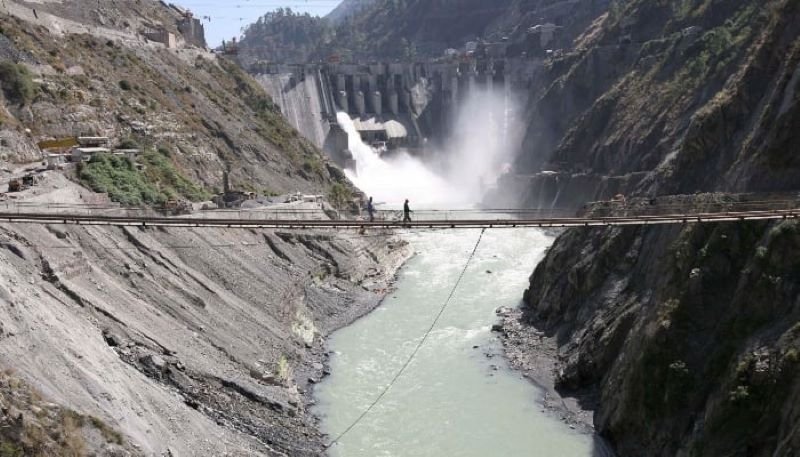
The Dulhasti Stage-II project is part of India’s push to fast-track several disputed hydroelectric projects in the Indus Basin, including Sawalkot, Ratle, Bursar, Pakal Dul, Kwar, Kiru, and Kirthai-1 and 2. The project will use the existing infrastructure of the 390 MW Dulhasti Stage-I scheme, a run-of-the-river project commissioned in 2007. Water from the Marusudar River will be redirected to the Dulhasti Dam through the Pakal Dul project to maximize power generation.
Authorities have acknowledged that changes in water flow could significantly affect the river’s natural ecology. A 25-kilometer stretch of the Marusudar River downstream of the Pakal Dul project is expected to experience major hydrological changes once Dulhasti Stage-II becomes operational.
The Indus Waters Treaty, signed in September 1960 and mediated by the World Bank, governs the use of rivers in the region. Under the treaty, India has access to the Sutlej, Beas, and Ravi rivers, while Pakistan controls the Indus, Jhelum, and Chenab rivers.
Read More: Pakistan’s UN Mission Event Highlights Grave Humanitarian Fallout of India’s IWT Suspension
The treaty does not allow either country to unilaterally suspend or terminate it. Over the years, both countries have clashed over multiple hydroelectric projects along the Indus and its tributaries. Pakistan relies heavily on these rivers for irrigation and hydropower and has raised concerns that India’s upstream dams could significantly reduce water flow. India, meanwhile, maintains that its projects, including Kishanganga and Ratle, comply with treaty provisions and has requested modifications to streamline the approval process.