As Middle East chokepoints fracture global trade, Beijing and Moscow formalize an Arctic partnership; and a new geopolitical fault line crystallizes in the High North.
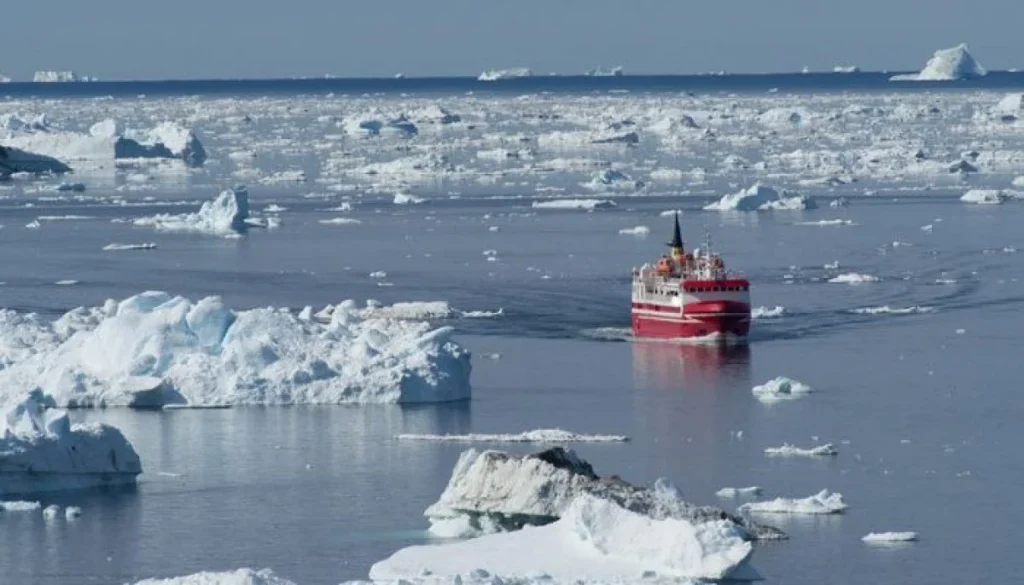
The Arctic, long treated as a strategic periphery, has entered the center of global order. China’s new “Ice Silk Road” – a shipping corridor beginning at Ningbo on China’s east coast, cutting through the Arctic Circle along Russia’s Northern Sea Route, and terminating at Felixstowe in eastern England – marks a structural shift in how Asia connects to Europe.
The route, announced by Chinese carrier Sea Legend Shipping, is not a provisional experiment. It is the opening move in a long-prepared strategic repositioning.
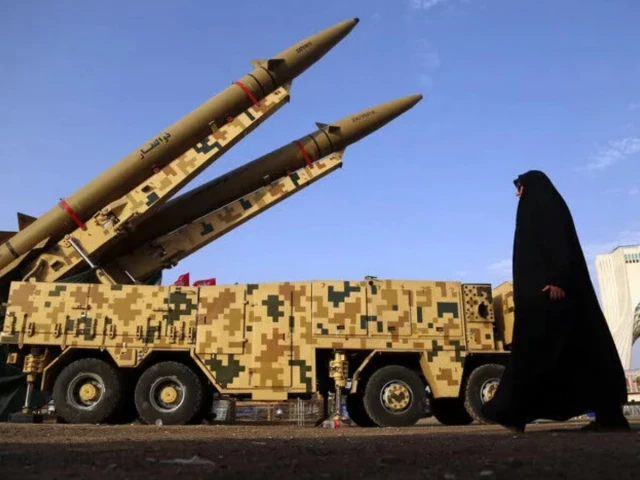
Shipping companies have grown increasingly interested in alternative Arctic routes as conflicts, including the US war on Iran, have restricted vital waterways like the Red Sea, the Gulf, and the Strait of Hormuz.
With traditional chokepoints under sustained pressure, a test voyage completed last October covered the Ningbo-to-Felixstowe distance in 20 days; roughly half the 40-day Suez route and less than half the 50-day Cape of Good Hope alternative.
Read More: Arctic: The Next Global Power Battleground?
What gives this corridor its strategic depth is the architecture underwriting it. Russia’s state nuclear corporation Rosatom, which operates the Northern Sea Route, has issued permits for seven Chinese transit vessels to begin regular weekly sailings.
Rosatom CEO Aleksey Likhachev described the 2026 season as a categorical departure from earlier experiments: eight voyages are planned through October, constituting the first fully operational regular service across what was previously treated as an experimental corridor.
Russia supplies the territorial scaffolding – the sovereign coastline, the icebreaker fleet, the permitting architecture – while China contributes the commercial infrastructure, the shipbuilding capacity, and the cargo volumes to give the route economic mass.
The division of labor is deliberate. Since Russia controls shipping through the NSR, China is, so far, the only country that can realistically use the route as an alternative to the Strait of Hormuz or the Suez Canal, as International Crisis Group’s William Yang noted.
China has deployed new, privately held companies for Arctic operations; a sign, according to Elizabeth Wishnick of the Center for Naval Analyses, that Beijing is exercising deliberate caution to avoid the secondary sanctions risks that shadow Russian-affiliated logistics infrastructure. The architecture, in other words, is both commercially rational and strategically insulated.
Read More: China, Russia Discuss Arctic Shipping Routes
The response from the Atlantic alliance has been swift and revealing. NATO launched its Arctic Sentry mission in February 2026 – a multi-domain military operation across the High North – with Secretary General Mark Rutte citing Russia’s increasing military activity and China’s growing Arctic interest as the justification.
Seven of the eight Arctic Council member states are NATO members, a fact that now carries a weight it previously lacked. Europe could benefit from a shorter route to Asia while simultaneously becoming more dependent on a shipping corridor controlled by Russia, as University of Hong Kong adjunct professor Alejandro Reyes noted; a structural bind that no amount of military posturing readily resolves.
China has been an observer at the Arctic Council since 2013; regular commercial shipping now gives that longstanding interest a practical economic dimension, drawing the region directly into great-power competition.
What emerges is not the story of an aggressor and a defender, but of two sets of interests constructing parallel institutional realities across a melting frontier; one anchored in territorial sovereignty and sovereign resource access, the other in alliance cohesion and naval presence.
Orders for ice-class vessels have reached their highest level in a decade, 167 ships contracted in 2025 with a further 164 planned for 2026; a number that speaks less to any single actor’s ambition than to a structural transformation already underway. The Arctic is no longer a theatre of future competition. It is one now.

Muhammad Mahad Samija
Muhammad Mahad Samija is a student of Political Science at Government College University, Lahore. He can be reached at [email protected]