Since its creation, Pakistan has faced a persistent strategic dilemma: how can a state with limited resources preserve its security in a region defined by intense power competition? This question has influenced Pakistan’s defense planning, diplomatic choices, and military doctrine for decades.
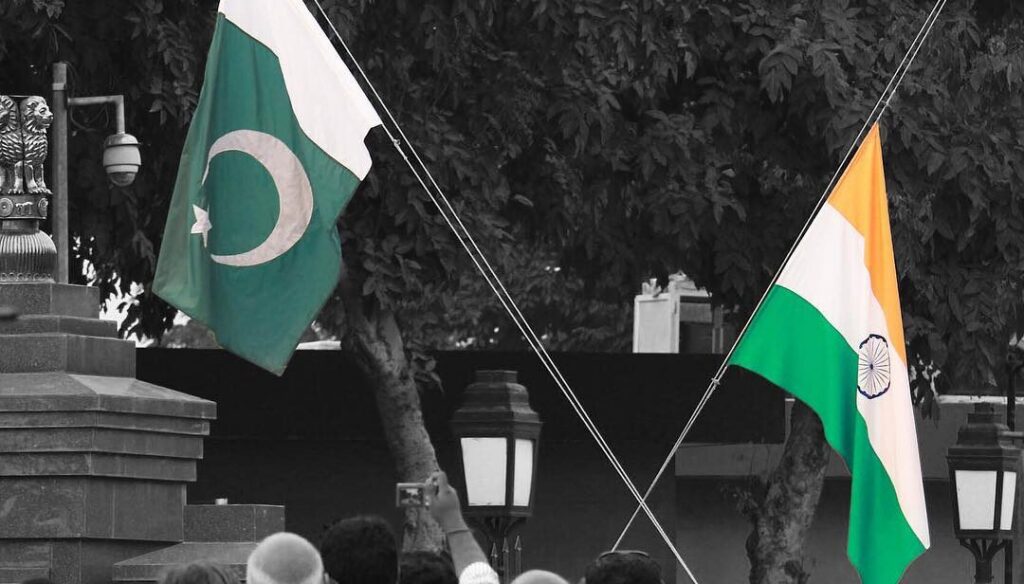
The India–Pakistan rivalry is often described through the familiar language of wars, borders, and nuclear deterrence. While these factors remain important, the competition today is increasingly defined by a broader contest over military modernization, technology, strategic partnerships, and the ability to shape the security environment.
From Pakistan’s perspective, the challenge is not simply India’s existing military strength, but the direction in which India’s capabilities are developing.
Over the past two decades, India has pursued an ambitious military transformation. Its expanding defense budget, acquisition of advanced platforms, development of long-range strike capabilities, naval expansion, and growing partnerships with major powers have strengthened its position as a regional military actor.
Read More: ‘Pakistan’s Water is a Red Line’: PM Warns India of Direct Response
Indian policymakers describe these efforts as necessary for modernization and strategic autonomy. However, in Islamabad, these developments are viewed through a different lens: as factors that could widen the conventional imbalance and reduce Pakistan’s strategic space.
Pakistan’s response has not been to compete with India in every category of military power. Given the economic and demographic differences between the two countries, such an approach would be unrealistic. Instead, Pakistan has focused on maintaining a credible deterrent posture through selective modernization, strategic partnerships, and capabilities designed to prevent any adversary from converting conventional advantages into political or military pressure.
The central argument of Pakistan’s strategic thinking is straightforward: stability does not require identical capabilities, but it does require that no state believes it can achieve its objectives through military superiority alone.
The Perception of Strategic Imbalance
The foundation of Pakistan’s security concerns lies in the growing gap between the two countries in economic resources, defense spending, and industrial capacity. India’s larger economy allows it to pursue modernization across multiple domains simultaneously, including air power, naval capabilities, space assets, cyber infrastructure, and defense manufacturing.
From New Delhi’s perspective, these efforts are part of becoming a more capable global power and responding to a changing regional environment. However, from Islamabad’s perspective, the cumulative effect of these developments creates pressure on Pakistan’s traditional security calculations.
The concern is not necessarily that every Indian military development is offensive in intention, but that advanced capabilities can alter strategic perceptions. In international politics, states often respond not only to what others intend to do but also to what they are capable of doing. This uncertainty is a central feature of the security dilemma.
Pakistan’s strategic planners therefore focus on maintaining sufficient capability to prevent a situation where military imbalance creates strategic vulnerability. Pakistan’s defense posture seeks to preserve a balance of power by ensuring that India’s conventional advantages do not create conditions in which Pakistan’s security interests can be challenged through coercion.
Beyond Numbers: Pakistan’s Deterrence Strategy
Pakistan has historically avoided a strategy based on numerical competition. Attempting to match India aircraft for aircraft, ship for ship, or soldier for soldier would place an unsustainable burden on Pakistan’s economy.
Instead, Pakistan has pursued what can be described as a strategy of deterrence through resilience and complication. The objective is to ensure that any potential military action carries significant uncertainty and cost.
This approach explains Pakistan’s focus on capabilities such as precision weapons, missile systems, unmanned platforms, air defense, and survivable strategic forces. These capabilities are not designed simply to demonstrate military strength; they are intended to influence decision-making by creating uncertainty about the outcome of any conflict.
In Pakistan’s strategic view, deterrence is successful when it prevents an adversary from believing that military superiority can easily produce political results.
India’s military modernization has become a major factor shaping Pakistan’s defense planning. New Delhi’s emphasis on integrated operations, precision strike capabilities, and indigenous defense production represents a shift toward greater operational flexibility.
Read More: IWT Under Pressure: What Happens if Pakistan-India Water Tensions Escalate?
From Pakistan’s perspective, developments such as improved surveillance capabilities, advanced aircraft acquisitions, missile technology, and maritime expansion have changed the regional military environment. Islamabad argues that these developments require adaptation to prevent the erosion of deterrence.
Pakistan’s response has therefore focused on maintaining capabilities that address specific strategic challenges rather than attempting to replicate India’s entire military structure.
This difference in approach is important. India’s strategy is increasingly focused on expanding military options and achieving greater strategic reach. Pakistan’s approach is primarily focused on preventing strategic vulnerability and maintaining a credible response capability.
The two approaches are not identical, but they interact with each other. Actions taken by one side influence the calculations of the other, creating a cycle of competition.
The Role of China and External Partnerships
Pakistan’s strategic environment has also been shaped by its relationship with China. Defense cooperation between Islamabad and Beijing has expanded significantly over the years, including cooperation in military technology, aircraft production, and defense capabilities.
For Pakistan, this partnership provides access to technology and strengthens its ability to maintain strategic balance. It also reflects a broader reality of modern geopolitics: states rarely develop military capabilities in isolation. External partnerships influence technology access, industrial development, and strategic confidence.
At the same time, India’s growing defense relationships with the United States, France, and other partners have also influenced Pakistan’s threat perceptions. Islamabad views these partnerships as factors that could strengthen India’s military and diplomatic position.
As a result, South Asian security competition is increasingly connected to wider geopolitical developments. The future of the India–Pakistan competition will not be determined only by traditional military platforms. Technology is changing how states compete.
Drones, cyber operations, artificial intelligence, satellite capabilities, and precision weapons are reshaping modern warfare. For Pakistan, these developments create both challenges and opportunities.
Advanced technology can allow states with fewer resources to improve military effectiveness, but it also creates new vulnerabilities. Cyber-attacks, misinformation campaigns, and rapid battlefield developments can create situations where decisions must be made with incomplete information.
This makes crisis management more important than ever. In a nuclear environment, the greatest danger may not always come from deliberate escalation but from misunderstanding, miscalculation, or inaccurate assumptions about an opponent’s intentions.
The Economic Challenge
One of Pakistan’s most important strategic challenges is balancing security requirements with economic limitations. Military capability requires financial resources, technological investment, and industrial capacity. Pakistan cannot ignore security requirements, but it must also recognize that long-term national power depends on economic strength.
A sustainable defense strategy therefore requires prioritization. The question is not whether Pakistan should modernize, but which capabilities provide the greatest strategic value while remaining economically manageable.
Economic resilience is ultimately part of national security. A strong economy provides greater strategic independence and reduces vulnerability.
Pakistan’s security policy is built around a fundamental objective: maintaining strategic balance in a region where conventional disparities remain significant.
Read More: Confrontational Policies of India and Pakistan Under the Nuclear Shadow
From Islamabad’s perspective, India’s military modernization and expanding strategic partnerships have created new challenges that require careful adaptation. Pakistan’s response has been based not on matching India’s capabilities one-for-one, but on maintaining deterrence through selective modernization, strategic partnerships, and capabilities designed to preserve national security.
The future of Pakistan’s defense posture will depend on its ability to combine military preparedness with economic sustainability and technological adaptation. The central challenge is not simply acquiring more advanced weapons; it is ensuring that those capabilities contribute to stability rather than uncontrolled competition.
In the end, strategic balance is not created only by military strength. It depends on the ability of states to understand each other’s concerns, manage crises responsibly, and prevent competition from becoming conflict. For Pakistan, maintaining deterrence and preserving strategic equilibrium will remain the foundation of its security policy in an increasingly uncertain regional environment.
*The views presented in this article are the author’s own and do not necessarily reflect the views of The Diplomatic Insight.*

Muhammad Adan Nisar
Muhammad Adan Nisar is an independent journalist. He can be reached at [email protected]

Faseeh Naqvi
Faseeh Naqvi is a journalist and researcher.