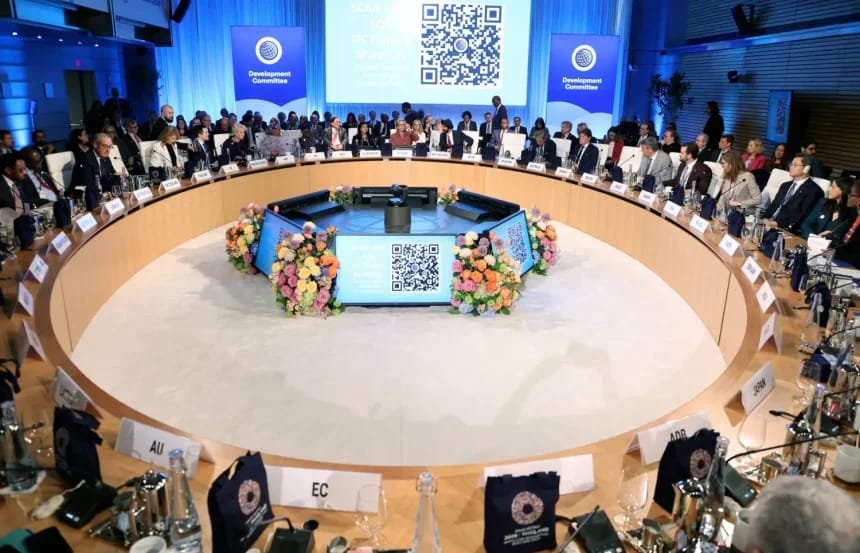
Washington (TDI): The crisis in the Strait of Hormuz dominated the International Monetary Fund and World Bank spring meetings, which concluded on Sunday after six days. Delegates expressed growing concern over energy markets and global economic stability.
The IMF and World Bank pledged support packages worth up to 150 billion dollars. These funds target countries hardest hit by rising energy prices.
Officials noted concerns about the measures if tensions in the strait continue. Major financial institutions said they have limited tools to contain the geopolitical shockwaves.
Attacks on ships and renewed closures in the strategic waterway increased uncertainty. Markets rallied briefly after reports the strait reopened on Friday. Uncertainty returned when Iran closed the route again on Saturday amid stalled talks with Washington.
IMF Cuts Growth Forecast
The IMF warned that global growth for 2026 could reach 3.1 percent in the best case. Worsening developments may lower expansion to 2.5 percent.
This raises fears of a broader global slowdown. Global inflation could climb to 4.4 percent or higher depending on how long the disruptions last.
Several finance ministers and central bank officials voiced frustration over the impact of the Hormuz disruption. European delegations called for efforts to restore full freedom of navigation.
French Finance Minister Roland Lescure said the knot of this conflict is the Strait of Hormuz. He stated “We need this to open, but not at any price.” Saudi Finance Minister Mohammed Al-Jadaan stated the outlook will not improve until the strait fully reopens.
Read More: Aurangzeb Engages Global Leaders at IMF–World Bank Meetings to Boost Pakistan’s Economy
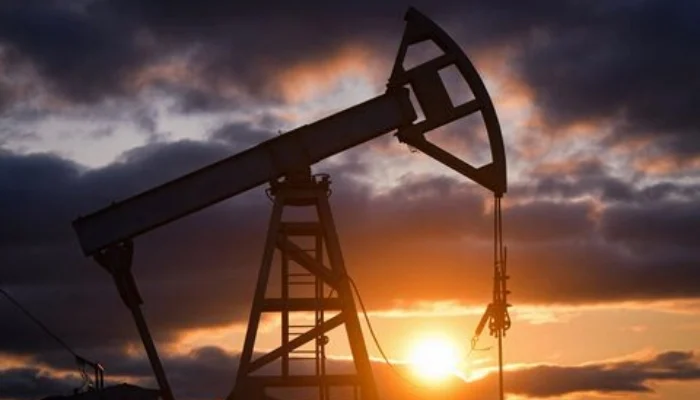
The Strait of Hormuz is a critical chokepoint for global energy supplies. It carries roughly 20 percent of the world’s oil and significant volumes of liquefied natural gas. The de facto closure has caused the largest supply disruption in the history of the global oil market.
Large energy importers in Asia and Europe face the brunt of higher fuel costs. Developing countries that rely on imports see rising inflation and slower growth. Global merchandise trade growth is projected to slow sharply to between 1.5 percent and 2.5 percent in 2026.
The meetings brought together leaders from more than 60 countries. Discussions focused on ways to ease pressure on the most vulnerable economies. Participants emphasized the need for coordinated action to protect global stability.

Muhammad Usman Hashmi is a researcher in International Relations, focusing on climate diplomacy, global governance, and political economy in the Global South. He has contributed to policy dialogues with the Foreign Policy Community of Indonesia and serves as a Senior Research Fellow at the International Council on Human Rights, Peace and Politics. He is also associated with Rethinking Economics Islamabad, contributing to research on development and sustainability.