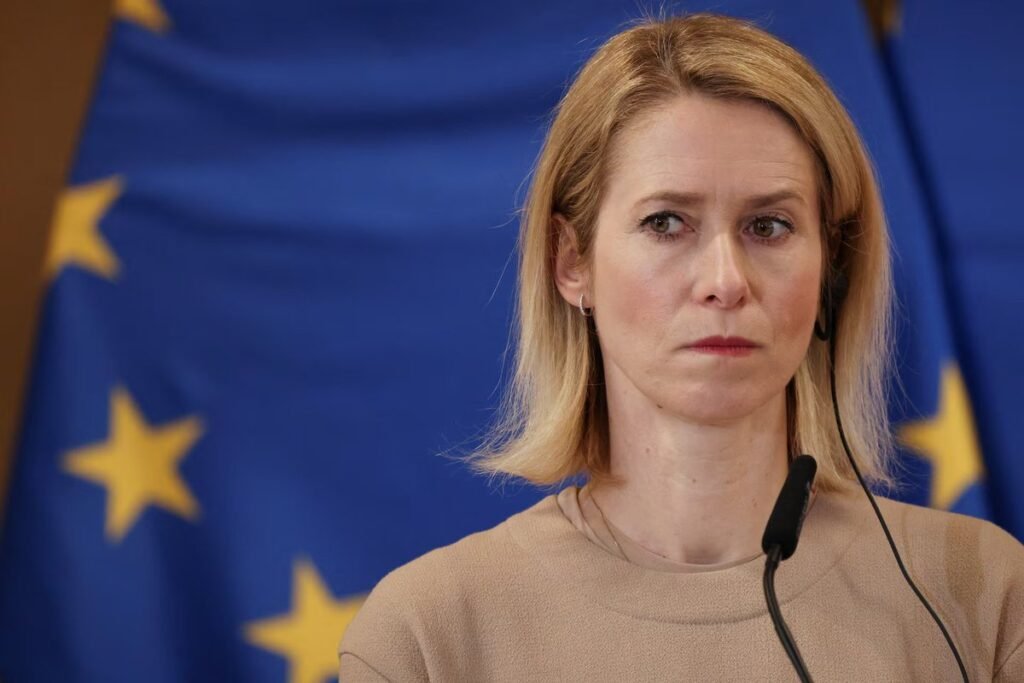
Brussels (TDI): France, Germany, and other European capitals are considering options that include stripping powers from European Union foreign policy chief Kaja Kallas and her €1 billion-a-year External Action Service (EEAS).
The discussions, reported by the Financial Times and citing five senior officials briefed on the matter, pose a challenge to a diplomatic architecture that has been in place for over a decade.
Among the structural proposals on the table is a consolidation of the EEAS’s global network of regional delegations into roughly 18 hubs, dramatically shrinking the current footprint of more than 140 offices worldwide.
Plans also include a staffing reduction of around 100 positions by 2027. At the heart of the debate is whether the EU’s top diplomatic post carries sufficient authority to be effective.
Read More: France’s Doctrinal and Institutional Dilemma in European Defense
Discussion is centering on whether a more empowered position with clearer authority could cut through the coordination problems that have long plagued European foreign policy.
Europe’s security environment has shifted dramatically since Russia’s full-scale invasion of Ukraine in 2022, and the EEAS has struggled to keep pace with the urgency that member states now feel about defense and foreign policy coordination.
Add to that, a corruption scandal involving EEAS leadership that surfaced in late 2025 has damaged the service’s credibility at precisely the moment it needs institutional defenders.
Read More: EU Leaders Descend on Montenegro for Historic Enlargement Summit
Established following the Treaty of Lisbon, the EEAS has been responsible since 2011 for running EU delegations and offices around the world; effectively serving as the EU’s embassy network.
Any significant reduction in its footprint or authority would represent one of the most consequential reforms to EU foreign policy infrastructure since the service was created.
Redistributing diplomatic power within the EU’s complex institutional architecture is rarely straightforward, and any move seen as undermining the bloc’s unified foreign policy voice is likely to face resistance from smaller states that value the EEAS as an equalizer on the world stage.