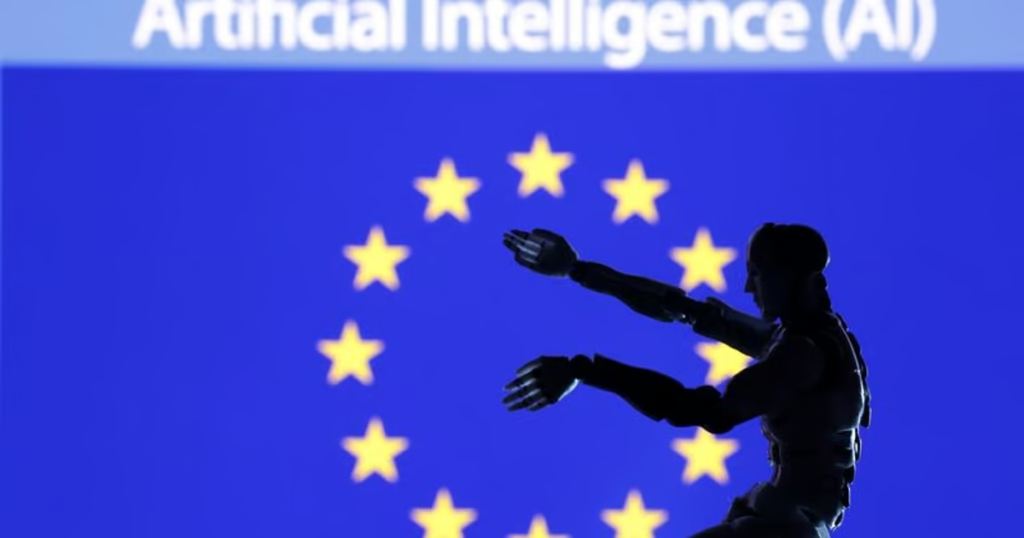
The European Union has reached a tentative agreement to simplify parts of its landmark artificial intelligence legislation while introducing a ban on AI-powered “nudifier” apps that create non-consensual explicit images.
The compromise, struck after lengthy negotiations between EU lawmakers and member states, is part of a broader effort to balance innovation with consumer protection under the bloc’s sweeping AI Act.
The provisional deal delays the implementation of several rules governing so-called high-risk AI systems, including technologies used in biometrics, law enforcement, border control and critical infrastructure.
Under the revised timeline, these obligations will now take effect in December 2027, rather than this year. AI systems embedded in regulated products such as machinery or toys will face compliance requirements from August 2028.
EU officials said the changes are intended to reduce regulatory overlap and ease the burden on businesses, particularly small and medium-sized firms that argued the original rules were too complex and costly.
The agreement also clarifies that some machinery products already covered by sector-specific safety laws will not face duplicate AI compliance requirements.
At the same time, lawmakers added new safeguards targeting harmful uses of generative AI, introducing a ban on AI systems that create sexually explicit deep-fake content without consent, including apps commonly referred to as “nudifiers.”
Read More: US, EU strengthen cooperation on Artificial Intelligence research
The prohibition also covers AI-generated child sexual abuse material and applies to images, audio and video content. Companies will have until December 2026 to comply.
The move follows mounting concerns across Europe over the spread of deep-fake pornography and AI-generated abuse targeting women and minors.
Dutch lawmaker Kim van Sparrentak said the agreement would help protect women and girls from “horrific nudifier apps” circulating online.
The revised framework also postpones mandatory watermarking requirements for AI-generated content until late 2026, giving developers more time to implement systems that identify synthetic media.
Regulators say watermarking will help combat misinformation and improve transparency around AI-generated images and text.
Despite the softer approach to some compliance rules, the EU’s AI Act remains one of the world’s toughest regulatory regimes for artificial intelligence.
The agreement still requires formal approval from the European Parliament and EU member states before becoming law.