In the contemporary era, marked by profound transformations of the international system and the transition from bipolarity to a multipolar configuration, the traditional paradigm of international relations is increasingly losing its relevance and effectiveness as an analytical framework and as a practical instrument for the regulation of interstate interactions. The formation of a new world order constitutes the culminating phase of a complex systemic process within which the struggle for the institutional consolidation of the status of subjects of international law and for the prioritization of national interests is intensifying against the backdrop of the growing salience of military‑political, economic, informational, and environmental security complexes.
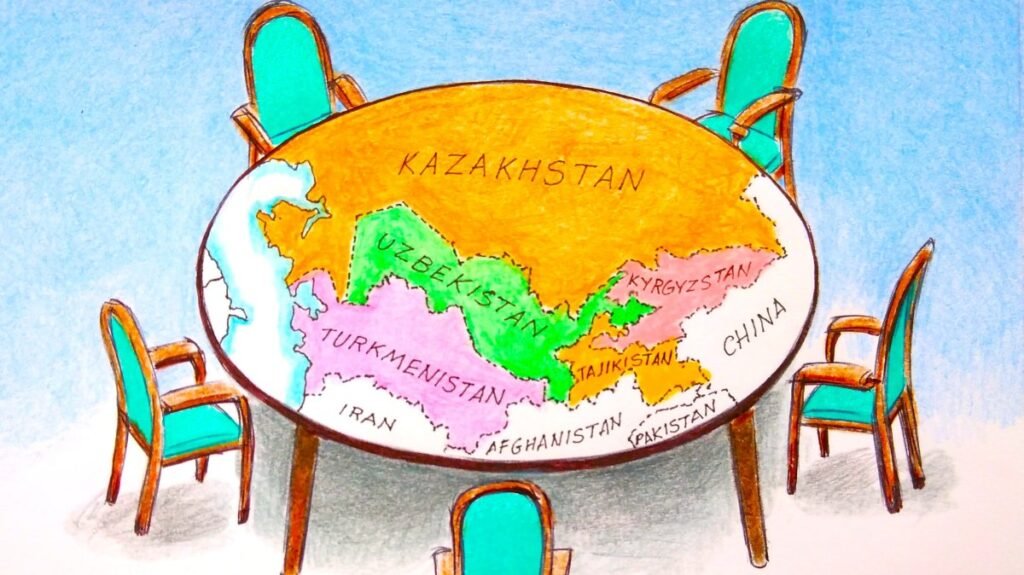
The multipolar distribution of centers of political power necessitates the consolidation of regional and global actors in order to elaborate collective strategies in response to the challenges of globalization and the escalation of security threats. The Central Asian region, represented by five sovereign states, has entered a critical stage of international recognition, driven by the implementation of interstate integration strategies, the articulation of long‑term development visions, and active participation in multi‑level diplomatic cooperation.
At present, Central Asia is emerging as an autonomous political actor and an active participant in the construction of the international order, developing new mechanisms of transnational interaction and, in doing so, acquiring a qualitatively new political voice while strengthening its diplomatic and reputational potential within the evolving system of global governance.
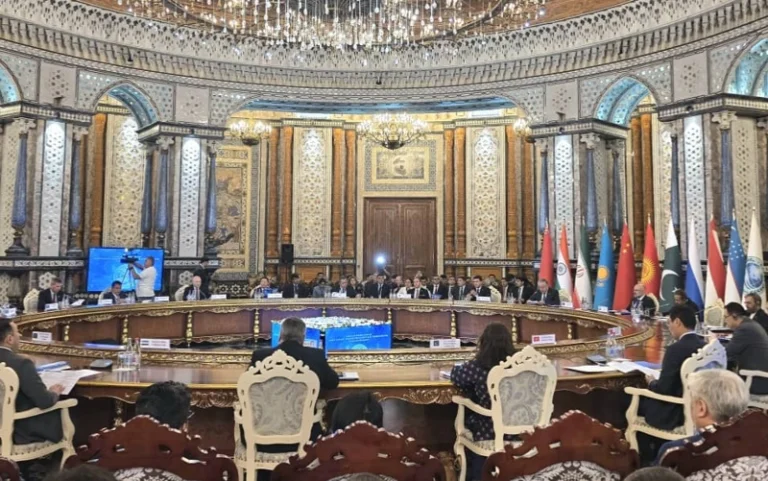
The historic Khujand meeting, convened on March 31, 2025 at the initiative of the President of Tajikistan, Leader of the Nation Emomali Rahmon, with the direct participation of the Presidents of Kyrgyzstan and Uzbekistan, constitutes a significant milestone and an innovative development in contemporary diplomacy. This gathering not only commemorates the international celebration of Navruz, but also embodies an emerging paradigm in international relations that, drawing on shared cultural and historical traditions, seeks to promote global security, political stability, and the sustainable development of the Central Asian states.
“We in Tajikistan highly value our relations with Kyrgyzstan and Uzbekistan, based on the principles of good-neighborliness, equality, mutual respect, and consideration of each other’s interests,” the Leader of the Nation noted in his speech. He further described the comprehensive development of relations between the three countries as “one of the priorities of Tajikistan’s foreign policy.”
Read More: Tajikistan’s Position at the Central Asia Plus Japan Dialogue Forum
The concept, initiated by the Leader of the Nation, of the historical community of the Central Asian states, their shared culture and civilizational heritage, as well as the positive national traditions of these three friendly and neighboring countries, was put forward as a central element of these countries’ integration policies. Despite the varying levels of economic and social development among their peoples, the diversity of priority areas for socioeconomic development, and the presence of certain ideological and ideological differences, this concept has evolved into a far-sighted strategy and conceptual framework for ensuring the region’s sustainable development and minimizing the risk of conflict.
The Khujand Summit has achieved the status of a landmark event of our time and can be considered a significant achievement of Tajikistan’s political leadership in the context of strengthening the national political system, state sovereignty, and the development of modern Tajik diplomacy.
The Republics of Kyrgyzstan, Tajikistan, and Uzbekistan have successfully established an innovative model of interstate relations based on the principles of mutual understanding, tolerance, good neighborliness, fraternal national solidarity, and a balanced foreign policy strategy of national leaders.
This example can serve as a model for maintaining and developing cooperation among other states in the Eurasian region and is also of interest to the international community. This process is a logical continuation of the historically established national unity and social harmony in Tajikistan, which are the cornerstones of Tajikistan’s domestic and foreign policy and reflect the result of systematic and consistent work under the leadership of the Leader of the Nation.
As noted, the meeting in Khujand took place against the backdrop of Nowruz, the international spring festival of peace and renewal. This will enhance and enhance the cultural and humanitarian significance of the meeting, strengthening Central Asia’s image as a region of shared historical heritage. Indeed, the meeting of the presidents in ancient Khujand marked an important step toward uniting Central Asia as an independent entity in international politics, significantly enhancing the authority and prestige of not only these three countries but the entire Central Asian region on the global stage.
Resolving complex issues through dialogue eloquently demonstrates the political and personal maturity of regional leaders and their readiness for a strategic partnership for the sake of peace, stability, and prosperity.
Read More: Central Asian Presidents Honored with Leo Tolstoy International Peace Prize
The resolution of border issues between the three Fergana Valley states is the result of many years of systematic interaction, constructive dialogue, and mutually beneficial cooperation based on the principles of respect for state sovereignty, equality of international actors, and mutual advantage. The peaceful resolution of this complex issue has opened new prospects for the development of multifaceted cooperation, contributed to the strengthening of trust and good-neighborly relations between the peoples of the neighboring countries, and an increase in their socioeconomic well-being.
It is important to emphasize that regional integration and consolidation played a key role in this process, laying a solid foundation for resolving contentious issues through compromise and respect for mutual interests. According to most experts, Central Asia has significantly improved its positive international image in a relatively short period of time. Compared to the recent past, when interstate relations were characterized by unresolved problems and conflicts, particularly related to border demarcation and water resource use, the progress achieved is significant.
The current stage of development in the Central Asian region is characterized by an atmosphere of trust, good-neighborliness, and mutually beneficial cooperation, formed through the political consensus of national leaders. The region, advancing through practical cooperation and integration processes, is strengthening its autonomy and resilience, enabling it to collectively address emerging challenges and threats.
Central Asia is on a path of sustainable and progressive development and is serving as a significant center of economic activity and investment attraction. The region’s voice is increasingly significant and influential, serving as a responsible and predictable actor in international relations and playing a significant constructive role in shaping the global agenda.
In conclusion, based on an analysis of the current integration processes of the region’s states and their growing role in the regional political system, it can be concluded that, in the context of recent events, including high-level meetings and the development of cooperation in energy, logistics, and security, the countries of Central Asia are gradually transforming from a position of limited dependence to the status of independent and active actors in international relations. In this context, new integration trends are becoming increasingly apparent, particularly the emphasis on trilateral diplomacy and the emergence of the concept of a “united Central Asia.”
Contemporary political theories, particularly the theory of agency, emphasize the need to improve the coordination of foreign policy efforts and the revival of common cultural foundations as factors contributing to the deepening of political integration. This approach has significant theoretical and practical significance within the framework of contemporary international relations research, as it not only provides a methodological basis for an adequate understanding of the region’s role in optimizing global political interactions but also serves as an important tool for developing national foreign policy and regional strategies.
Read More: Foreign Economic Relations Between Tajikistan and Russia
Overall, the political initiative under consideration to deepen integration sets the current vectors for the development of international relations in the region, which are as follows:
- Central Asia is becoming an independent and active actor in the international arena, defending its national interests and influencing the formation of a new system of international relations. This is supported by an integration policy and a strategic vision for the region’s development, aimed at strengthening political stability and sustainable development in the countries of Central Asia.
- The region is increasingly participating in international politics due to its geostrategic significance, wealth of natural resources, transit opportunities, and the formation of new interstate cooperation institutions, such as the Organization of Turkic States. This gives the countries of the region the opportunity to balance between major world powers and independently develop a multi-vector foreign policy.
- Great power rivalry in Central Asia (the US, China, Russia, the EU, Turkey, Iran, etc.) strengthens the region’s role as a geopolitical center, requiring the countries of Central Asia to develop their own integration strategy and strengthen their international presence.
- Contemporary processes of political integration, the development of regional diplomacy, and shared cultural roots are contributing to the emergence of Central Asia as a key political actor capable of influencing international relations in the 21st century.
Thus, contemporary Central Asia is emerging as a key player in 21st-century international relations, defined by the synthesis of its exceptional geopolitical significance, successful regional integration processes, and active participation in the transformation of the international order. Moreover, this participation is characterized by a pragmatic balancing act between various global centers of power in the context of an emerging multipolar world.
The Central Asian region is demonstrating a growing ability to independently determine foreign policy priorities and develop collective mechanisms for responding to contemporary global challenges and threats, which is strengthening its influence in the international system and enhancing its role in the formation of new transnational institutions.
*The views presented in this article are the author’s own and do not necessarily reflect the views of The Diplomatic Insight.

Shamsiddin Karimov
Shamsiddin Karimov is the Chief Researcher at the Institute for Asian and European Studies of the National Academy of Sciences of Tajikistan. He is a doctorate of Political Science.