Dhaka (TDI): Bangladesh’s political landscape shifted dramatically as the Bangladesh Nationalist Party (BNP) swept to a commanding victory in the country’s parliamentary elections, securing a powerful mandate that many observers believe could steady the nation after months of turbulence.
The vote, held on Thursday, was the first national election since the 2024 youth-led uprising that forced long-serving Prime Minister Sheikh Hasina from office. That period of unrest, driven largely by younger voters, brought widespread disruption to daily life and key industries, including the garment sector, a backbone of Bangladesh’s export economy.
Pre-election surveys had suggested the BNP was heading for a strong showing, and the results confirmed those projections. According to local broadcasters, the BNP-led alliance captured 209 of the 300 seats in the Jatiya Sangsad, giving it a two-thirds majority. With ballots counted overnight, the party quickly acknowledged its win but urged supporters not to hold victory rallies. Instead, it called for prayers across mosques, temples, churches and pagodas for the country’s peace and prosperity.
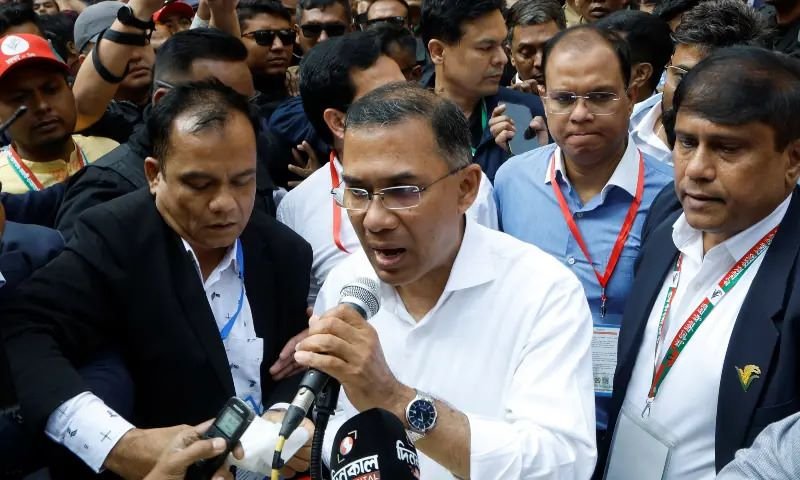
The BNP is headed by Tarique Rahman, 60, son of former Prime Minister Khaleda Zia and former President Ziaur Rahman. During the campaign, the party pledged financial assistance for low-income families, a 10-year cap on any individual serving as prime minister, steps to attract foreign investment, and tougher anti-corruption measures.
Its main rival, Jamaat-e-Islami, accepted defeat after its alliance secured 68 seats. Party chief Shafiqur Rahman said the group would take on the role of a “constructive opposition” rather than opposing the government for its own sake. The National Citizen Party (NCP), formed by youth activists who played a key role in last year’s uprising, managed to win only five of the 30 constituencies it contested.
Read More: Bangladesh Holds Landmark Election After Youth-Led Revolution
Although the BNP’s victory was decisive, the election itself was widely viewed as the most competitive in years. The Awami League, which governed for over 15 years under Hasina, was barred from participating. Turnout appeared to surpass the 42 percent recorded in 2024, with local media estimating that more than 60 percent of registered voters cast ballots. More than 2,000 candidates, including independents, ran in the polls, with at least 50 political parties contesting seats, marking a record level of participation.
Alongside parliamentary voting, citizens also took part in a referendum on proposed constitutional reforms. The measures include creating a neutral interim administration during election periods, restructuring parliament into two chambers, increasing women’s representation, reinforcing judicial independence, and imposing a two-term limit on the prime minister. While official results have yet to be released, early media reports suggest a strong majority supported the reforms.
Read More: Bangladesh’s First Post-Hasina Vote Tests the Power of Gen Z
From exile in India, Sheikh Hasina dismissed the election as illegitimate, calling it a “carefully planned farce.” She argued that without her party’s participation and meaningful voter engagement, the process lacked credibility. Hasina demanded the cancellation of the vote and the reinstatement of the Awami League’s political activities, along with fresh elections under a neutral caretaker government. Critics of her tenure, however, have long accused her administration of overseeing elections marked by boycotts and intimidation.