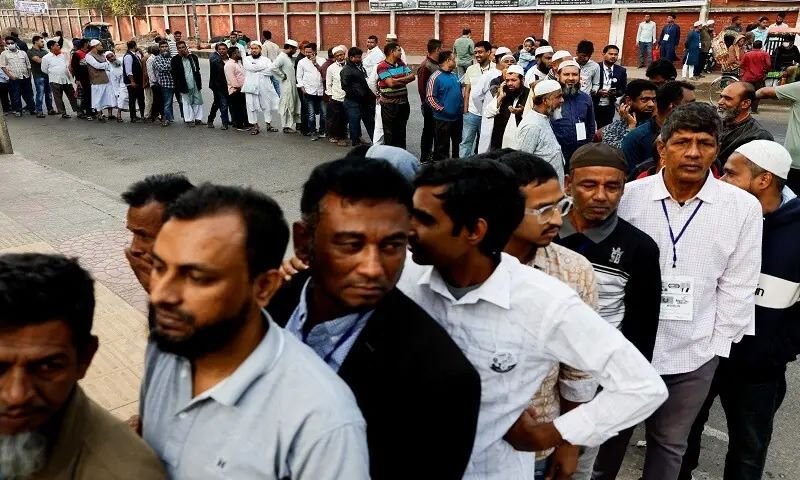
Dhaka (TDI): Voters across Bangladesh turned out in large numbers on Thursday as the country held a critical general election, widely viewed as a turning point after last year’s mass uprising that forced former Prime Minister Sheikh Hasina from power.
The 2024 protests, largely driven by young people from Generation Z, ended Hasina’s long rule and triggered months of instability that shook the nation’s key industries, including its garment sector, the world’s second-largest exporter of apparel. Many observers say a clear and credible result is essential to restore political stability in the country of 175 million people.
Polling stations opened at 7:30am local time, with long queues forming even before voting began. In Dhaka, voters expressed a sense of renewed hope
This is considered the first national election following a youth-led revolution, with Nepal expected to hold a similar post-uprising vote next month.
The election features a contest between two major alliances led by the Bangladesh Nationalist Party (BNP) and Jamaat-e-Islami, once political allies but now rivals. Opinion surveys ahead of polling suggested the BNP may have a slight advantage. The Awami League, previously led by Hasina, has been banned, and she remains in self-imposed exile in India. Analysts note that shifting political dynamics could also affect regional influence, particularly relations with India and China.
Read More: Bangladesh’s First Post-Hasina Vote Tests the Power of Gen Z
Unlike past elections criticized for boycotts and voter intimidation, more than 2,000 candidates, including many independents, are competing for 300 seats in the Jatiya Sangsad, Bangladesh’s parliament. In total, at least 50 parties are participating, marking a record level of political engagement. Voting in one constituency was postponed following the death of a candidate.
Muhammad Yunus, the Nobel laureate heading the interim administration formed after Hasina’s removal, described the vote as more than routine. He said the public’s long-standing frustration over inequality, injustice and economic hardship is now being expressed through constitutional means.
Alongside the parliamentary election, voters are also deciding on a proposed package of constitutional reforms. These include introducing a neutral caretaker government during election periods, creating a bicameral parliament, expanding women’s representation, strengthening judicial independence and limiting any prime minister to two terms in office.
Read More: Post-Hasina Bangladesh Enters Election Mode Ahead of February Polls
Security has been tightened nationwide, with more than 100,000 military personnel deployed to assist nearly 200,000 police officers in maintaining order. Although the campaign period remained largely calm, authorities are taking precautions to prevent disruptions.
Nearly 128 million citizens are registered to vote, of whom almost half are women. However, only 83 female candidates are running for office. Surveys indicate that corruption and rising living costs are the primary concerns among voters.
The two main prime ministerial hopefuls are BNP leader Tarique Rahman and Jamaat chief Shafiqur Rahman. Despite sharing a surname, they are not related.