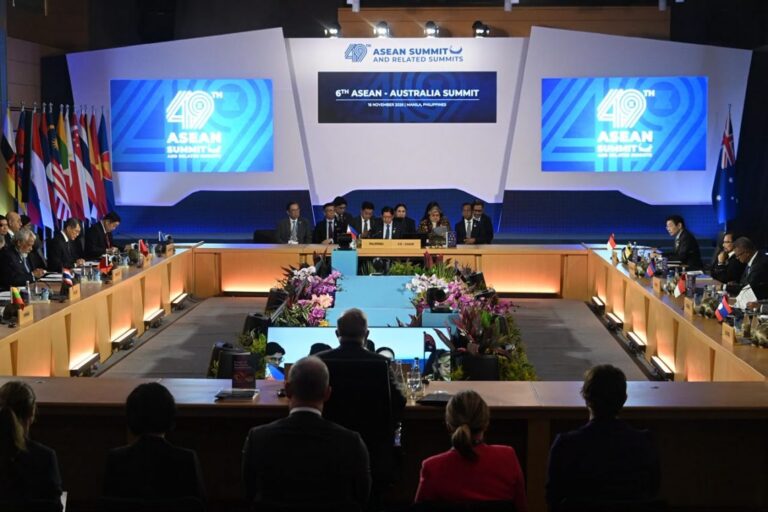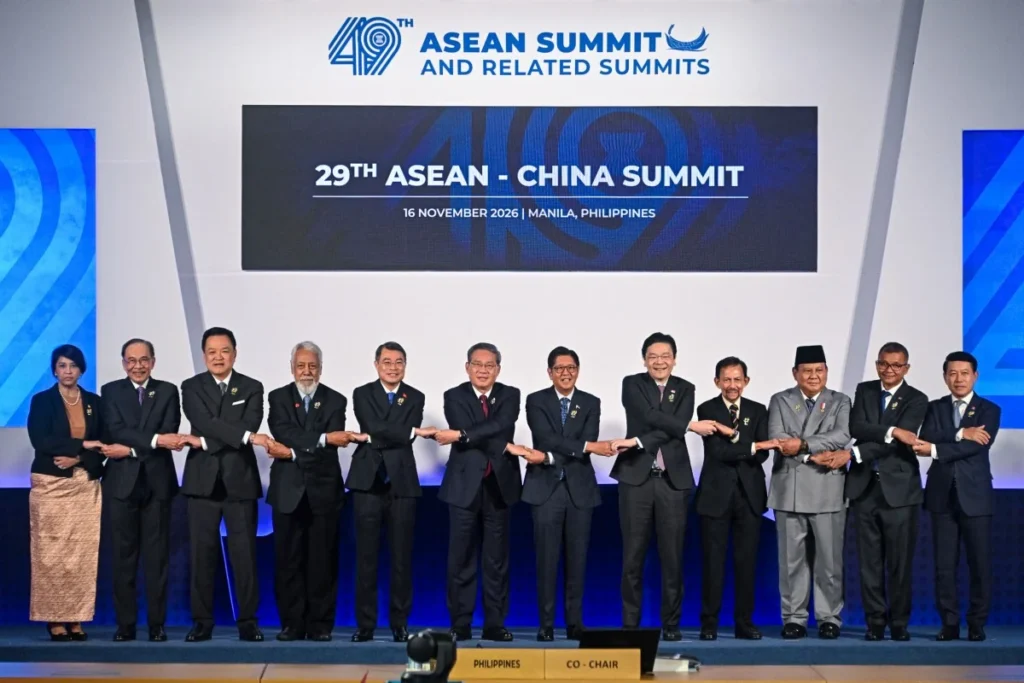
Negotiations between ASEAN member states and China on the long-awaited Code of Conduct (COC) in the South China Sea have made significant progress, with the parties reaching provisional agreement on more than 80 percent of the draft’s paragraphs, according to a statement released by the Philippine Department of Foreign Affairs (DFA) on November 15.
In its briefing on the substantial completion of negotiations, the Philippines, serving as ASEAN Chair in 2026, described the development as an important milestone in the negotiation process. The parties have now entered what Manila characterized as the final phase of negotiations, following years of diplomatic engagement.
The Philippines also highlighted the efforts of Malaysia and China as co-chairs of the ASEAN-China Joint Working Group on the Implementation of the Declaration on the Conduct of Parties in the South China Sea (DOC).
Their leadership, alongside the engagement of other delegations, has contributed to advancing discussions on the draft agreement.
A key development concerns the relationship between the existing Declaration on the Conduct of Parties in the South China Sea (DOC) and the proposed COC.
The parties have provisionally agreed that the DOC will provide the foundation for the COC, while the latter will establish more substantive provisions to guide the conduct of parties in the South China Sea.
Beyond establishing rules of conduct, the proposed COC is also expected to serve as a platform for practical maritime cooperation.
According to the Philippines’ statement, such cooperation may include voluntary activities conducted in accordance with international law, particularly the 1982 United Nations Convention on the Law of the Sea (UNCLOS), while respecting the sovereignty, sovereign rights, and jurisdiction of coastal states.
The parties further reaffirmed their commitment to the peaceful settlement of disputes under international law. However, the COC is intended to function as a mechanism for managing differences and preventing tensions at sea rather than resolving the underlying territorial and maritime disputes.
The negotiations have been underway since the adoption of the DOC in 2002, followed by the adoption of the framework for the COC in 2017.
In 2023, the parties adopted guidelines aimed at accelerating the early conclusion of an effective and substantive COC, committing to complete negotiations within three years or earlier.
During its ASEAN chairmanship in 2026, the Philippines initiated nine rounds of negotiations and two Senior Officials’ Meetings to sustain diplomatic momentum and advance the draft agreement.
Despite the progress, the negotiations have yet to reach a final conclusion. The parties have agreed to continue working constructively toward completing an effective and substantive COC at the earliest possible time.

Iqbal Saputra
Iqbal Saputra is an International Relations graduate. His research focuses on Southeast Asia, ASEAN Security, and Indo-Pacific Studies.