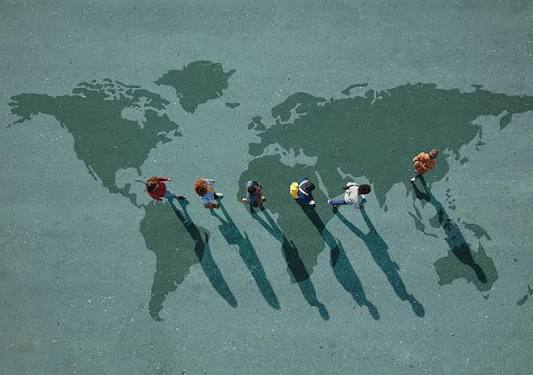
The international security environment is undergoing a profound transformation. Strategic rivalries, protracted conflicts, renewed nuclear uncertainty, and technological disruption are challenging the assumptions underpinning the post-Cold War international order.
Meanwhile, multilateral institutions face mounting pressure, and the rules and norms that have traditionally supported international cooperation are increasingly contested.
According to the Stockholm International Peace Research Institute (SIPRI), global military expenditure reached US$2.887 trillion in 2025, its highest recorded level and the eleventh consecutive annual increase. This reflects not only growing perceptions of insecurity but also a broader shift toward military preparedness as geopolitical competition intensifies.
Yet military capabilities alone cannot guarantee international stability. Artificial intelligence is transforming warfare and military decision-making, cyber operations are expanding the scope of strategic confrontation, and disinformation is eroding trust within and between societies.
Climate-related insecurity, resource competition, and political polarization further complicate an increasingly fragmented international landscape.
These developments expose a fundamental limitation in conventional approaches to security: international stability depends not only on the strategic calculations of states but also on the awareness and engagement of the societies they represent.
Rethinking Security in an Era of Strategic Uncertainty
As such, diplomacy must address not only relations between states but also the societal conditions that shape international security. Public trust, information integrity, and technological literacy are increasingly important to national resilience and international cooperation.
When people lack access to reliable information or opportunities to engage critically with complex policy issues, they become more vulnerable to disinformation and competing geopolitical narratives. This can erode public confidence and narrow the political space for diplomatic compromise.
History offers compelling examples of how informed and engaged civil society can boost international policy. The International Campaign to Abolish Nuclear Weapons (ICAN), a global civil society coalition, helped mobilize public support and bring humanitarian considerations into nuclear negotiations, contributing to the adoption of the 2017 Treaty on the Prohibition of Nuclear Weapons.
Similarly, the International Campaign to Ban Landmines demonstrated how sustained civil society advocacy, working alongside like-minded governments, helped secure the 1997 Ottawa Treaty.
These examples highlight an important lesson: civil society should not simply be informed about foreign policy decisions after they have been made. Instead, it should have opportunities to understand and contribute to the debates that shape them. From nuclear disarmament and climate diplomacy to artificial intelligence governance, meaningful public engagement can strengthen accountability and build broader support for international cooperation.
Achieving this, however, requires more than access to information. It requires making complex geopolitical and technological developments understandable, connecting policy debates with their human consequences, and creating meaningful opportunities for participation. This is particularly important as emerging technologies reshape security, influence political discourse, and raise questions that will affect generations to come.
Technology, Peacebuilding, and the Role of Civil Society
Addressing the gap between complex global challenges and public understanding is the motivation behind Future Witness, an initiative of the PeaceTech Alliance. Launched during United Nations Disarmament Week in October 2026, Future Witness seeks to make pressing international issues more accessible while creating opportunities for people to engage with the questions shaping their future.
The platform’s first thematic hub focuses on nuclear weapons, bringing historical testimony and humanitarian perspectives into conversation with contemporary security debates. Additional hubs are planned to explore other challenges at the intersection of technology, society, and international cooperation.
As Future Witness founder Heather Wokusch notes: “We aim to bridge the gap between specialist knowledge and public engagement – using technology not simply to share information, but to connect people, preserve lived experiences and encourage meaningful public participation.”
That pursuit becomes particularly important in areas such as nuclear disarmament, emerging technologies and international security, where complex technical and political developments can make meaningful public engagement difficult.
In that context, decision-makers and international institutions have an important responsibility to invest in the capacity of civil society to engage with these issues. Rather than treating public participation as something that can be achieved through consultations alone, they should actively support opportunities for learning and dialogue.
Read More: Climate Diplomacy in Digital Era: Harnessing Tech for Environmental Peace
This could include funding educational programs, workshops and training initiatives that help civil society organizations understand multilateral processes and international policy debates. It also means creating opportunities for civil society to engage directly with diplomats, researchers, technical experts and policymakers, enabling them to develop informed perspectives and contribute more effectively to discussions.
Particular attention should be given to strengthening the capacity of youth organizations, grassroots initiatives and communities that are often underrepresented in international forums. Supporting these groups requires more than providing access to information; it means investing in long-term partnerships, accessible educational resources, and networks that enable them to engage continuously with international developments.
Technology can play an important role in supporting this process. Digital platforms such as Future Witness can help translate technical expertise into accessible content, connect historical experiences with contemporary debates, and create opportunities for public dialogue.
However, sustained engagement between civil society and decision-makers is also key. Ultimately, the goal should be to move beyond simply informing civil society towards empowering it to participate as a knowledgeable and constructive partner in international cooperation.
By investing in civil society’s capacity to understand and engage with complex global challenges, decision-makers can strengthen public participation and contribute to more inclusive and sustainable approaches to peacebuilding.
*The views presented in this article are the authors’ own and do not necessarily reflect the views of The Diplomatic Insight.*

Heather Wokusch
Heather Wokusch is an international educator, human rights advocate, and presenter on peace topics. She can be reached at [email protected]