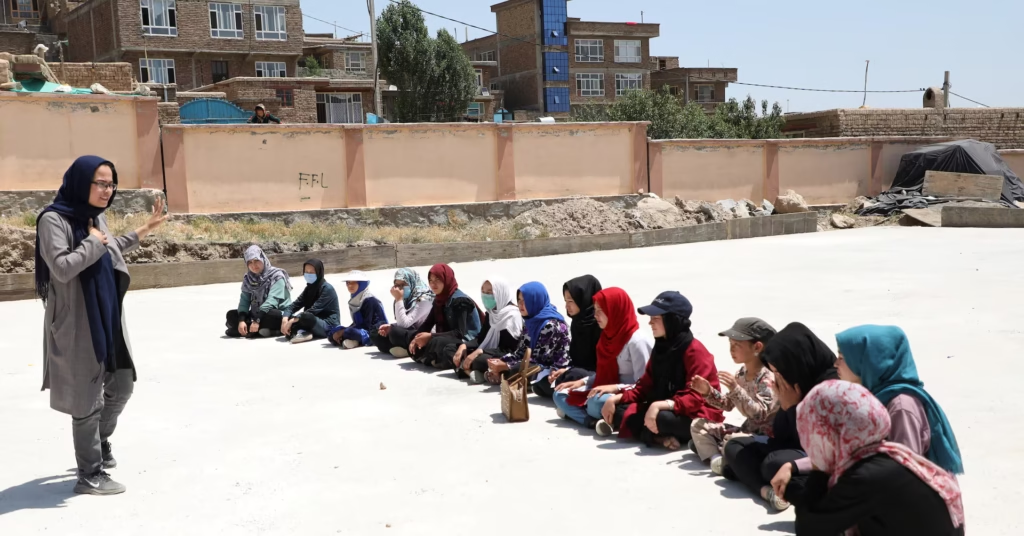
Afghanistan could lose more than 25,000 female teachers and health workers by 2030 if current restrictions on women’s education and employment continue, according to a new report by the UNICEF.
The warning comes as policies imposed since the Taliban’s return to power in 2021 continue to limit girls’ education to primary levels and bar women from most public-sector jobs.
These measures have already affected at least one million girls, a number projected to double by the end of the decade if no changes are made.
According to the report, titled The Cost of Inaction on Girls’ Education and Women’s Labour Force Participation in Afghanistan, the country could see a loss of up to 20,000 female teachers and 5,400 female health workers by 2030; roughly a quarter of the female workforce recorded in 2021.
Afghanistan risks losing more than 25,000 women teachers and health workers by 2030 if restrictions on girls’ education and women’s employment continue, warns @UNICEF.
More than one million girls have already been denied their right to learn.https://t.co/Nqkt63xXDW
— UN News (@UN_News_Centre) April 28, 2026
The number of lost health workers alone could rise to 9,600 by 2035. The implications extend beyond employment figures.
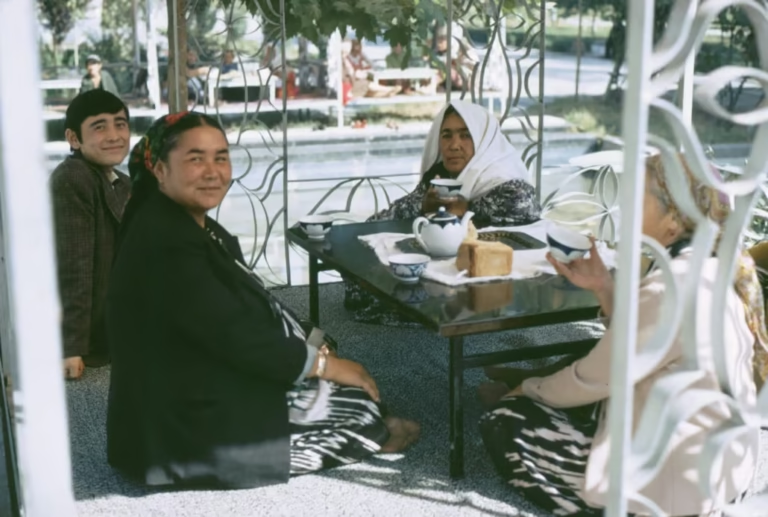
Female professionals are considered vital in Afghanistan’s education and healthcare systems, particularly in a society where cultural norms often require women to be treated by female medical staff and taught by female teachers.
A decline in these roles could therefore restrict access to schooling for girls and healthcare for women, exacerbating existing humanitarian challenges.
“This will be the reality if girls continue to be excluded from education,” UNICEF Executive Director Catherine Russell said, warning that the country “cannot afford to lose future teachers, nurses, doctors, midwives, and social workers.”
The economic impact could also be significant. UNICEF estimates that the loss of female participation in these sectors could cost Afghanistan around 5.3 billion Afghanis (approximately $84 million) annually; equivalent to about 0.5% of the country’s GDP.
The report urges Afghanistan’s de facto authorities to reverse restrictions, invest in skills training, and allow women to participate fully in the workforce.
Without such measures, the country risks long-term damage to both its economy and its already fragile health and education systems.