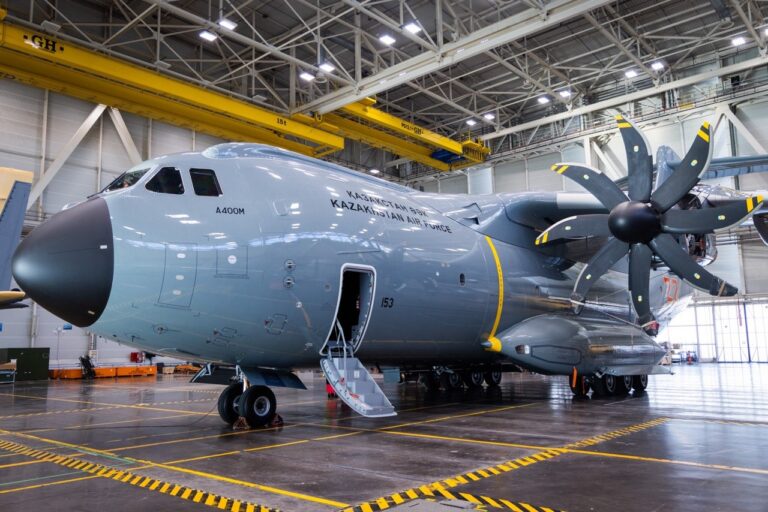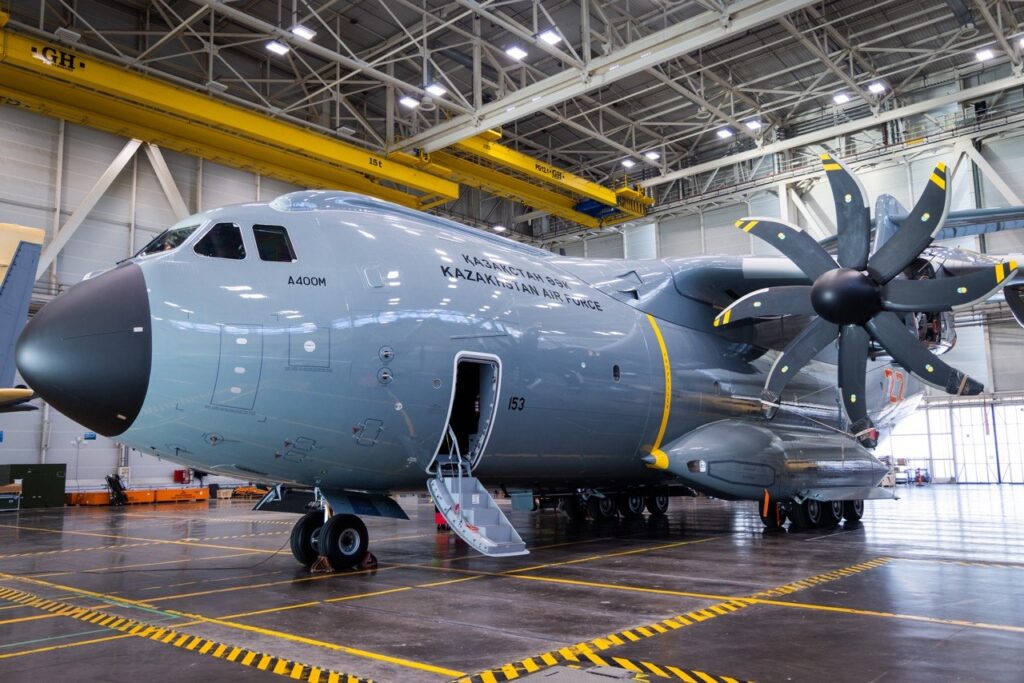
Kazakhstan is preparing to receive its second Airbus A400M military transport aircraft, bringing one of the country’s most significant military aviation modernization projects closer to completion.
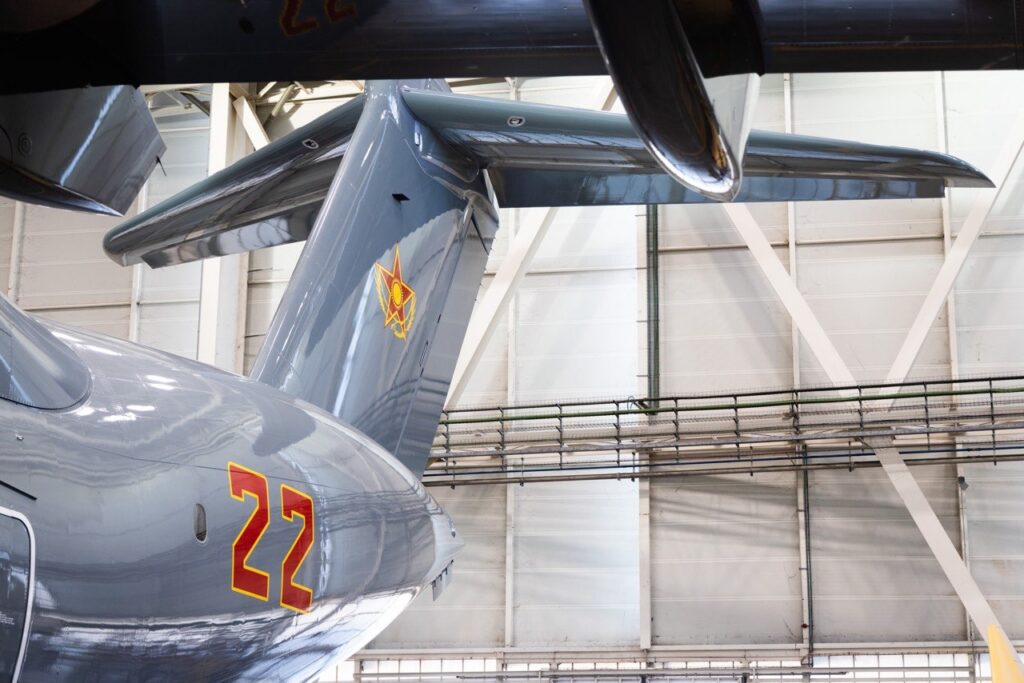
The aircraft has already been painted in the colors and markings of the Kazakh Armed Forces and is undergoing final acceptance procedures before delivery. Once the second aircraft enters service, Kazakhstan will operate two A400Ms under the contract signed with Airbus Defense and Space in 2021.
The first aircraft was delivered in December 2024. The importance of the program, however, extends beyond the acquisition of two new transport aircraft. Kazakhstan became the first country in Central Asia to operate the A400M and remains the only operator of the type in the region.
For the largest country in Central Asia by territory, this gives the armed forces access to an airlift capability previously unavailable in the region. Kazakhstan’s cooperation with Airbus in military aviation began well before the arrival of the A400M.
The country received its first Airbus C295 transport aircraft in 2013. Over the following years, Kazakhstan expanded its C295 fleet, giving pilots, technicians and military aviation personnel more than a decade of experience operating Airbus-built transport aircraft.
The A400M, however, represents a different class of capability. While the C295 is primarily designed for tactical transport missions, the A400M combines tactical flexibility with the range and payload required for strategic airlift.
The aircraft can carry up to approximately 37 tons of cargo, including military vehicles, artillery systems, helicopters, engineering equipment and other oversized loads.
It can also transport personnel, conduct airborne operations, support medical evacuation missions and deliver humanitarian assistance. This combination is particularly relevant for Kazakhstan.
The country stretches across a vast territory between the Caspian Sea and the Chinese border, with major military and logistical centers separated by thousands of kilometers. The ability to move personnel, equipment and supplies rapidly across such distances has clear operational value.
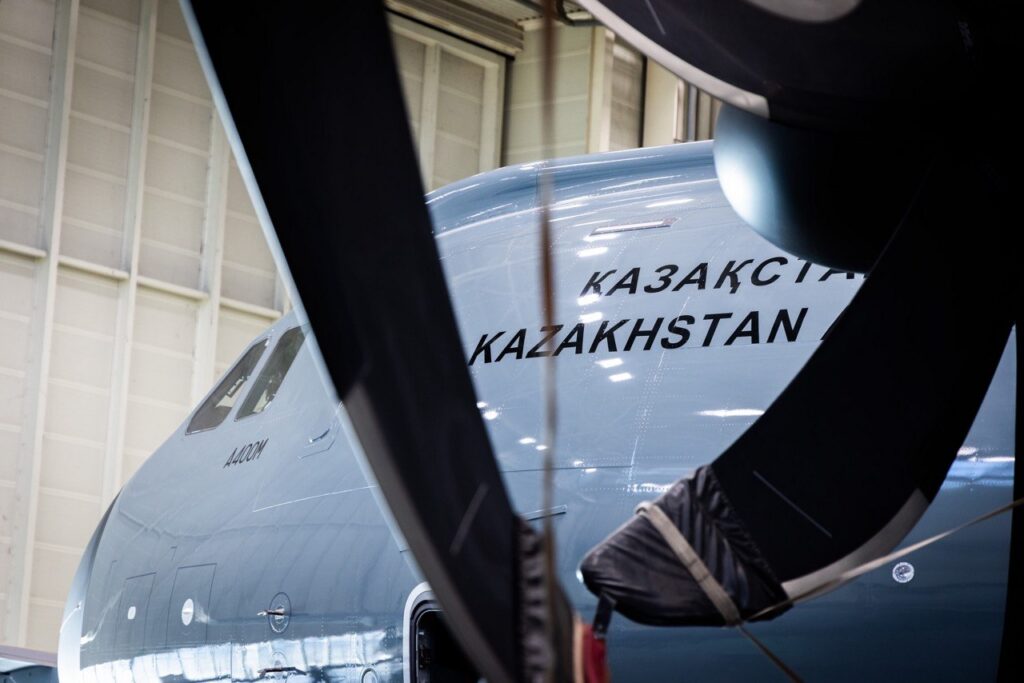
A Unique Capability in Central Asia
One of the A400M’s defining advantages is its ability to combine long-range transport with access to relatively austere airfields.
Unlike many large transport aircraft, the A400M was designed to operate from short and semi-prepared runways, allowing cargo to be delivered closer to areas where it is needed. This gives the aircraft a broader mission profile than that of a conventional strategic airlifter.
The A400M can support troop movements, equipment transfers, airborne operations, medical evacuation, disaster response and humanitarian missions. It is also capable of carrying cargo that would be too large or heavy for Kazakhstan’s lighter C295 aircraft.
In operational terms, this means Kazakhstan is not simply increasing the number of aircraft in its fleet. It is expanding the range of missions its military transport aviation can perform. The regional dimension of the program is particularly significant. No other Central Asian state currently operates the Airbus A400M.
Read More: Kazakhstan Holds Central Asia’s Largest Military Exercise of the Year
Kazakhstan therefore occupies a unique position within the region, possessing an aircraft that can perform both tactical and long-range heavy transport missions.
This does not mean that a fleet of two aircraft places Kazakhstan among the world’s largest military airlift operators. European countries such as Germany, France and the United Kingdom operate much larger A400M fleets. The significance for Kazakhstan is qualitative rather than quantitative.
The A400M gives the country access to a category of air mobility that was previously limited in Central Asia: the ability to move large and heavy cargo over significant distances while retaining the option to operate from less developed airfields.
For regional militaries that still rely heavily on Soviet-designed transport aircraft, Kazakhstan’s choice is also notable from a procurement perspective.
Building an Operational Capability
Kazakhstan inherited a significant amount of Soviet military equipment after the collapse of the Soviet Union. Like other countries in Central Asia, it has continued to operate a mixture of Soviet- and Russian-designed aircraft while gradually introducing newer platforms from other suppliers.
The acquisition of the A400M is part of that broader diversification. Rather than replacing every Soviet-era platform with a Western equivalent, Kazakhstan appears to be building a mixed fleet in which different aircraft serve different operational roles.
The C295 provides a lighter tactical transport capability, while the A400M adds the ability to carry heavier and larger cargo over much greater distances.
This approach allows Kazakhstan to diversify its military aviation partnerships while reducing reliance on a single supplier or technological ecosystem.
For Airbus, Kazakhstan is also an important customer because the country represents the A400M’s first entry into the Central Asian market.
Acquiring an aircraft such as the A400M involves much more than simply delivering the airframe. Kazakh pilots and technical personnel have undergone training with Airbus, including preparation in Spain and subsequent training flights in Kazakhstan.
Read More: Kazakhstan’s Parliament Approves Military Technical Cooperation with Serbia
The introduction of the first A400M therefore marked the beginning of a longer process involving pilot qualification, maintenance procedures, ground support, logistics and mission planning.
The second aircraft is important in this respect. Operating only one heavy transport aircraft creates obvious limitations. Scheduled maintenance, technical inspections or training requirements can temporarily remove the aircraft from operational availability.
A two-aircraft fleet does not eliminate these limitations, but it provides greater flexibility. One aircraft can potentially be used for training or maintenance while the other remains available for transport missions. For a small fleet, that difference can be operationally significant.
The A400M also has potential value outside conventional military operations. Kazakhstan regularly faces natural disasters and extreme weather conditions across its large territory, including floods, wildfires and severe winter emergencies.
Large transport aircraft can play an important role in such situations by moving rescue personnel, vehicles, medical equipment and humanitarian supplies quickly between regions. Kazakhstan has also participated in international peacekeeping and humanitarian operations.
A long-range transport capability gives the country greater independence when deploying personnel or equipment abroad, reducing reliance on chartered aircraft or foreign transport support. This could become increasingly relevant if Kazakhstan expands its participation in international missions.
A Shift in Central Asian Defense Modernization
Kazakhstan’s A400M acquisition reflects a broader trend in Central Asia. Countries across the region are gradually modernizing their armed forces, purchasing new aircraft, drones, air defense systems and armored vehicles from a wider range of suppliers.
China, Turkey, South Korea and European manufacturers are becoming more visible in a defense market that was once dominated almost entirely by Soviet and Russian equipment. Kazakhstan’s decision to purchase the A400M fits into this wider diversification.
It demonstrates that Central Asian defense modernization is increasingly about more than replacing aging platforms. It is also about acquiring capabilities that did not previously exist in national inventories. In Kazakhstan’s case, heavy long-range airlift is one of those capabilities.
The arrival of the second A400M will complete Kazakhstan’s original two-aircraft order, but its significance goes beyond the completion of a contract.
Read More: Tokayev Unveils New Reform Agenda as Kazakhstan’s First Kurultai Opens
Together, the two aircraft will give Kazakhstan a small but modern heavy airlift fleet capable of transporting personnel, oversized equipment and humanitarian cargo over long distances.
The fleet will remain modest by global standards. Yet within Central Asia, it represents a capability that no neighboring state currently possesses in the same form.
For that reason, Kazakhstan’s A400M program is worth watching not simply as another aircraft acquisition, but as an example of how military aviation in Central Asia is gradually changing.
The region is moving away from complete dependence on its Soviet-era inheritance and toward more diversified fleets, suppliers and operational concepts. Kazakhstan’s second A400M is one of the clearest examples of that transition.