For years, Egypt’s investment pitch sounded like a travel brochure: a huge consumer market, a strategic location, a young workforce. All true, and all available in dozens of other emerging economies. That is why the government’s decision to build a foreign direct investment (FDI) strategy around 16 priority sectors deserves attention.
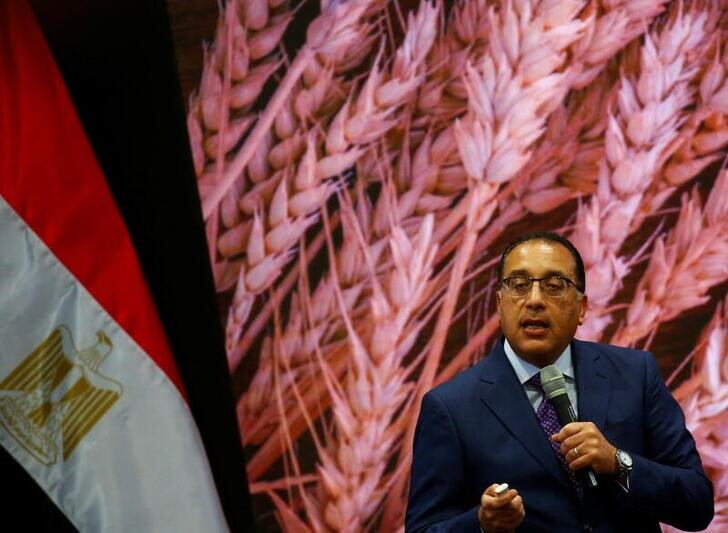
According to Investment Minister Mohamed Farid, the plan, developed with the World Bank, marks a shift from general promotion to direct investor targeting. It is a sensible idea. Whether it works depends on execution, not announcements.
The logic of the shift is simple. Global investors do not choose countries in the abstract; they choose them for a specific plant, a specific supply chain, a specific margin. A garment maker looking for a nearshoring base for Europe has different needs from a pharmaceutical firm or a solar equipment manufacturer. A strategy that speaks to each of them in their own language is more persuasive than a generic road show.
Egypt appears to understand this. The ministry says its updated investment map lists roughly 1,330 opportunities across sectors and governorates. Reporting based on the ministry’s own material suggests the targeted sectors will include textiles and garments, food, automotive manufacturing, electronics assembly, pharmaceuticals, machinery, chemicals and green energy.
These are industries where Egypt can plausibly compete on proximity to European and African markets, not just on low costs.
Egypt has a credible story to tell. Farid says the country attracted $15.5 billion in FDI in the last calendar year, keeping its position as Africa’s top destination for the fourth year running. He also cited GDP growth of 5.1 percent, up from 4.4 percent, with a government target of 5.5 to 6 percent.
But the data needs honest reading. Egypt drew about $47 billion in FDI in 2024, a leap that moved it to ninth place worldwide. That figure was lifted by a small number of very large deals, mostly in land and real estate. The $15.5 billion that followed is not a collapse; it is a reminder that headline FDI is lumpy.
One mega-deal can flatter a year’s statistics without creating a single factory job. A sector-targeted strategy is, in effect, an admission that the quality of investment matters more than the size of any single year’s total.
Why Targeting Makes Sense for Egypt
Egypt’s needs are specific. The Labor Minister has said the strategy must align with a national employment plan aiming at about 1.4 million new jobs a year through 2030. The Industry Minister wants it to support a goal of $100 billion in industrial exports by 2030. Neither target can be met by luxury property or one-off asset sales. They need factories, suppliers, trained workers and export contracts.
There is also an encouraging detail in the government’s plan to restructure the role of the Sovereign Fund of Egypt. The fund and its sub-entities may take minority stakes of 10 to 20 percent in priority projects, without replacing private management. Used well, that is a risk-sharing tool that gives hesitant investors a state-backed partner. It also signals that Cairo is willing to put its own capital behind its priorities.
Three risks stand out. First, focus. Sixteen sectors is a long list for a country that must prioritize. Earlier World Bank work reportedly considered 13 sectors, and an official account in August spoke of twelve. A list that keeps changing suggests that the hard choices are still being negotiated. If every sector is a priority, none is.
Second, coordination. At a June meeting on the strategy, Finance Minister Ahmed Kouchouk called for stronger coordination among government bodies and better economic data. He is right. Investors judge a country by how its agencies behave on the ground: licensing, customs, land allocation, tax treatment. A beautiful strategy document cannot compensate for a permit that takes months.
Third, the private sector’s role. Minority state stakes can attract investors, but they can also crowd them out if the state becomes the default partner for every project. The government has said it wants to expand private-sector participation. The test will be whether the sovereign fund steps back as projects mature, and whether domestic firms get a fair share of the opportunities.
Read More: Egypt Seeks Closer ASEAN Ties Amid Regional Tensions, Sudan Conflict
Success will not be measured by the day the strategy is launched. It will be measured two or three years later, in a handful of concrete outcomes.
Are foreign manufacturers reinvesting profits instead of repatriating them? Farid has said that helping existing investors reinvest and expand is a fundamental priority, and he is correct: today’s investors are the best sales force for tomorrow’s.
Are local suppliers being drawn into global value chains? Is the share of manufacturing and export-oriented projects in total FDI rising? And are the jobs real and spread beyond the Cairo region?
Egypt should also publish clear, regular figures on these results. Transparency is itself an investment incentive. Investors trust governments that measure themselves honestly.
Egypt’s move from advertising to targeting is overdue and, in principle, correct. The macro picture is improving, the investment map is detailed, and the World Bank partnership adds technical credibility. What remains is the unglamorous work: narrowing priorities where needed, fixing the daily frictions investors face, and keeping the state’s role as catalyst rather than gatekeeper.
If Cairo does that, 16 sectors could become the foundation of a more productive, export-driven economy. If it does not, it will be one more strategy on a very long shelf.
*The views presented in this article are the authors’ own and do not necessarily reflect the views of The Diplomatic Insight.*

Waqas Abdullah
Waqas Abdullah is a geopolitical analyst and anthropologist whose areas of expertise are Middle Eastern and Indo-Pacific politics. A Türkiye Bursları Scholar, he is pursuing a Master’s in International Relations at Selçuk University Konya. His work focuses on climate refugees, human security, and regional cooperation.