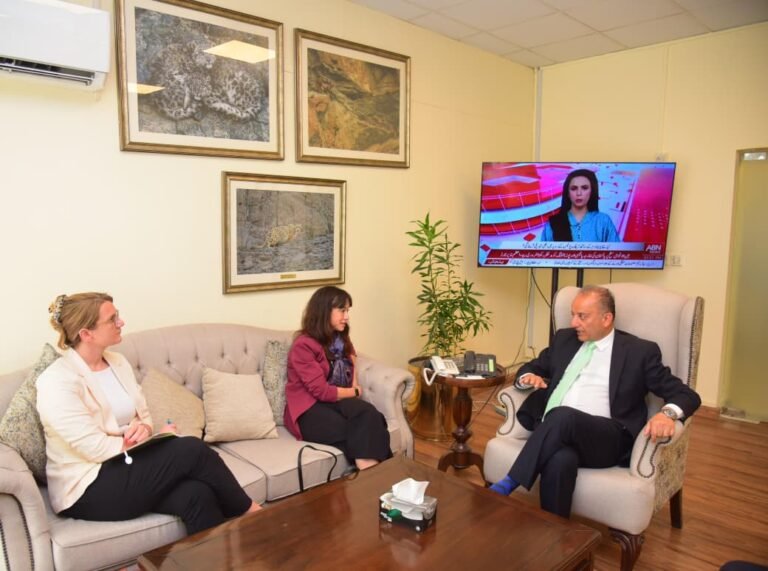
Islamabad (TDI): Fuad Pashayev, UNESCO Representative to Pakistan, praised the country’s active engagement in UNESCO’s science programs.
He reiterated UNESCO’s support for initiatives that strengthen the role of science in peace and development. “Building trust in science is essential not only to counter misinformation but also to ensure equitable access to knowledge and reinforce public confidence,” he said.
Pakistani youth and leading scientific minds converged in the Pakistan Museum of Natural History to celebrate World Science Day for Peace and Development, focusing on the future-critical theme: “Trust, Transformation, and Tomorrow: The Science We Need for 2050.”
The event was jointly organized by UNESCO Pakistan, Pakistan Science Foundation (PSF), Economic Cooperation Organization Science Foundation (ECOSF), Pakistan Academy of Sciences, demonstrating a unified national commitment to scientific literacy.
The day’s proceedings reinforced the urgent need for a knowledge-based economy, particularly as the celebration aligns with the International Decade of Sciences for Sustainable Development (2024–2033).
Shahid Iqbal Baloch, Federal Secretary, Ministry of Science and Technology (MoST), commended PSF, PAS, and ECOSF for successfully organizing the event and for their continued efforts in promoting research and innovation in Pakistan.
Read More: Pakistan Partners With UNESCO to Protect Underwater Archaeology
He reaffirmed the government’s commitment to strengthening the national science and technology ecosystem, fostering public trust in science, and aligning national priorities with the SDGs.
Dr. Muhammad Akmal, Chairman, Pakistan Science Foundation, who thanked the distinguished guests, partner organizations, and participants. He emphasized that PSF is fully committed to advancing science, research, and innovation in the country.
“World Science Day reminds us of our shared responsibility to use science with trust, inclusivity, and for the well-being of humanity,” Dr. Akmal said.
Dr. Aslam Baig, Secretary General, Pakistan Academy of Sciences, highlighted the importance of integrity, transparency, and effective communication in building trust in science.
He reaffirmed PAS’s commitment to promoting evidence-based policymaking and maintaining high scientific standards in Pakistan.
Read More: Who is Representing Pakistan at COP 30 and What to Expect
The speakers highlighted the urgent need for increased R&D investment, evidence-based policymaking, and stronger public trust in science to build national resilience against complex challenges such as climate change, water scarcity and biodiversity loss.
They noted that global R&D spending now exceeds USD 1.7 trillion annually, with Asia contributing 44%, yet low-income countries account for only 0.3% of global investment.
Pakistan itself invests only 0.16% of GDP in R&D compared to the 1.7% global average, despite having one of the world’s youngest populations, with over 64% under the age of 30, and being among the world’s top 10 most climate-vulnerable countries.
Strengthening scientific literacy, empowering youth, and increasing investment in science and technology were identified as critical drivers for Pakistan’s transformation and sustainable development toward 2050.
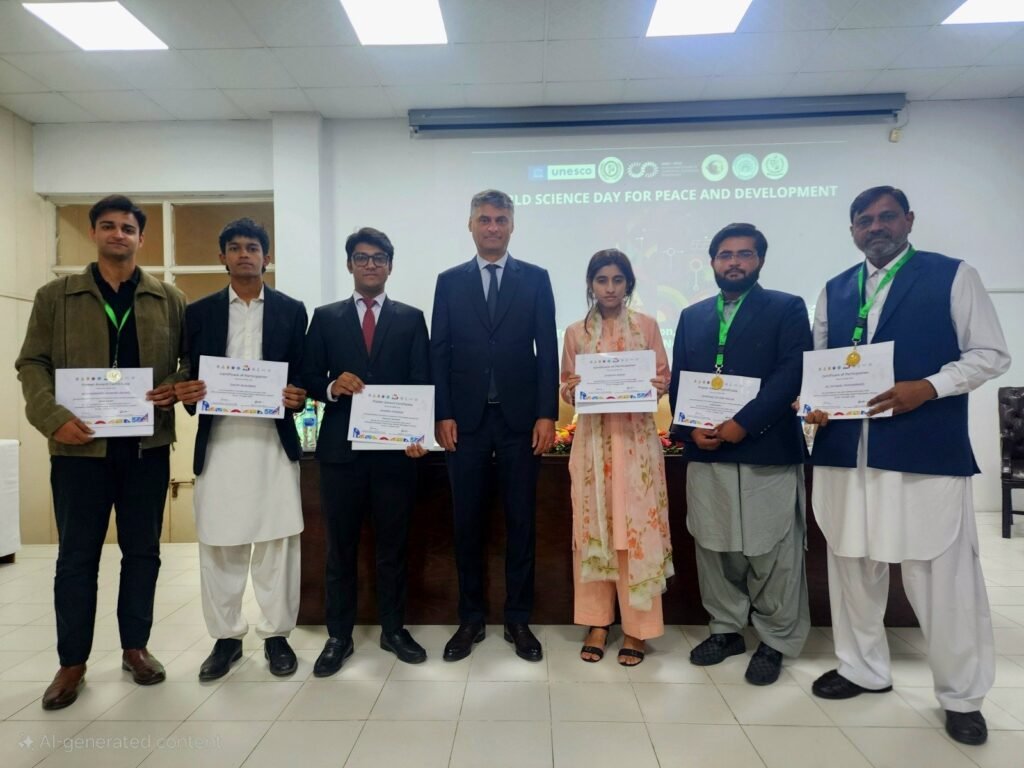
The event concluded with the prize distribution for the Pakistan Team members who secured 3 medals in the Asian Science Camp 2025 at the regional event in Thailand and a tour of the exhibits by students.

Established in December 2008, The Diplomatic Insight is Pakistan’s premier diplomacy and foreign affairs magazine, available in both digital and print formats.