Russia’s invasion of Ukraine has altered strategic thinking far beyond Eastern Europe. States across Eurasia are reassessing how to protect their sovereignty without being drawn into blocs, as they previously relied on the predictable great-power behavior. The most significant among those facing this dilemma is Kazakhstan, sharing a long border with Russia.
Since its independence, Kazakhstan has preserved its autonomy through delicately balancing relations with Russia , China, the West, and regional partners specifically through the doctrine of multi-vector-foreign policy. And this served Astana well. But the Russia-Ukraine war has introduced a new variable: uncertainty over durability of security arrangements.
The question for Kazakhstan is not whether to diversify its relations but how to do it without undermining its principles. One underexplored answer to this question lies in middle-power security cooperation, specifically expending ties with Pakistan.
Why Pakistan, and Why Now?
Seeking NATO-style guarantees is not viable both politically and geographically, and is rightly not being pursued by Kazakhstan. Instead, its priority is quiet strengthening of its deterrence, resilience, strategic autonomy and diplomatic leverage without formal alliances. This is where non-hegemonic and non regional partners can play a significant role.
A country profile with non-hegemonic designs, geographically distant, militarily professional, expert in defense diplomacy and nuclear armed would be ideal, and here Pakistan perfectly fits in. Pakistan’s security partnerships in the middle east, built on discretion, incrementalism, and mutually beneficial in nature offers distinction from that of great powers, necessitating formal alliances.
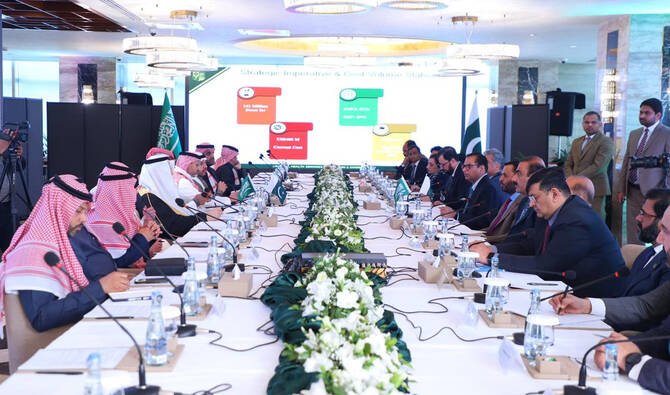
The most significant instructive precedent among them is Pakistan-Saudi partnership. Pakistan has contributed to Saudi’s security through advisory roles, trainings, and consultative mechanisms that have had not been symbolic only but have helped in stabilizing Saudi Arabia without demanding any guarantees. This process has preserved the strategic autonomy as well as flexibility for the latter.
Kazakhstan’s circumstances differs but the principle remains the same, i.e. security cooperation without alliance like dependence.
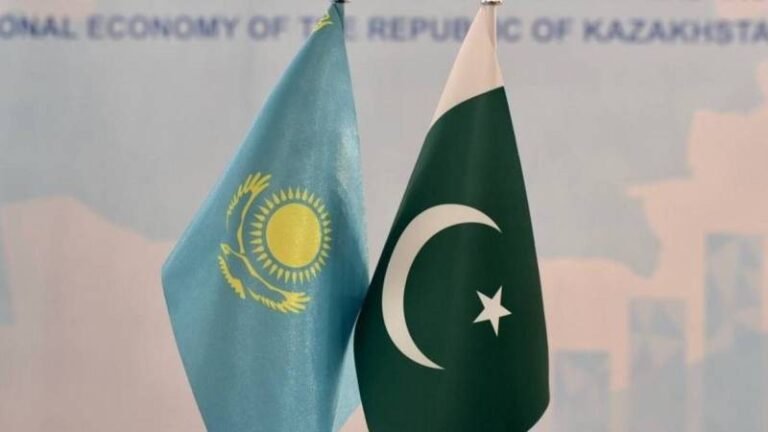
Read More: Pakistan, Kazakhstan Sign Joint Declaration Establishing Strategic Partnership
This timing is important, as Kazakhstan is navigating a more complex environment marked by strained Russia-West relations, increasing attention from China, and renewed interest of middle powers across Asia and middle East. Diversifying security relations in this environment will be deemed more a s expending menu options rather then replacing existing ties.
Pakistan fits ideally here because; first; it is geographically distant from Kazakhstan removing the escalation risk of immediate threat environment, Second; it is expert in maintaining strategic ambiguity, balancing relationship with major powers while maintaining independent decision-making, that also resembles Kazakhstan own multi-vectorism, and Third: Pakistan defense cooperation toolkit emphasize more on capacity building over power projection.
Therefore the potential areas for cooperation between the two are deliberately modest but meaningful, including regular strategic dialogue, military education and training exchange, peacekeeping coordination ,and limited defense-technical collaboration in non sensitive areas.
These steps won’t undermine Kazakhstan’s existing commitments on one hand while not provoking regional powers on the other, if framed transparently and incrementally. Importantly such cooperation would not be signaling alignment, but cooperation.
Managing Misperception
Expending defense partnerships might be deemed prone to external misinterpretations by critics and is a valid concern, but is manageable. And the skill and expertise are long being demonstrated by Kazakhstan through signaling balance rather than defiance.
This cooperation can be framed as complementary to expending regional cooperation frameworks, not competitive to them. More particularly Turkey’s growing engagements as middle power in Central Asia is now normally been seen as middle-power partnership, the norm that is common in Central Asia. Pakistan’s involvement would fit here as well.
Key here would be the designed institution, clear communication, emphasis on professional cooperation and incremental steps, all quietly done and prioritize over forward deployment would minimize the misinterpretations. Such strategic ambiguity will enhance stability rather than undermining it.
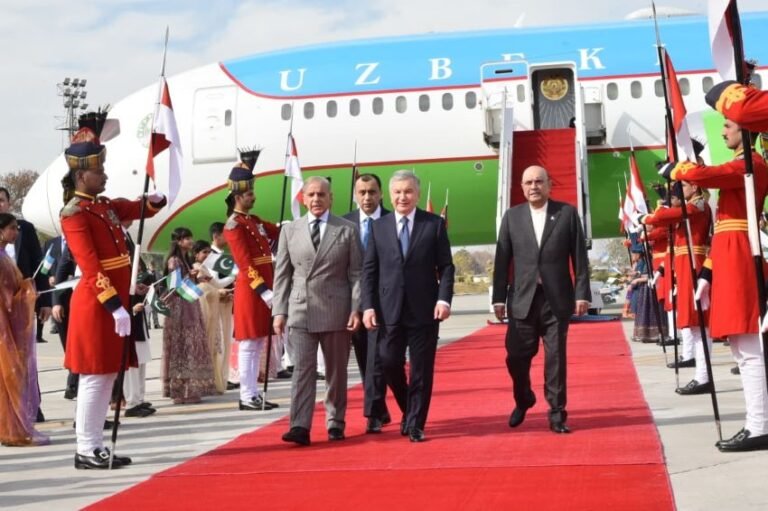
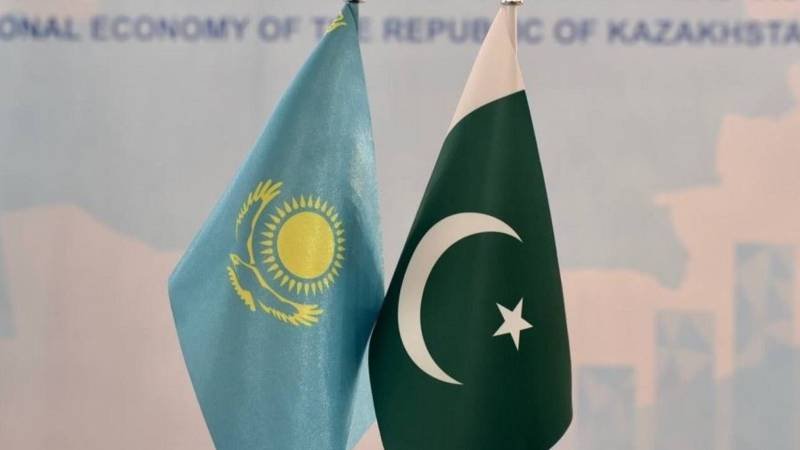
As Kazakhstan’s president just concluded a visit to Pakistan, and both countries unveiled what they call “strategic partnership,” there is an opportunity to move toward substantial outcome over extend symbolism. But again, this does not require dramatic announcement or seeping agreements brought together by both the parties slowly, with patience and discretion as well as with share understanding that security in todays Eurasia is not about guarantees but about availability of options.
This isn’t a departure from the multi-vector policy for Kazakhstan but its continuation in new conditions. Whereas for Pakistan it is going to be the projection of its image of responsible state on global level as well as a chance to help in regional stability.
In the environment after Ukraine invasion the most successful strategy for Eurasian nations is the least visible one. Quietly, and carefully constructed partnerships can provide assurances without escalations. Kazakhstan’s search for strategic autonomy and security require new partners, rather than alliances, and Pakistan deserves to be considered among them.
*The views presented in this article are the author’s own and do not necessarily reflect the views of The Diplomatic Insight.

Faraz Hayat
Faraz Hayat is a graduate student of International Relations. His interests lie in Eurasian security and middle power cooperation.