Washington (TDI): US Vice President JD Vance has said President Donald Trump will not allow the ongoing conflict with Iran to turn into a prolonged military commitment, rejecting calls for an extended US presence and reaffirming the administration’s pledge to avoid another “forever war.”
In an interview with Fox News on Monday, Vance said there was no disagreement between him and Trump over the direction of the conflict, stressing that the president intended to bring the war to an end rather than allow it to become a long-term engagement.
“My prediction is that whatever the president ultimately decides to do, there are going to be people who demand more, who want the war to go on indefinitely,” Vance said.
He added that he was confident Trump would not allow the conflict to become another prolonged overseas commitment.
“What I feel quite confident about the president of the United States, and again, there’s no daylight here, is that whatever he ultimately decides to do, however he ultimately decides to bring the conflict to a close, he is not going to let this become a forever war,” he said.
Read More: ECO Endorses Iran’s Peace Initiative, Commends Pakistan’s Mediation Efforts
Vance ruled out the prospect of a decade-long military engagement, saying the United States would not remain involved for 10 or 15 years, or even two years.
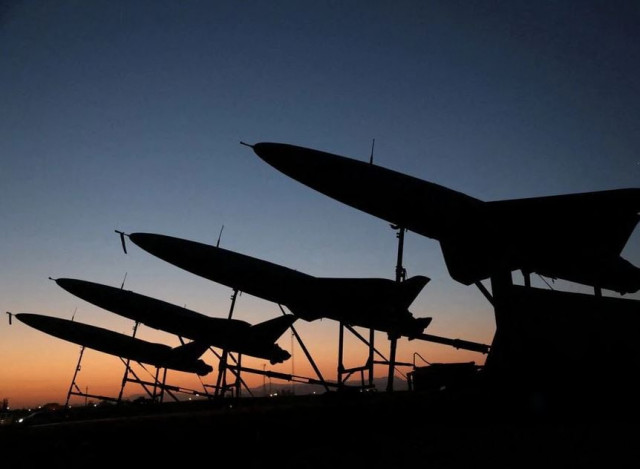
His remarks come as Washington and Tehran remain locked in a military confrontation, with debate intensifying over the conflict’s financial, political and military costs.
The vice president accused some foreign policy advocates of favouring an indefinite US military presence in the region, arguing that the administration had made a clear commitment to voters to avoid prolonged wars overseas.
“Despite the fact that a lot of neoconservatives and a lot of other people want us to stay there forever, we’re not going to stay there forever. We promised we wouldn’t,” he said.
Read More: Iran Claims Seizure of US Drone Amid Reports of Tanker Fires in Strait of Hormuz
Vance also expressed confidence that Trump would ultimately bring the conflict to a close with what he described as “great results” for the American people.
His comments appeared aimed at addressing concerns among sections of the US political establishment and the public about the possibility of another extended military campaign in the Middle East.
During the interview, Vance also addressed criticism of the administration’s handling of the conflict and its potential political consequences for Republicans following the 2026 midterm elections.
Asked whether he and Trump differed over the war, the vice president dismissed the suggestion, insisting there was no disagreement among senior administration officials over the president’s approach.
He acknowledged, however, that the conflict had carried political costs, particularly through higher gasoline and energy prices.
“Politically, yes, and I think the president himself has absolutely said this as well. There was a political cost: the higher gas prices, the higher energy prices,” Vance said.
He also defended himself against criticism surrounding a memorandum of understanding related to Iran, suggesting that some critics were targeting him as a way to attack the president. “I’m happy to be a heat shield for the president of the United States,” he said.
Vance’s remarks underscore the administration’s effort to reassure voters that the conflict will not develop into an open-ended military campaign, while acknowledging the domestic economic and political pressures associated with the war.