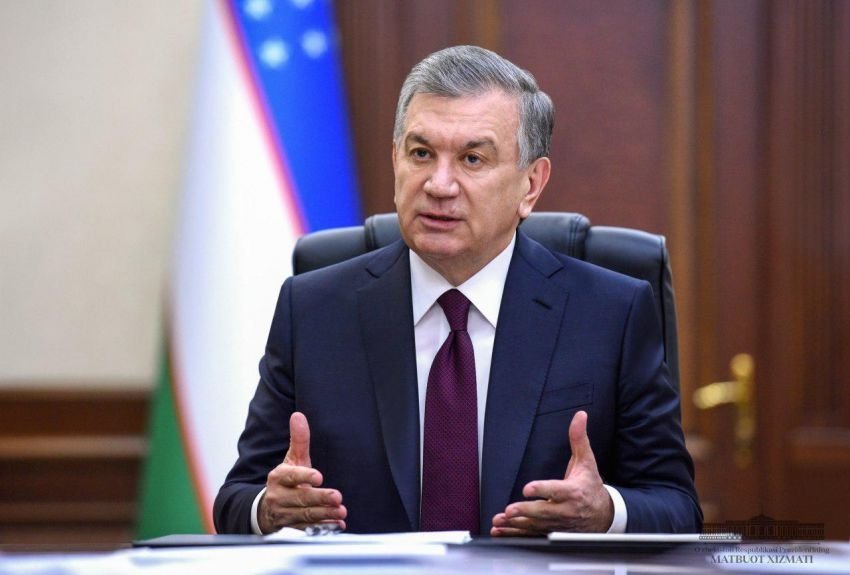
Tashkent (TDI): On August 5, the President of Uzbekistan, Shavkat Mirziyoyev, will take part in the Third United Nations Conference on Landlocked Developing Countries (LLDC3), which will be held in the Avaza tourist zone in Turkmenistan.
The Conference is being organized by the UN Secretariat in cooperation with the Government of Turkmenistan. The upcoming forum is expected to be attended by heads of state and government, over 100 high-level delegations, including representatives of 32 developing landlocked countries, as well as UN Secretary-General António Guterres.
The conference will feature political-diplomatic, trade-economic, and cultural-humanitarian events, including National Days of Central Asian countries, which will showcase their culture, arts, and national cuisine. An exhibition will also be held, highlighting national achievements, investment and infrastructure projects, and technological solutions of the region’s countries.
The Group of Landlocked Developing Countries (LLDCs) includes 32 UN member states. Among the CIS countries, its members are Armenia, Azerbaijan, Kazakhstan, Kyrgyzstan, Moldova, Tajikistan, Turkmenistan, and Uzbekistan.
The group’s key objectives are to promote the collective economic interests of its members, effectively implement globally agreed goals and action plans, and consolidate their joint position on major international economic issues within the United Nations, the World Trade Organization, and other multilateral forums.
Read More: Pakistan, Afghanistan, Uzbekistan Sign Landmark Railway Deal to Boost Regional Trade
About UN LLDC Framework
The United Nations Conference on Landlocked Developing Countries serves as the primary decision-making platform for LLDC-related issues and is held once every ten years.
The first conference was convened on 28-29 August 2003 in Almaty (Kazakhstan), in accordance with UN General Assembly Resolution 57/242. It was preceded by two sessions of the open-ended intergovernmental preparatory committee.
As a result, the Almaty Program of Action (APA) was adopted, providing a global framework for establishing efficient transit transport systems, improving administrative procedures, and streamlining border controls.
The second LLDC conference took place on 3-5 November 2014 in Vienna (Austria). Its main outcome was the Vienna Program of Action for 2014-2024, aimed at addressing the specific needs of landlocked developing countries, eliminating poverty, and implementing other development-related measures.
Read More: Uzbekistan Showcases Digital Achievements, Urges Global Cooperation
How Uzbekistan Navigates Its Landlocked Reality
Uzbekistan actively participates in international efforts under these frameworks, which are aimed at tackling the unique challenges faced by LLDCs. In particular, the country has been consistently implementing measures to develop a sustainable transport and logistics infrastructure, diversify trade routes, and strengthen regional cooperation.
In 2022, the UN General Assembly unanimously adopted a special resolution on strengthening connectivity between Central and South Asia, initiated by Uzbekistan and co-sponsored by 40 countries.
In recent years, Uzbekistan has become both the initiator and active participant in major international projects such as the Trans-Afghan Railway Corridor, the development of the Middle Corridor, and initiatives under the Belt and Road Initiative (BRI), as well as China–Central Asia cooperation platforms.
These efforts are complemented by the modernization of domestic infrastructure – the construction and electrification of railways, and the establishment of modern logistics hubs and terminals. At the same time, Uzbekistan is actively promoting its agenda within the Organization of Turkic States, the Economic Cooperation Organization, the Shanghai Cooperation Organization, and other regional formats.
This multi-vector approach is already producing results: transit volumes through Uzbekistan are growing, and the country’s role as a transport hub in Eurasia is expanding. Most importantly, Uzbekistan is enhancing its resilience to external risks and paving the way for full integration into the global economy despite its geographical constraints.
Thus, Uzbekistan’s double landlocked status is no longer seen as a challenge. Today, it is regarded as a strategic factor shaping the country’s international priorities and transforming it into an active player in the emerging Eurasian logistics landscape.

Established in December 2008, The Diplomatic Insight is Pakistan’s premier diplomacy and foreign affairs magazine, available in both digital and print formats.