Washington (TDI): The United States has temporarily lifted certain sanctions on Russian oil shipments already at sea, allowing countries to purchase the cargoes, to stabilize global energy markets shaken by conflict in the Middle East and soaring fuel prices.
The decision, announced by the US Treasury Department, grants a 30-day waiver permitting transactions involving Russian oil that has already been loaded onto tankers before the announcement.
The policy is intended to prevent supply disruptions as escalating tensions around Iran and the Strait of Hormuz threaten global energy flows.
US officials say the waiver applies only to oil that is already in transit and is not meant to represent a broader rollback of sanctions imposed on Moscow following its 2022 invasion of Ukraine.
Treasury Secretary Scott Bessent described the step as a “narrowly tailored” measure designed to stabilize markets without giving any undue advantage to Russian government revenues.
This relief comes as the military conflict involving Iran, Israel and the US is about to reach a fortnight, and while tanker traffic through the Strait of Hormuz remains suspended.
Read More: World Faces Historic Oil Supply Disruption Amid Iran War: IEA
As a result, benchmark Brent crude prices climbed above $100 per barrel, raising concerns and anxiety about inflation and rising fuel costs worldwide.
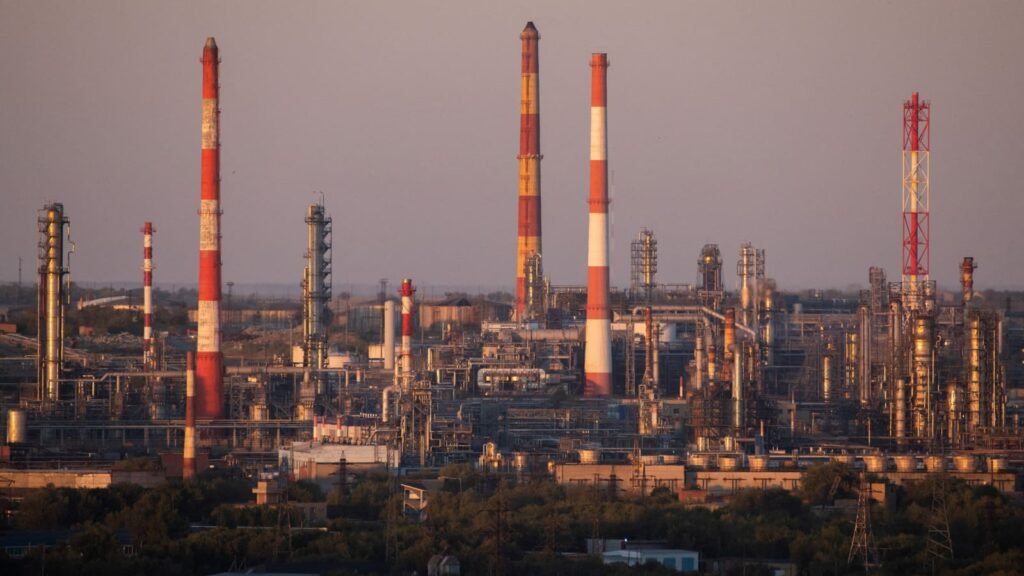
Estimates suggest that about 120 million barrels of Russian oil are currently stranded on tankers due to sanctions and logistical complications, which makes roughly five to six days of global supply.
Allowing these cargoes to reach buyers will help relieve short-term shortages while governments search for longer-term solutions to the market disruption.
Alongside the sanctions relief, the United States and its partners have also turned to emergency measures such as releasing oil from strategic reserves and coordinating international stockpile releases through the International Energy Agency (IEA).
The IEA, a group of 32 countries, has announced it will release 400 million barrels from its strategic reserves, which are more than 1.2 billion barrels, kept and stored for emergency situations.
The waiver on Russian oil is expected to remain in effect until mid-April, after which US officials will reassess market conditions and decide whether to reinstate the restrictions fully or extend the temporary authorization.