United Nations (TDI): This year’s observance of the International Day to Combat Islamophobia has drawn heightened global attention, with the United Nations and member states voicing concern over a noticeable rise in anti-Muslim hatred and discrimination.
Pakistan, which led efforts to establish the day through a 2022 resolution at the United Nations General Assembly, said that Islamophobia is becoming increasingly widespread, driven by political narratives, online platforms, and segments of mainstream discourse.
Observed annually on March 15, the day also serves to remember the victims of the Christchurch mosque shootings, where 51 people lost their lives in an attack on worshippers.
Officials and analysts say ongoing geopolitical tensions, particularly conflicts in the Middle East, have contributed to a renewed surge in Islamophobic rhetoric. Reports point to a rise in online hate speech and dehumanising language targeting Muslim communities, creating a broader atmosphere of intolerance.
Read More: Pakistan, Netherlands Pledge Joint Action Against Islamophobia
At a high-level event at UN headquarters, Secretary-General António Guterres called on countries to work together to counter what he described as a growing wave of anti-Muslim prejudice. He warned that even subtle forms of bias can have deep consequences, shaping social attitudes and weakening trust within societies.
“These trends are not abstract,” he noted, pointing to incidents of harassment, threats, vandalism, and attacks on places of worship as real-world consequences of rising intolerance.
Meanwhile, President of the General Assembly Annalena Baerbock highlighted the role of modern technology in amplifying the issue. She said digital platforms, while designed to connect people, are increasingly being used to spread misinformation and prejudice at an unprecedented scale.
Representatives from the Organisation of Islamic Cooperation echoed similar concerns, describing Islamophobia as having reached alarming levels globally. They stressed that the problem is being normalised in political rhetoric and further intensified by emerging technologies, including artificial intelligence.
Saudi Arabia’s UN envoy Abdulaziz Alwasil called for stronger legal protections and coordinated international efforts to combat discrimination. Türkiye, which co-hosted one of the events, urged a unified global stance against intolerance and violence targeting Muslims.
Read More: Altaf Hussain Wani Urges UN’s Action Against Rising Islamophobia in India
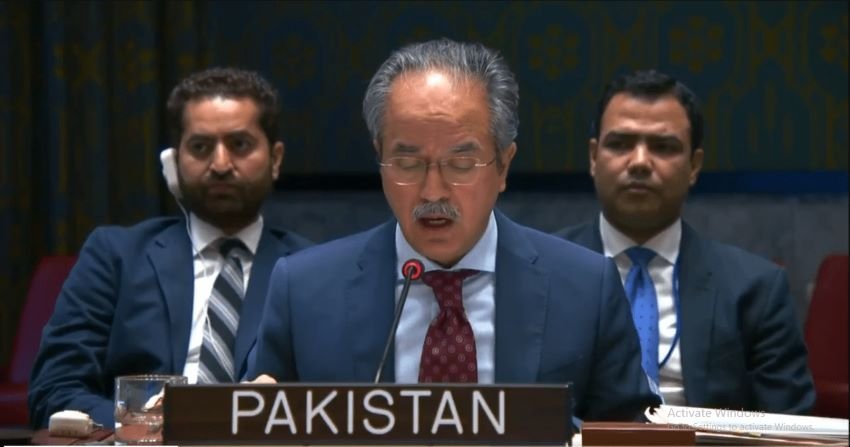
Pakistan’s Permanent Representative, Asim Iftikhar Ahmad, said Islamophobia has evolved beyond simple prejudice, describing it as a systematic form of discrimination affecting nearly two billion people worldwide. He pointed out that such attitudes often lead to real-world consequences, including unequal access to jobs, education, and fair treatment in law enforcement.
He urged the international community to move from statements to concrete action, including the development of a comprehensive global strategy to address the issue.