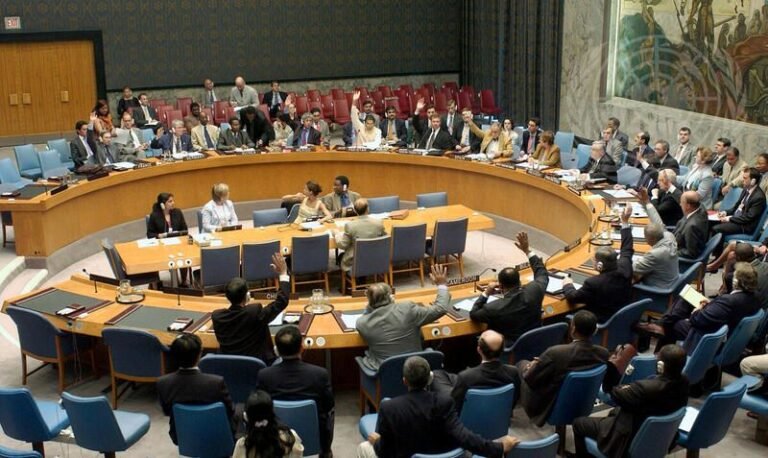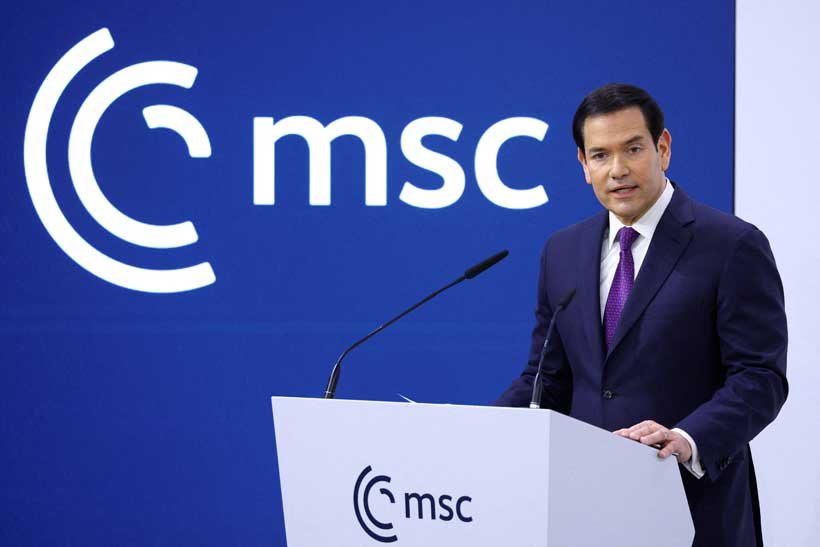
From 13-15 February, the 62nd Munich Security Conference was held in Munich, Germany. The conference invited presidents, prime ministers, foreign ministers, defense officials, and specialists from 50 countries. The leaders’ speeches and talks indicate the possibilities of changes in international security, military relations, economic sanctions, and the coordination of strategies. Furthermore, it is a diplomatic back-channel platform.
The informal sideline sessions shed light on pertinent threats and challenges, such as de-escalation and agreement on contentious matters.
The security conference highlighted a broad strategic imbalance of the transatlantic alliance. For decades, Europe has been reliant on the US military strength. Conversely, as the strategic dynamics shifted, the superpower under the Trump administration lacked the political will to bear the security burden of Europe without more reciprocity. It is leading towards structural renegotiation in the Euro-Atlantic relationship.
During the decades following the Cold War, the Euro-Atlantic security structure was based on assumptions of US military preeminence, the economic power of Europe, and shared democratic values within NATO. It seems to be a high-cost adaptation to a changing world order. The Russian-Ukrainian war, US strategic repositioning, and Europe’s need to stand on its own feet are changing the dynamics of the global chessboard.
The 2026 security conference explores a new hard strategic reality. The joint strategic guarantees between the US and Europe have evolved into strategic realism. The protracted conflict between Russia and Ukraine has exposed Europe’s dependence on the superpower’s intelligence, logistical capabilities, and advanced military infrastructure. Despite Europe’s commitment to rearmament, its military-industrial backbone remains fragmented.
Read More: Pakistan’s Strategic Importance Highlighted at Munich Security Conference
This fundamental defect has intensified the burden-sharing demands from Washington. Under Donald J. Trump, the United States has prioritized economic nationalism, the Western Hemisphere, Indo-Pacific strategic interests, and domestic defense. Secretary of State Marco Rubio reaffirmed his message on alliances via the principles of reciprocity and industrial competence, emphasizing the need for Europe to achieve self-sufficiency.
According to critics, this weakens the moral foundation of the shared beliefs and forges coalitions at the level of financial transactions. The situation is rather unfavourable, since the United States is singularly responsible for deterring both Russia and China, a task it cannot do without the credibility of European capabilities. At Munich Talks, this strategic imbalance was broached.
The European leaders were not opposed to the alliance, but strategic anxiety was obvious. Emmanuel Macron stressed the idea that “Europe is rearming, but we must now go beyond.” German Chancellor Friedrich Merz cautioned that “Big power politics is fast, harsh and unpredictable”. He emphasized that states must prioritize defense autonomy. He stressed that Europe cannot indefinitely outsource its security. “We should be in a position to protect ourselves not only technologically, economically, but also militarily.”
It not only reflects European frustration but also strategic realism. Europe has recognized its vulnerabilities. Europe is now more focused on nuclear assurance and strategic replacement. The only nuclear powers in Europe are France and the United Kingdom, but their arsenals are not as huge as those of Russia. Europe is navigating the path of strategic autonomy, but it still depends on the NATO framework.
The 2026 Munich conference was more of a psychological change rather than an institutional change. It marked a turning point. The real question is how recalibration will turn it into a balanced partnership? The tension between European sovereignty and the American-dominated security structures is growing, thus affecting the cohesion of the alliance.

Adeela Ahmed
Adeela Ahmed is a Research Fellow at the Centre for Security, Strategy Policy Research (CSSPR), University of Lahore, Pakistan. She can be reached at adeelaahmed6@gmail.com