
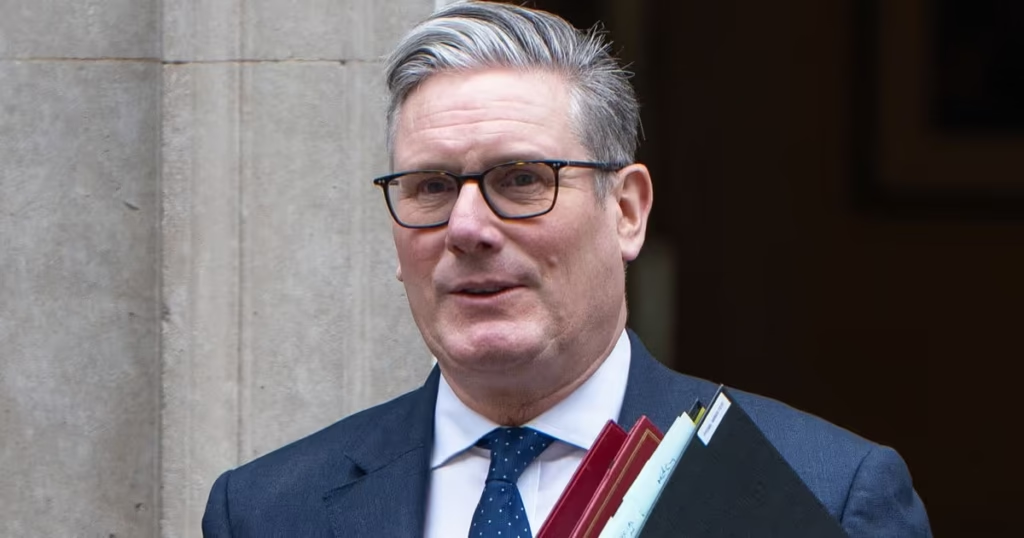
London (TDI): UK Prime Minister Keir Starmer announced his resignation on Monday, bringing an end to his leadership of the Labour Party and setting the stage for the United Kingdom’s seventh prime minister in a decade.
Speaking outside 10 Downing Street, Starmer said he would step down as Labour leader after accepting that members of his parliamentary party no longer believed he was best placed to lead them into the next general election.
“I have heard the answer of my parliamentary party to that question, and I accept that answer with good grace,” Starmer said.
Starmer confirmed that he had informed King Charles III of his decision and requested Labour’s National Executive Committee to begin a leadership contest on July 9, with the process expected to conclude before Parliament returns from its summer recess in September.
Starmer said he would remain prime minister until a new leader is elected to ensure an orderly transfer of power. “Every decision I have taken has been about putting the country I love first,” he said. “I will do everything I can to ensure an orderly handover of power.”
Read More: Political Crisis Mounts for UK’s Starmer After Health Secretary Exit
The resignation follows months of growing pressure within Labour amid falling public support, internal criticism and the rising popularity of the Reform UK party.
At the start of his address, Starmer reflected on Labour’s landslide election victory in 2024, describing it as the proudest moment of his political career and crediting his leadership with rebuilding a party he inherited in a weakened state.
He highlighted what he described as key achievements of his government, including stronger economic growth, rising wages, reduced NHS waiting lists, increased defense spending, expanded workers’ rights, tougher action on illegal migration and measures aimed at reducing child poverty.
Starmer also argued that his government had restored Britain’s international standing and delivered meaningful change after 14 years of Conservative rule. Despite defending his record, he acknowledged that Labour lawmakers had increasingly questioned his ability to secure another electoral victory.
The prime minister pledged his “full and unequivocal support” to whoever succeeds him and expressed confidence that the next Labour leader would inherit a stronger and fairer country.
His departure comes as veteran politician Andy Burnham emerges as the frontrunner to replace him. Burnham recently returned to Parliament after winning a key by-election, boosting calls within Labour for a change in leadership ahead of the next general election.
Read More: UK’s Starmer Rejects Resignation Calls Amid Growing Political Pressure
While Burnham is viewed by many party members as a strong communicator capable of reviving Labour’s fortunes, analysts note that he has yet to fully outline his positions on major issues including foreign policy, defence and economic management.
Starmer concluded his remarks by thanking colleagues, supporters and his family, saying he looked forward to spending more time with his wife and children after leaving office.
“When I leave the biggest job in the country, I shall spend more time on the most important job, being the best husband and father I can be,” he said.