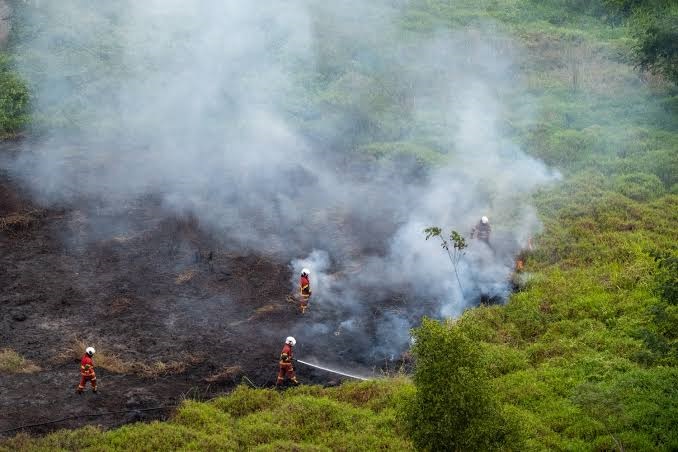
Southeast Asia is being squeezed from two directions at once; a strengthening El Nino weather pattern is bringing hotter conditions across the region, threatening crops and food security.
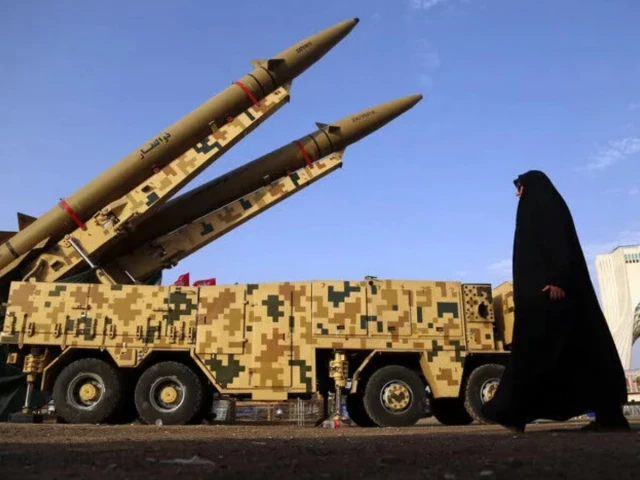
At the same time, the US-Iran war and controlled traffic through the Strait of Hormuz has driven energy costs to climb up, hitting the poorest communities hardest and pushing millions of ordinary families to make desperate choices.
El Nino is a natural climate phenomenon that occurs when the surface temperature of the central and eastern Pacific Ocean rises above normal.
This warning disrupts the global atmospheric system, shifting rainfall patterns, intensifying heat, and causing droughts in some parts of the world while bringing floods to others.
For Southeast Asia, El Nino always means less rain and more heat. The ASEAN Specialized Meteorological Center confirmed that El Nino conditions are now present and are forecasted to grow even stronger in the coming days, reducing rainfall across much of the southern region from August through October.
For farmers already struggling with high input costs, a dry spell across this period will be devastating; reducing harvests, cutting water availability, and pushing already elevated food prices higher.
Southeast Asia is in the grip of an energy crisis since the start of the US-Iran war that started in February 2026. The cost of gasoline in Cambodia climbed more than 40% after US strikes on Iran disrupted energy supplies through the Strait of Hormuz.
Prices have eased slightly since a short-lived ceasefire, but higher transport and operating costs continue to squeeze households and small businesses, raising the risk of longer-term economic damage.
The impact is visible, literally from the space. Bloomberg Economics’ analysis of NASA satellite imagery found that nearly 60% of Asia’s land area experienced abnormal declines in nighttime radiance since the conflict began, with the dimming concentrated outside major cities, suggesting the burden is falling disproportionately on poorer rural communities.
The International Energy Agency (IEA) estimates Southeast Asia’s energy import bill will roughly double this year to about $160 billion.
The Asian Development Bank (ADB) has cut its GDP growth forecast for developing Asia to 4.9% and raised its inflation outlook to 4.3%, warning that oil prices may stay above pre-war levels through 2027.
The combination of El Nino and the energy crisis create a particularly dangerous overlap. Drier conditions mean lower agricultural output, which pushes food prices up. But food prices are already elevated because higher fuel costs have driven up the cost of fertilizer, transport, and irrigation.
Countries like Cambodia, Myanmar, and Bangladesh, which almost entirely depend on imported fuel, have the least capacity to absorb these shocks.
An ADB economist warned there is a “real possibility” parts of the Asian economy will suffer lasting scars similar to those left by pandemic if households take on debt and businesses cut jobs or downsize operations.
The scramble for energy supplies has also pushed United States’ partners in Southeast Asia closer to alternative supplies.
Philippine President Marcos Jr. discussed energy security with Vladimir Putin at the Russia-ASEAN Summit in June, while Indonesia and Thailand have also sought deeper energy ties with Moscow.
Cambodia recently broke ground on a Chinese-backed, nearly $1 billion, hydropower project, and Laos is also expanding electricity links with Beijing.
The energy crisis began in a war thousands of miles away in the Middle East. But for the farmers, small business owners, and working class of Southeast Asia, it has arrived at their front door, and El Nino is about to knock again.