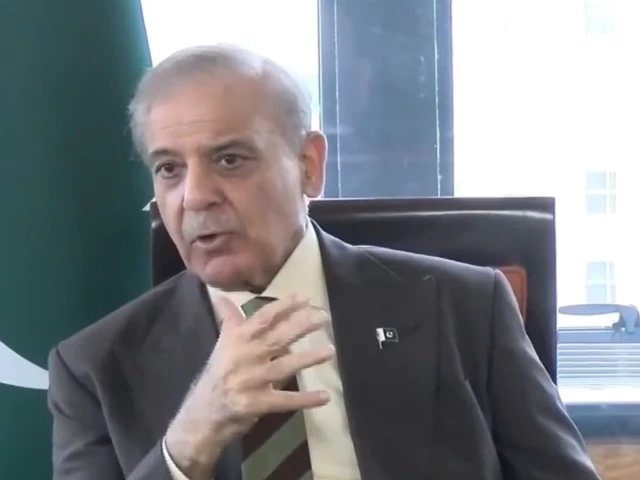
Islamabad (TDI): Prime Minister Shehbaz Sharif will visit Antalya, Türkiye, today to participate in the Leaders’ Summit of the 31st Conference of the Parties (COP31) to the United Nations Framework Convention on Climate Change (UNFCCC), where he is expected to call for concrete global action against climate change and greater financial support for developing countries.
According to a statement issued by Pakistan’s Foreign Office (FO), the prime minister will address the summit on Wednesday, highlighting the growing threat climate change poses to the planet and the need for a coordinated international response.
During his three-day visit, PM Shehbaz will outline Pakistan’s efforts to accelerate solarisation and expand renewable energy capacity as part of the country’s transition towards a cleaner and more climate-resilient economy.
He will also highlight initiatives to strengthen disaster preparedness and early-warning systems, while urging the international community to ensure predictable, adequate and accessible climate financing for developing countries.
The Foreign Office said the prime minister would emphasize that financial support was essential for vulnerable nations to strengthen their resilience against climate-related disasters and pursue sustainable development.
Read More: Guterres Urges World Leaders to ‘Get Serious’ as COP31 Opens Amid Climate Finance Dispute
During the visit, PM Shehbaz will also attend a high-level roundtable convened by the COP31 presidency on the sidelines of the Leaders’ Summit. He is expected to hold bilateral meetings with the Turkish leadership and several other world leaders.
The Foreign Office said Pakistan’s participation reflected its strong support for the global climate agenda and its commitment to working closely with the international community to address the climate crisis.
The prime minister’s visit comes as COP31 negotiations have begun in Antalya amid disagreements over climate finance, with developing countries pressing wealthy nations to increase funding for adaptation and the transition to cleaner energy.
Read More: Pre-COP31: Pacific Leaders Say Fossil Fuel Cuts Not Open for Renegotiation
UN Secretary-General Antonio Guterres has urged world leaders to intensify their efforts, warning that the world has entered a new era of climate extremes following devastating weather events across several regions.
The conference follows a year of severe heatwaves in Europe, major wildfires in Indonesia and catastrophic flooding in Nepal, with an exceptionally strong El Niño phenomenon adding to concerns over climate-related disruptions.
The opening ceremony was delayed by around 90 minutes as negotiators held discussions over demands from developing nations to include climate finance issues on the official agenda.
Under international climate agreements, developed countries have provided financial assistance to help developing nations address climate impacts, reflecting their historically greater contribution to greenhouse gas emissions. However, poorer countries maintain that existing funding remains insufficient.
Developing nations have sought the inclusion of a platform agreed at COP30 in Brazil last year to discuss how wealthy countries should provide financial support. African countries have also pushed for discussions on tripling adaptation finance to help vulnerable states fund measures such as coastal protection and drought-resistant agriculture. However, the proposal was not included as a standalone agenda item.
The negotiations are taking place amid fresh warnings about rising global temperatures, melting ice and increasing sea levels.
The World Meteorological Organization has reported that 2026 has continued a period of exceptional global temperatures, while the European Union’s climate monitoring service has projected that the year is likely to become the second-hottest on record.
Scientists have warned that a strong El Niño could push temperatures even higher in 2027.
The United Nations warned in September that global temperatures were on course to exceed 1.5 degrees Celsius above pre-industrial levels, breaching the most ambitious threshold established under the Paris Agreement.
Despite growing climate risks, observers expect limited major breakthroughs at COP31, as countries face economic pressures, energy market uncertainty and geopolitical tensions.
For Pakistan, which remains highly vulnerable to extreme weather events, the summit provides an opportunity to press for stronger international commitments on climate financing, disaster resilience and the transition towards renewable energy.