Drive north through Hebei, toward the Inner Mongolian plateau, and the ground climbs until farmland gives way to grassland and then to trees. This is Saihanba, in Weichang County, and it looks different every time you come. In spring the ground thaws and the first green comes back; summer is cool under a closed canopy; autumn turns the birch and larch yellow and red; winter buries the roads in snow. Most visitors come for those views. They are standing, though, in woods that had to be replanted within living memory. The trees here are the result of climate, history, overuse, and then a long, deliberate effort to put forest back. This piece follows the seasons first, then the history behind them.
The seasonal scenery of Saihanba
Spring: the land awakens
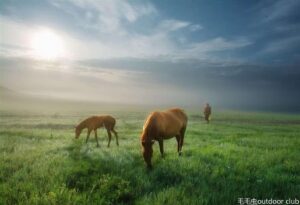
Spring comes late on Saihanba. The calendar may say April, but the air still bites, and snow sits in shaded hollows for weeks. When the thaw finally starts, meltwater runs across the low ground, pond ice turns soft, and the streams swell. Against the dark spruce and pine, the grasses and shrubs put out their first pale green. The old needles still look like winter while everything underneath them starts over.
On a clear morning you can watch the light move. It hits the high branches,then filters down through the canopy to needles, bark, and wet ground. After rain there is the smell of wet earth. Out on the grassland the wind is visible, moving across the grass in waves; inside the treeline it breaks into smaller, softer currents. The sky up here takes up most of the view. Clouds cross it fast, and the far ridges switch from blue to grey and back.
Then there is the noise. Water runs under breaking ice, birds come back to nest, and the small animals are out again after the freeze. With the leaves not yet out, the trunks, tracks, and shape of the ground are still easy to read. It is the easiest time of year to see how the place fits together: trees, grass, water, and animals all answering the same rise in temperature and daylight.

What stays with you is how slow it is. At this altitude nothing can be rushed into summer. Buds open when the weather lets them, and a cold night can still kill new growth. The season takes its time, and that is part of why it looks the way it does. It is worth remembering when people talk about repairing damaged ground: trees do not come back on a schedule. They need the right conditions, and years of care.
Summer: a cool green world
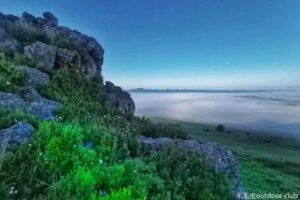
By summer the woods have closed in. The conifers hold their deep green, and the deciduous trees and understory add lighter shades on top; the meadows come up in grass and flowers. Under the canopy the air is noticeably cooler than out in the open, and on a hot day that shade is the first thing you notice.
The weather keeps changing. Water sits on needles and leaves, and the floor smells of resin, moss, and damp soil. Low cloud drifts between the slopes and blurs the line where the trees end. On clear days you can see for miles across wooded hills, valleys, and grassland. Nothing holds still for long: the treetops move, insects work the meadows, and the light keeps crossing the slopes.
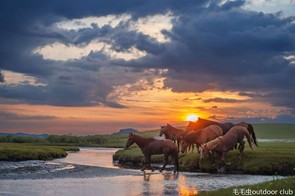
Summer is when the mechanics are easiest to picture. Leaves and needles catch the sunlight, roots drink the water and hold the soil, and the canopy gives birds somewhere to nest while the shrubs below feed and hide smaller animals. The streams and wetlands tie these patches together. The green you see is not one thing; it is a set of connections between water, soil, plants, and animals, and damage to any one of them pulls at the rest.

The cool woods bring people out: walkers on the forest roads, families in the clearings, photographers waiting for cloud to lift off the hills. Feet and rubbish do real damage if nothing manages them. A busy forest needs paths that keep walkers off fragile ground, and visitors who carry waste out, with limits so the wildlife is not crowded out. The pleasure and the upkeep are the same problem, looked at from two sides. In a summer like this it is easy to think the woods will always be there, but they stay this green only because someone keeps preserving them.
Autumn: color and clarity
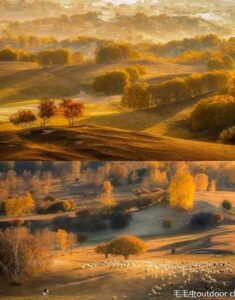
Autumn is when the contrasts sharpen. Mornings turn cold and the light clears. The deciduous trees go yellow, amber, and russet while the conifers stay dark green, and where the woods meet the meadow the color runs in bands up the hillside: gold against evergreen, warm leaves against pale grass, far ridges fading to blue.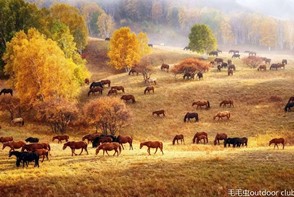
The air goes crisp and distant things look close enough to touch. A stand of trees on the far slope seems just across the valley; a narrow stream catches the sun like a glass thread. Leaves pile along the paths and around roots, so footsteps go quiet. The place smells drier than in summer, of leaf litter and resin. As the days shorten, the low sun drags the shadows out and turns everything gold, a little differently each hour.
The plants and animals are getting ready. Plants pull energy back into roots and stems, seeds come loose, and the animals move through the woods feeding and looking for cover. The color is one stage of a cycle that runs through decay and back into growth. A walk through it can feel like a celebration and a reckoning at once.
This is also where the history breaks into the view. The woods look abundant now , but within the last century this same ground was pressed hard and nearly stripped. The autumn canopy is one more reason not to let that happen again: the soil, water, and nesting cover all depend on the cycle that produces the color in the first place.
 Winter: snow, silence, and getting through the cold
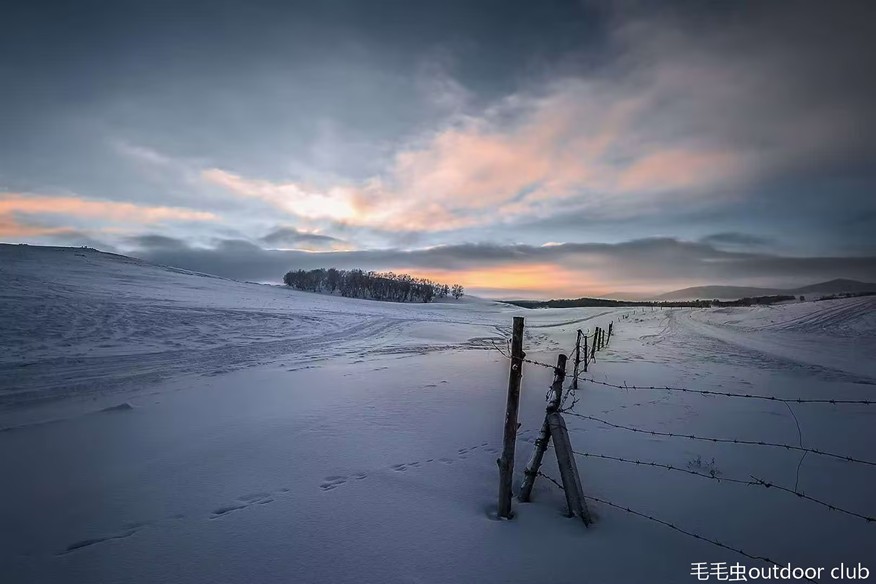
Winter strips the place down. Snow covers the meadows and roads, rounds off the stones, and hides the tracks. Evergreen branches carry layers of white; the bare trees draw thin dark lines against a pale sky. From far off the hills look simple. Close up, the snow holds detail: ridges shaped by wind, animal prints, branch shadows laid across the ground.
The cold is hard to ignore. Wind crosses the exposed slopes without anything to stop it, and the air feels dry and bright. On still days the snow swallows sound, so a creaking branch or a single bird call carries a long way. Sunlight off the ground makes the woods glow. At dusk blue shadows pool in the hollows and the edge between forest and sky goes soft. Nothing has stopped; the cycle has just gone quiet.
 Things are still alive out there, mostly by waiting. Evergreen cover still hides animals, which conserve energy, forage when they can, and keep to sheltered spots. Seeds, roots, and dormant buds hold next year’s growth inside them. Even the snow has a job: it insulates the soil and turns into water when it melts. Winter shows which patches actually give shelter, and how much every living thing here relies on what is around it.
Snow makes the trees’ work easier to see. Cover cuts the wind at ground level, holds the snow in place, and slows water when the thaw comes. Roots and vegetation keep the slopes and soil from moving. None of this is obvious in July; under snow it is hard to miss. The winter view is plain, almost bare, and it is a good argument for keeping the structure that carries both animals and people through the year.
From seasonal beauty to historical memory
So how did these woods get here? The answer moves from what you can see to what happened in Weichang County before any of us were visiting. Start with the geography. The county sits in northern Hebei, against the Inner Mongolian plateau, and Saihanba itself is a high, cool country: forest, meadow, and wetland. It is a transition zone, which means the growing season is short and ground that is disturbed takes a long time to come back. The same features that make it striking also made its resources useful, and easy to break.
Grassland, forest, and imperial hunting
The name Saihanba is usually traced to Mongolian words for a beautiful high place. Long before modern forestry, the upland was pasture and hunting ground, part of the wider northern frontier. Under the Qing it became tied to the Mulan grounds, an imperial domain where the court held large seasonal hunts and military drills. These were not sport in the modern sense. The hunts put the Qing court visibly in the north, managed its ties with Mongol groups, and helped hold a frontier order in place.
There never was an untouched wilderness here. Herders, officials, hunters, and passing travelers all used the ground in their own ways, making livings and moving through it while state policy decided who could access what. Politics and administrative reshuffles changed those arrangements over the years, and the land itself kept answering to both weather and human decisions.
By the 1800s the imperial hunting system was breaking down. Late-Qing political and financial pressure, together with changes in how land was administered, opened and settled areas that had been tightly controlled. More people meant more farming, grazing, timber cutting, and gathering of fuel, and the demands on plants and soil climbed. In cold, fairly dry high country, that kind of pressure leaves marks. Trees take decades to mature, and bare soil gives wind and rain an easy target.
It is not a simple villain story. People living here needed ground to farm and fuel to burn, and the institutions and economy around them set the choices they had. When demand goes up and the rules cannot hold use within what the land can take, the ground degrades without anyone deciding that it should. Weichang and Saihanba are a case of human needs and ecological capacity drifting apart.
Decline, and the work of growing trees back
Through the twentieth century the loss of trees and the degradation of the ground became hard to miss. Reports from the time describe thin cover, exposed earth, and worsening erosion in parts of the area, with the exact state varying from one patch to the next. Broadly, high country that had once carried far more woodland and grassland had been changed beyond easy recognition. With the plants gone, the soil could not be held and water could not be regulated, and the effects were feared well beyond the immediate area.
Because this is watershed and mountain ground, planting trees was never just about making the view nicer. Forests slow erosion, even out runoff, store carbon, and give animals somewhere to live, though how well they do it depends on species, structure, and competent management. Damaged upland changes water and soil downstream as well. Planners and foresters treated replanting and rehabilitation as public work for that reason.
In 1962 a state-owned forestry enterprise was set up at Saihanba to plant and manage forest. It started badly. The site was remote, the cold was severe, and the growing season was short. Seedlings failed to live through harsh winters, and methods that worked in milder places failed on the plateau. The workers had to learn the local ground by doing, change how they planted, and keep going through seasons when most of what they put in died.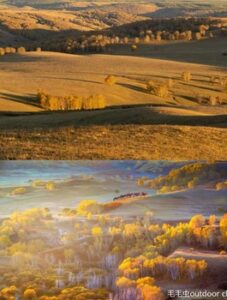
The early years were hard, unglamorous work. Getting trees to take on a site like this took labor, knowledge, and constant adjustment. Seedlings had to be protected, workable species and planting layouts found, roads and facilities built. Results came slowly. A stand that survived stood for years of small, repeated effort.
Three generations of forestry work
The story is usually told through three generations of workers, and the phrase catches something true: people started a job most of them would not live to see finished. Foresters planted, tended, measured, and replanted; technicians worked out better methods; nearby communities adjusted as the woods and the economy changed around them. Day to day, the work was ordinary, but it served a purpose that ran far past any single planting season.
Over the decades the planted area grew and the way it was managed changed with it. Existing stands had to be guarded against fire and pests, forest roads maintained, growth measured, and the links between forest structure, biodiversity, and water thought through. The purpose of the forestry also widened in many places, from producing timber toward ecological functions. The shift came with a wider view of woods as living systems whose value is not just the wood you can cut out of them.
The institutions changed alongside the trees. Saihanba became a major state forest area, and its work in conservation, research, and public education expanded. The forest enterprise and the local economy brought jobs and infrastructure, and the woods turned into a defining part of how the region thinks of itself. For people living nearby it was a workplace, a home, and a resource that had to be carefully looked after all at once.
The numbers do not tell the whole story. Large-scale planting can bring back cover and cut erosion, but the area planted is not the same as a healthy forest. Species choice, the mix of ages, available water, soil condition, and the connections between habitats all count. Dense stands of one species carry their own risks from pests, disease, and fire. Management now has to pair the achievement of getting trees established with steady ecological assessment and change as the woods age.
Recognition, and what it means elsewhere
 In recent decades the work has been widely recognized, inside China and abroad. In 2017 the United Nations Environment Programme gave the Saihanba Afforestation Community its Champions of the Earth award, pointing to what decades of effort had turned the ground into. The award drew attention to the scale of the work and to the people who did it, and put Saihanba into wider discussions about restoration, climate, and the obligation to repair ground that has been damaged.
The award does not finish anything. A planted forest still has to be defended against fire, pests, drought, and use it cannot sustain. Climate change is shifting temperatures, rainfall, and growing seasons, and with them the species and water available. Tourism and development need planning so that access does not wear away the very habitat people travel to see. Long-term monitoring and local knowledge stay essential because the conditions keep moving and management has to move with them.
There are things other restoration projects can take from it. Functional forest takes decades even when a policy sets the project up in a single year. Methods have to fit the soil, climate, elevation, and water actually on site, not the other way around. And none of it happens without people: workers, communities, researchers, and state bodies, with the work holding up better when local livelihoods and conservation pull in the same direction. Area planted is easy to count; ecological quality has to be assessed too, and it is easier to ignore.
What happens next
The two journeys, through the seasons and through the history, end in the same place. Spring shoots recall how fragile young plantings are; the summer canopy shows what years of keeping at it can produce. Autumn color runs on cycles longer than any worker’s career; the winter quiet shows how every living thing needs shelter and a way to get through. In every season the woods are a physical place and a record of decisions made over decades.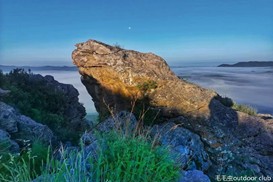
Saihanba is part of Weichang’s wider story, where environmental conditions and people’s welfare are tightly linked. Woods and grasslands support the soil and water, and a healthy landscape can support living through forestry done responsibly, conservation, research, and tourism. Development still has to respect limits. Roads, visitor facilities, extraction, and settlement all bring pressure if they are planned without looking at the terrain and the habitats. Without that protection, development here does not last.
It is also a warning not to treat nature as a painted backdrop. The scenery changes because living processes respond to sunlight, temperature, water, and soil, and people can either protect those processes or break them. Replanting repairs damage, but stopping the damage first is usually cheaper and works better. Mature forest, wetland, grassland, and wildlife corridors are worth keeping alongside new trees; each does things a young plantation cannot yet do.
Conclusion: whose job is it?
What comes through the four seasons and the history is that the beauty here is both given and earned. The spring streams, summer shade, autumn color, and winter snow belong to the plateau’s natural rhythms, but the woods that frame them today are also the product of decades of shared work. The past shows what happens when use outruns what the land can carry; the replanting shows what people can do when they bring patience and knowledge, and cooperate over long periods.
Protection starts with paying attention: how water moves, how species rely on habitat, how local communities use the ground. It carries on through concrete choices: stopping fires, cutting waste, keeping visitors on durable routes, restoring damaged patches with methods that fit, and managing woods for resilience as well as yield. It also needs institutions built for long care, because ecosystems do not recover within one season or one short policy cycle.
The future will be decided in ordinary acts more than in award ceremonies. A seedling brought through its first winter, a wetland left alone, a forest road kept up, a visitor who carries rubbish out: each one counts. Scientists and foresters will have to keep watching conditions change, and residents and visitors will have to accept that access comes with obligations. The woods only stay successful while someone keeps caring for them.
Next spring the meltwater will run through the hills again and new leaves will open under the evergreens. Summer will bring shade and birdsong, autumn will turn the slopes gold, winter will lay its snow over everything. The story is not confined to one forest or one county. Every generation in it has the same job: keep the conditions that let life, beauty, and hope come back. Now their future is filled with hope and bright.

Guozhi
A student in Zhongnan University of Economics and Law.I was born in Weichang.When I was young,I usually go to Saihanba to enjoy my holiday. The beautiful and charming scenery of my hometown always stays in my mind, which give me inspiration to write down this article.