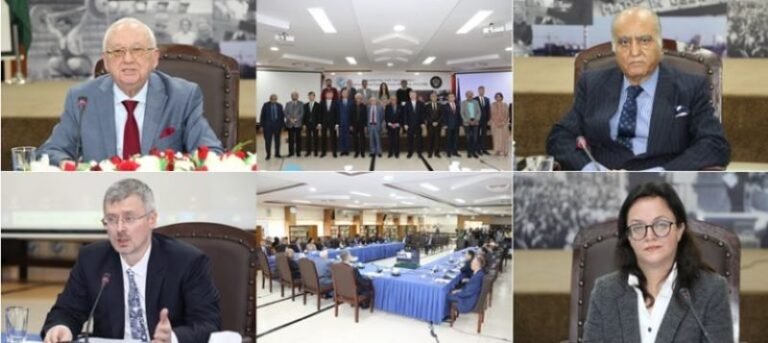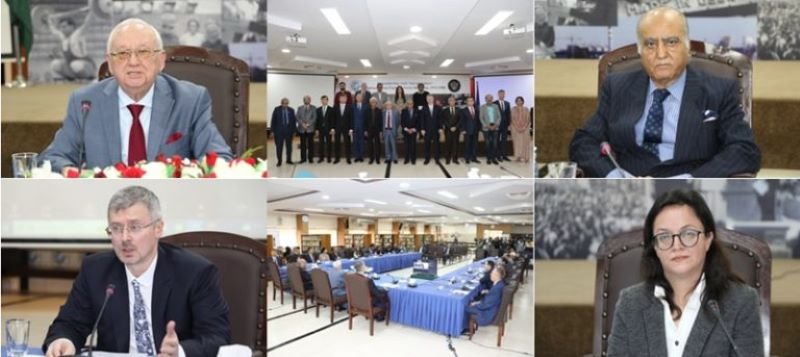
Islamabad (TDI): The Institute of Strategic Studies Islamabad (ISSI), in collaboration with the Embassy of Russia in Islamabad, organized a roundtable discussion to commemorate the contributions of Ambassador Sarvar Azimov and reflect on Pakistan–Russia relations during the 1974–1980 period.
Titled “Remembering Ambassador Sarvar Azimov: Diplomacy and Pakistan–Soviet Relations (1974–1980)”, the event brought together diplomats, scholars, and policy experts to revisit a significant chapter in bilateral history and examine its relevance for present-day relations.
Dr. Neelum Nigar, Director CSP, in her introductory remarks highlighted the importance of revisiting diplomatic legacies amid global instability and declining trust. She noted that reflecting on history can provide insights for sustaining dialogue and cooperation in complex international contexts.
Ambassador Khalid Mahmood, Chairman Board of Governors ISSI, in his welcome remarks, framed the roundtable as both a commemorative exercise and an analytical reflection. He noted that Ambassador Azimov served during a period marked by Cold War tensions, regional realignments, and strategic uncertainty, requiring diplomacy characterised by patience, nuance, and a deep understanding of national interests.
Read More: Russian Embassy Invites Pakistani Youth to World Youth Festival 2026
He emphasized that Pakistan–Russia relations have evolved through multiple phases, ranging from caution and distance to gradual engagement and normalisation. In this context, revisiting historical experiences is essential for understanding the foundations of contemporary bilateral relations and for informing future policy directions.
Russian Federation Ambassador Albert P. Khorev highlighted late Ambassador Sarvar Azimov’s unique combination of intellectual depth and diplomatic skill. He recalled his pivotal role in strengthening Pakistan–Soviet relations during the 1970s as Pakistan, under Zulfikar Ali Bhutto, diversified its foreign policy.
He pointed to major Soviet-supported initiatives—such as Karachi Steel Mills and key thermal power plants—as crucial to Pakistan’s industrial growth and economic self-reliance, reflecting a broader strategic alignment despite Cold War tensions.
Ambassador khorev also emphasised Ambssador Azimov’s role in maintaining continuity in bilateral ties amid regional and political challenges, with trade expanding significantly between 1973 and 1980. Highlighting people-to-people and institutional cooperation, including Soviet technical assistance and training for Pakistani engineers, Ambassador Khorev stressed that these efforts built lasting foundations for collaboration and mutual understanding, and expressed hope for continued recognition of such diplomatic legacies.
Ambassador Anvar S. Azimov, a distinguished Russian diplomat and son of late Ambassador Sarvar Azimov, delivered deeply reflective remarks that combined personal insight with strategic perspective. He emphasised that, historically, Pakistan and the Soviet Union maintained a fundamentally constructive bilateral relationship, notwithstanding external geopolitical pressures from major powers. He noted that both countries consistently sought to strengthen cooperation in line with their national interests and shared developmental objectives.
Ambassador Anvar Azimov highlighted the Soviet Union’s early recognition of Pakistan and its role in facilitating dialogue during the 1965–66 India–Pakistan conflict, particularly through the Tashkent process, which reflected Moscow’s commitment to regional stability.
Read More: Russia Voices Concern Over Pak-Afghan Border Clashes
Reflecting on his father’s diplomatic approach, he underscored that Ambassador Sarvar Azimov prioritised trust-building, respect, and engagement across political divides, enabling him to maintain productive relationships with successive Pakistani leaderships during a complex and evolving political environment.
He noted that such an approach was instrumental in sustaining cooperation even during periods of geopolitical tension. He also highlighted the broader significance of Soviet assistance to Pakistan’s industrial and economic development, particularly in sectors such as steel, energy, and technical training. Emphasising the need for continuity, he expressed the hope that these historical foundations could be revitalised to further deepen Pakistan–Russia relations in the present context.
Concluding on a forward-looking note, Ambassador Azimov stressed that while bilateral relations remain positive, there is considerable scope for further strengthening cooperation, guided by shared interests and mutual respect.
In the subsequent discussion session, scholars offered diverse perspectives on the legacy of Ambassador Sarvar Azimov and the broader trajectory of Pakistan–Soviet relations. The participants highlighted the evolution of Pakistan–Russia relations from Cold War-era constraints to contemporary engagement, noting the expanding scope of cooperation in areas such as energy, connectivity, and regional multilateral frameworks.
Participants emphasized that historical reflection is not merely commemorative but can serve as a guide for navigating present and future challenges in bilateral and regional relations. The event concluded with a vote of thanks and the presentation of mementos to the distinguished speakers.

Sohail Majeed
Sohail Majeed is a Special Correspondent at The Diplomatic Insight. He has twelve plus years of experience in journalism & reporting. He covers International Affairs, Diplomacy, UN, Sports, Climate Change, Economy, Technology, and Health.