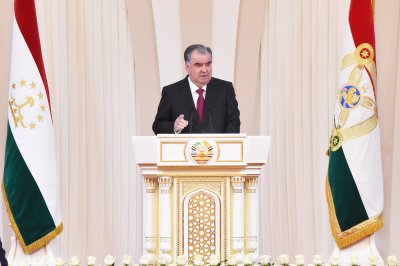
Since assuming the presidency of the Republic of Tajikistan in 1994, Emomali Rahmon has played a pivotal role in strengthening bilateral relations with the United States. This has indirectly fostered the emergence of American studies as an academic discipline within Tajikistan’s scholarly landscape.
His diplomatic efforts, leveraging soft power tools such as nongovernmental organizations (NGOs) and public diplomacy, have established foundations for educational and scientific exchanges.
Key examples include the creation of American Corners and dissertation research in American studies. NGOs, in particular, have advanced intercultural dialogue and academic mobility, amplifying U.S. influence through civil society.
Diplomatic Visits and Dialogue
President Rahmon’s official visit to the United States in December 2002 marked a turning point in bilateral relations, spurring political dialogue and interest in analyzing the American model of governance. Prior working visits in 1997 and 1999 deepened cooperation, including exchanges on foreign policy experience, which is reflected in Tajik scholarly publications on U.S. policy evolution.
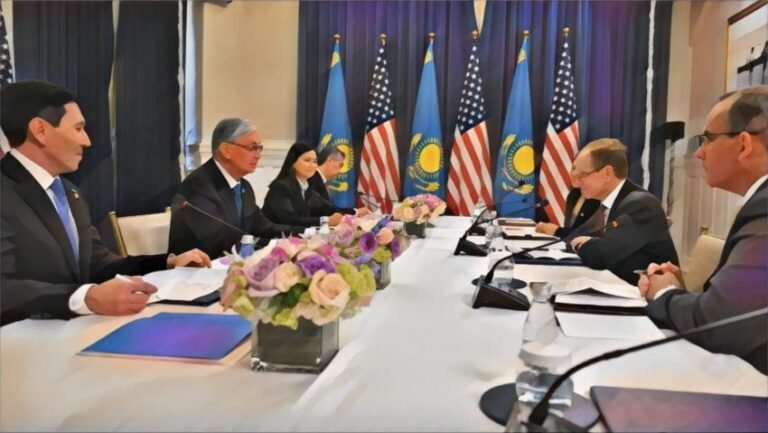
Recent high-level meetings, such as negotiations with President Donald Trump in November 2025 at the “Central Asia–U.S.” summit, underscored priorities in science, education, and academic exchanges. Outcomes from the C5+1 summit in Washington signal promising prospects for Tajik–U.S. partnership, emphasizing economy, energy, and high technology.
The summit reinforced high-level dialogue between Rahmon and Trump, laying groundwork for mutual investments and joint projects. Discussions highlighted expanded trade-economic cooperation: over 70 U.S.-capitalized companies currently operate in Tajikistan, focusing on mineral extraction, processing, and sustainable supply chains.
Read More: Tajikistan’s President – Peace Cheerleader in the International Arena
Agreements were reached on an investment platform for agriculture, including soybean and cotton supplies alongside irrigation technologies. Further trade growth is anticipated via the Coordination Council and interregional mechanisms.
Tajikistan emphasized its hydroelectric potential in the context of green energy and regional electricity exports. The summit prioritized critical minerals, transport corridors, and digitalization, formalized in memoranda on technological cooperation.
This opens avenues for joint initiatives in artificial intelligence, high technology, and infrastructure. Parties also addressed counterterrorism, extremism, and narcotics trafficking to bolster regional stability. In the humanitarian sphere, plans include expanded academic exchanges, educational programs, and soft power instruments aligned with Tajikistan’s strategic priorities.
President Trump described the summit as the “dawn of new relations,” affirming U.S. commitment to deeper engagement in Central Asia.
Support for Educational Initiatives
Under President Rahmon’s leadership, American Corners—information-resource centers—were established in Tajikistan, with the first opening in 2005 in Kulob and Khujand (eight operate today). Funded and supported by the U.S. Agency for International Development (USAID) as part of civil society strengthening and cultural diplomacy, these centers provide open access to U.S. resources, English language courses, and exchange programs.
They systematically promote study of American culture, politics, and history, thereby advancing American studies at local and national levels. Rahmon’s endorsement of long-term U.S. educational programs, including over $10 million in USAID grants since 2005 for scholarships and joint projects, has elevated Tajikistan’s human capital, promoting academic mobility and intercultural dialogue.
President Rahmon’s diplomatic initiatives since the 1990s to forge strategic U.S. partnerships have diversified Tajikistan’s foreign policy while catalyzing institutional development of American studies as a public diplomacy component. His visits and partnerships stimulated dissertation research on Tajik–U.S. relations since 1991 and U.S. policy.
Efforts to diversify foreign policy elevated the U.S. as a priority study object in Tajik diplomacy. High-level discussions on joint scientific projects facilitate American studies growth through student exchanges and collaborative research.
In summary, President Emomali Rahmon’s contributions to Tajik American studies manifest in strategic U.S. ties, institutional knowledge-generation frameworks, and sustained disciplinary development.

Shamsiddin Karimov
Shamsiddin Karimov is the Chief Researcher at the Institute for Asian and European Studies of the National Academy of Sciences of Tajikistan. He is a doctorate of Political Science.