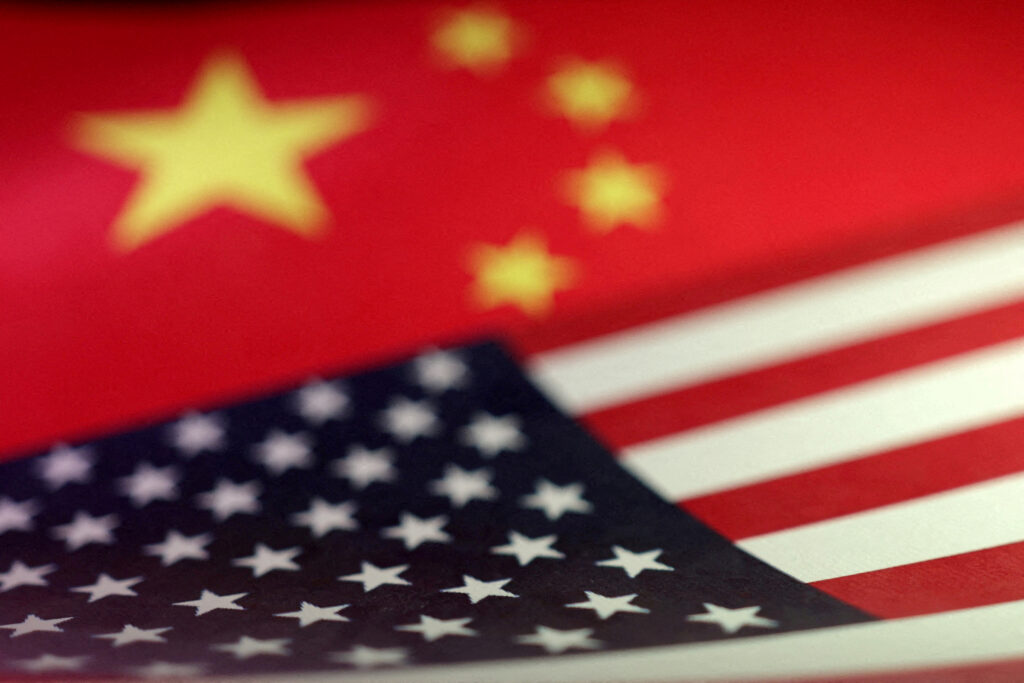
The 21st century is entering a new phase of great power competition that is not only determined by military, energy, or trade dominance, but also by the ability to control strategic technological ecosystems.
Artificial Intelligence (AI) is one of the main arenas in the competition between the United States and China because this technology has the potential to change almost all sectors of life, from the economy, industry, defense, to governance.
The modern AI competition is not just about who creates the most advanced models, but who is able to build the supply chains and ecosystems that make AI usable globally.
In this context, two competing geopolitical approaches have emerged, namely the United States-led Pax Silica and the China-led World Artificial Intelligence Cooperation Organization (WAICO).
Not only do they offer technology, but they also carry different narratives regarding how AI should be developed and who has the right to dictate the global rules of future technology.
Read More: Pakistan Joins Global AI Body WAICO as Founding Member
The United States’ strategy in AI competition departs from the excellence of the innovation ecosystem. Washington still has leading tech companies such as NVIDIA, Microsoft, Google, OpenAI, Anthropic, and Meta at the forefront of generative AI development.
In addition, America also has advantages in venture capital, research universities, as well as high-level chip design capabilities.
However, Washington realized that dominance in innovation alone was not enough. America’s biggest challenge is ensuring that the entire AI supply chain remains within a network of countries that are considered trustworthy.
Therefore, Pax Silica is here as an effort to build a technology coalition that connects semiconductors, critical minerals, energy, manufacturing, and digital infrastructure.
This approach is seen through various policies such as export controls on advanced chips, restrictions on access to high-end GPUs, as well as efforts to strengthen technological ties with Japan, South Korea, Taiwan, Australia, and other countries that have important positions in the semiconductor supply chain.
Read More: China’s AI Diplomacy is Redefining Great Power Competition
The United States has its ability to master important parts of the AI stack, especially chip design, frontier AI models, and computing infrastructure.
However, the weakness is its reliance on global supply chains, especially in semiconductor and strategic materials manufacturing. Thus, Pax Silica is not just an economic project, but a geopolitical instrument to maintain America’s leadership in setting global AI standards.
In contrast to the United States, which emphasizes supply chain security and exclusive partnerships, China is building a narrative that global AI should thrive through open cooperation and not be dominated by one particular group of countries.
Through WAICO, Beijing offers an alternative model that emphasizes inclusivity, international cooperation, and wider access to AI technology. This narrative has appeal especially to developing countries who see Western technology as often concentrated in developed countries and large corporations.
Read More: Geopolitics of Artificial Intelligence: How Countries Are Competing for AI Dominance
China’s strategy is also strengthened by a different approach to AI development. If America is more oriented towards creating the most advanced AI models, China is more focused on how AI can be applied extensively in industry, manufacturing, government, and people’s lives.
Beijing’s main advantages are its large manufacturing capacity, large data availability, strong state support, and the ability to integrate technology into the production sector.
Models such as DeepSeek, Alibaba’s Qwen, and China’s various open-weight AI developments demonstrate Beijing’s strategy to reduce its reliance on American technology while expanding its influence through more accessible technology.
It can be interpreted that while Pax Silica offers security and trust, WAICO offers accessibility and technological sovereignty.
Technology Fragmentation
The emergence of Pax Silica and WAICO shows that the world is moving towards technological fragmentation or technological bifurcation.
The digital world, which used to be relatively integrated, is beginning to be divided into several technological ecosystems based on geopolitical interests.
The United States seeks to create an AI ecosystem based on allied countries with high security standards. Meanwhile, China is trying to build a more open and attractive alternative to the countries of the Global South.
This Fragmentation can produce major consequences. Developing countries could face pressure to choose between the American or Chinese tech ecosystem.
It is similar to the dilemma of third world countries in the Cold War era, but in a new form. If the cold war era was more about choosing a military bloc between the West which is often called NATO and the East called the Warsaw Pact, this era will prefer the technological bloc.
For developing countries, the main challenge is not just to choose whose technology to use, but how to build domestic capacity so that it does not become just a market for foreign technology
World AI Going Forward
The world going forward will see the AI competition of the United States and China in three main directions. First, about global standards competition, where countries that succeed in determining AI security, ethics, interoperability, and regulatory standards will gain great political influence. Technology is no longer neutral because technical standards can be an instrument of geopolitical power.
The second, about infrastructure competition, such as the competition for data centers, energy, critical minerals, and semiconductors will increase. AI requires a huge physical foundation, so countries that control infrastructure will have a strategic position.
Third, this will be about the narrative competition. The United States will continue to promote AI based on innovation, security, and trust between democratic countries.
Instead, China will emphasize AI as a tool for development, digital sovereignty, and technology access for developing countries. Ultimately, AI wars are not just about who has the best technology, but who manages to convince the world that their models are the future.
Read More: How Artificial Intelligence is Changing the Future of Global Diplomacy
Pax Silica and WAICO represent two different visions of the global AI order. The United States sees AI as a strategic asset that must be secured through allied networks and supply chain controls.
Meanwhile, China sees AI as an instrument of global development that must be expanded through open cooperation.
This competition shows that AI has become the new center of 21st-century geopolitics. Just as oil shaped the global politics of the 20th century, AI will be one of the key factors determining the future distribution of world power.
For the Global South, the choice is not just about joining one of the blocs, but building national capacity through investments in research, education, the semiconductor industry, and digital governance.
In an increasingly fragmented world, technological sovereignty will become an important part of national sovereignty.
*The views presented in this article are the author’s own and do not necessarily reflect the views of The Diplomatic Insight.*