Islamabad (TDI): Pakistan’s political and military leadership on Wednesday reaffirmed solidarity with the people of Indian Illegally Occupied Jammu and Kashmir (IIOJK), saying lasting peace and stability in South Asia remain closely linked to a just and peaceful resolution of the Jammu and Kashmir dispute.
The statements came as Pakistan observed Youm-i-Istehsal (Exploitation Day) to mark the seventh anniversary of India’s August 5, 2019 decision to revoke the special status of occupied Jammu and Kashmir. President Asif Ali Zardari said the day was being observed to reaffirm Pakistan’s unwavering solidarity with the people of IIOJK and pay tribute to their courage and resilience.
He said India’s actions of August 5, 2019 could neither change the legal status of the Kashmir dispute nor weaken the resolve of the Kashmiri people. “For seven years, millions of Kashmiris have continued to live under severe restrictions that have affected every aspect of daily life,” President Zardari said, adding that despite prolonged hardship, the people of Jammu and Kashmir had remained committed to their pursuit of justice and right to self-determination.
The president reaffirmed Pakistan’s continued moral, political and diplomatic support for the Kashmiri people, saying Islamabad would continue to raise the issue at international forums until the dispute was resolved in accordance with relevant United Nations Security Council (UNSC) resolutions and the aspirations of the Kashmiri people.
Read More: Pakistan Rejects Indian Defense Minister’s Remarks on Kashmir
He also urged the international community to play its role in addressing the human rights situation in occupied Kashmir. “To my Kashmiri brothers and sisters, I say Pakistan stands firmly with you. Your courage in the face of adversity inspires us. You are not alone,” he said.
Prime Minister Shehbaz Sharif said the people and government of Pakistan stood in unwavering solidarity with the people of Kashmir. He said India’s measures of August 2019 had neither changed the legal status of the dispute nor diminished the aspirations of the Kashmiri people.
Instead, he alleged, the measures had deepened repression, restricted fundamental freedoms and accelerated efforts to alter the demographic composition of occupied Kashmir. The prime minister also expressed concern over restrictions on civil liberties, independent media and Kashmiri political leadership.
“The Kashmir dispute remains the principal unresolved issue affecting peace and stability in South Asia,” Shehbaz said. He stressed that lasting regional peace could not be achieved through coercion or unilateral actions, but only through a peaceful settlement in line with the aspirations of the Kashmiri people and relevant UNSC resolutions.
Read More: Dar Urges Peaceful Resolution of Kashmir, Gulf Crisis at ASEAN Forum
PM Shehbaz urged the international community to move beyond expressions of concern and play a more active role in seeking a durable settlement. He also called on India to end human rights violations in occupied Kashmir, reverse the measures introduced since August 2019 and create conditions conducive to a peaceful resolution of the dispute.
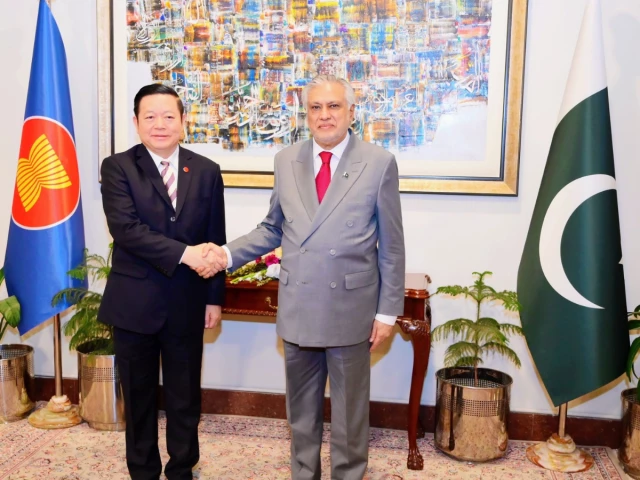
Deputy Prime Minister and Foreign Minister Ishaq Dar said India’s August 5, 2019 actions posed a “grave challenge” to the established international framework. Dar reaffirmed Pakistan’s support for the fundamental rights of Kashmiris under the UN Charter and relevant UNSC resolutions.
He said the developments since 2019 had further complicated efforts to promote peace and stability in South Asia while adversely affecting the lives, rights and freedoms of Kashmiris. The deputy prime minister called on the international community to ensure respect for international law, international humanitarian law and human rights.
Pakistan’s military leadership also reiterated its solidarity with the people of IIOJK. Chief of Defense Forces and Chief of Army Staff Field Marshal Asim Munir, Chief of Naval Staff Admiral Naveed Ashraf and Chief of Air Staff Zaheer Ahmed Baber Sidhu reaffirmed support for the Kashmiri people’s right to self-determination.
According to a statement issued by the Inter-Services Public Relations (ISPR), the armed forces said their support was rooted in international law and relevant UNSC resolutions. The military leadership described the continued situation in IIOJK as a matter of serious concern and said provocative rhetoric and what it termed “belligerent posturing” contributed to regional instability and human suffering.
The armed forces reiterated that lasting peace and stability in South Asia were intrinsically linked to a just and peaceful settlement of the Jammu and Kashmir dispute in accordance with the aspirations of the Kashmiri people and relevant UNSC resolutions.