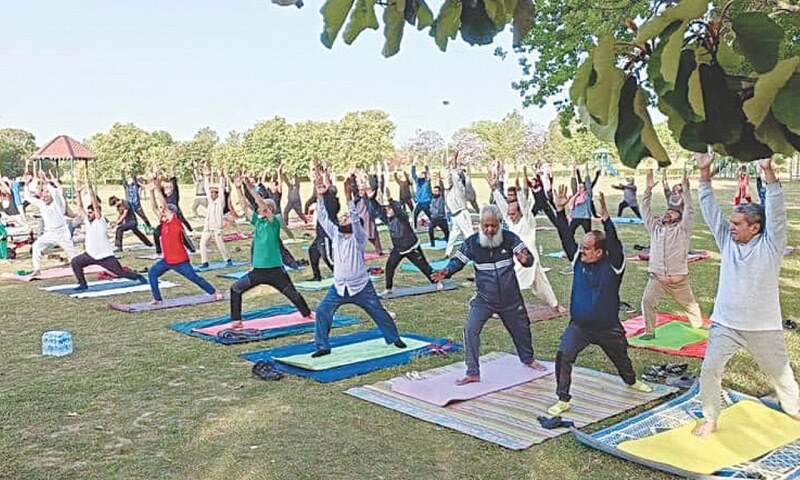
Pakistan is trying to treat its way out of a crisis it should also be preventing. According to the WHO’s NCD Progress Monitor 2025, non-communicable diseases (NCDs) killed more than 871,000 Pakistanis in 2021. That was 52 percent of all deaths in the country.
The same report puts the chance of a Pakistani aged 30 to 70 dying early from one of these diseases at 26 percent. In Iran, the figure is 14 percent.
Hospitals are essential, but they meet patients after the damage is done. Pakistan also needs a funded national physical activity policy that makes aerobic exercise, the simple movement of walking, cycling and running, part of ordinary life.
Diabetes shows the scale of the problem most clearly. The International Diabetes Federation estimates that 34.5 million Pakistani adults were living with diabetes in 2024. Pakistan has the highest age-standardized prevalence in the world, at 31.4 percent.
Without a change in direction, the federation projects that number will reach 70.2 million by 2050. Diabetes-related health spending already stands at about $2.7 billion a year, yet that amounts to only about $79 per patient.
These numbers describe a national economic risk as well as a medical one. NCDs often strike the economically productive workforce, which costs families their income and the economy its workers.
What Aerobic Exercise Can Do
Aerobic exercise helps muscles use glucose more effectively, improves insulin sensitivity and supports healthy blood pressure. The WHO’s guideline of 150 minutes of moderate activity a week works out to about 25 minutes a day, and a brisk daily walk is one of the simplest ways to reach it.
The evidence behind that target is strong. A 2016 meta-analysis covering more than 3.4 million people linked moving from inactivity to the recommended level with substantially lower risk:
- 26 percent lower risk of developing type 2 diabetes
- 23 percent lower risk of dying from cardiovascular disease
- 17 percent lower risk of developing cardiovascular disease
These are associations from observational research, and exercise is no replacement for medical care, a healthy diet or tobacco control. The most useful finding for policymakers is that the greatest gain comes from moving from inactivity to small amounts of activity. A policy does not have to create athletes to matter. It only has to get inactive people moving.
Exercise also changes how people feel. For a university project and presentation, I ran a small experiment on exercise and mood, and the results showed that exercise affected mood.
Science offers one possible explanation. A small study of ten regular runners found that anandamide, an endocannabinoid the body makes, rises in the blood after 30 minutes of moderate-intensity exercise. These molecules can cross the blood-brain barrier, although the researchers measured only blood levels and did not test mood directly. A habit that lifts mood may also be easier to keep.
Exercise Cannot Outrun a Salty Diet
Movement is only half of prevention. The WHO reports that adults worldwide average about 11 grams of salt a day, more than double its recommended limit of 5 grams. It links excess sodium to raised blood pressure, cardiovascular disease and an estimated 1.7 million deaths in 2023. Processed foods such as bread, processed meat and snacks are common sources.
A brisk walk does not cancel out a poor diet, so Pakistan needs action on both. Health advocates are already calling for front-of-pack warning labels on high-sodium foods, and the government should make them mandatory.
A study in The Lancet Global Health estimated that 45.7 percent of Pakistani adults did not meet recommended activity levels in 2022. The global figure was about 31 percent.
Women face the widest gap. In Pakistan, India and Afghanistan, women lag behind men by more than 14 to 20 percentage points.
Telling people to exercise more will not close that gap, because much of the problem lies in their surroundings. Many neighborhoods lack safe sidewalks and open parks. Summer heat and winter smog limit outdoor activity in major cities.
For many women, household duties, safety concerns and a lack of suitable spaces make regular exercise even harder. These are problems of planning and policy, so they need a public response.
A Global Commitment and an Unfinished Plan
The WHO’s Global Action Plan on Physical Activity sets 20 policy recommendations and a target of a 15 percent reduction in inactivity by 2030.
The WHO estimates that inaction could mean almost 500 million new cases of preventable disease between 2020 and 2030, at a treatment cost of about $27 billion a year. Fewer than half of countries have a national physical activity policy, and fewer than 40 percent of those policies are operational.
Pakistan was once ahead of this curve. Its 2004 National Action Plan on NCDs was an early effort among developing countries and included the development of a physical activity policy. Yet a 2020 editorial in the Journal of the Pakistan Medical Association found that the country still had no national policy or guidelines on physical activity.
In April 2026, the government formed a national task force on lifestyle medicine to support national standards and guidelines. That is a welcome step, but it should lead to a funded physical activity policy.
Because health is largely a provincial responsibility, the federal government and the provinces will need to act together. Five steps would make a practical start:
- Adopt a funded national policy. Issue national activity guidelines for all ages, align provincial plans with them and give each province a budget and a measurable target.
- Put activity in primary care. Train primary health workers to screen for inactivity and give simple exercise advice alongside blood sugar and blood pressure checks.
- Make physical education count in schools. Protect daily activity time for both girls and boys, so healthy habits begin before disease does.
- Build walkable cities. Require safe sidewalks, shaded routes and accessible parks in urban development plans, and include active travel in transport projects.
- Create safe spaces for women. Fund women-only hours at public facilities and well-lit walking tracks in parks, then track women’s participation separately.
Progress also has to be measured. Pakistan should publish national activity data regularly, so the public can see whether the policy is working.
Pakistan cannot build enough hospitals to keep pace with a diabetes epidemic projected to double by 2050. Prevention will not replace treatment, but it can reduce the number of people who need it.
Aerobic exercise is one of the simplest tools available, and much of it requires no equipment at all. What it does require is a safe place to walk and a government that treats movement as public health infrastructure. With the 2030 global deadline approaching, Pakistan should turn its 2004 promise into policy.
*The views presented in this article are the authors’ own and do not necessarily reflect the views of The Diplomatic Insight.*
Maham Yaqoob
Maham Yaqoob is a student of biochemistry at Quaid e Azam University, Islamabad.