United Nations (TDI): At an emergency session of the United Nations Security Council on Thursday, Pakistan expressed hope for an early return to stability in Iran, emphasizing that international law and the UN Charter forbid interference in the internal affairs of sovereign nations.
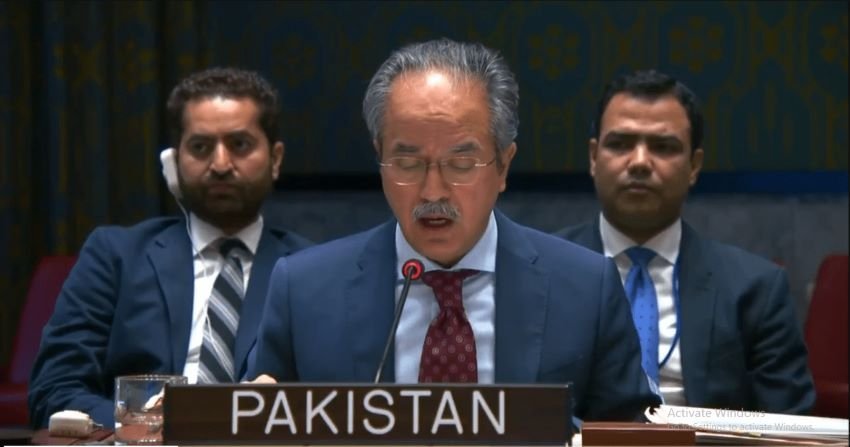
Speaking to the 15-member Council, Pakistan’s Permanent Representative Ambassador Asim Ahmad said, “The UN Charter prohibits threats or use of force against the territorial integrity or political independence of states, and interference in matters that are essentially within the domestic jurisdiction of states.”
The meeting had been convened by the United States to discuss unrest in Iran. US Ambassador Mike Waltz criticized the Iranian government’s actions against protesters and reiterated Washington’s support for President Donald Trump’s stance.
Ambassador Ahmad noted that Pakistan had been closely monitoring developments in Iran and the wider region, stressing that new threats to regional peace and stability remain a serious concern. He described Iran as a “brotherly nation,” highlighting the historical, cultural, and religious ties shared by the two countries.
Read More: Calm Before the Storm? From Protests to War, the Middle East on Edge
“A stable and peaceful Iran serves the interests of Pakistan, the region, and beyond,” he said, expressing confidence in the judgment and resilience of the Iranian people and leadership.
He further stressed that the core principles of the UN Charter are inviolable, and that any external interference in the internal matters of states is inconsistent with international law. “We firmly believe that all disputes should be resolved peacefully and in accordance with international law,” Ambassador Ahmad said, warning that unilateral actions or the use of force would only worsen crises and inflict unnecessary suffering.
He concluded, “We sincerely hope the situation in Iran will soon return to calm and normalcy, free from internal turmoil or external pressure, and that all parties will engage in dialogue to find lasting solutions based on mutual respect.”
Opening the discussion, UN Assistant Secretary-General Martha Pobee urged all sides to exercise restraint to prevent further escalation. She described the situation in Iran as fluid but noted that protests have reportedly declined in scale compared with previous weeks. Pobee expressed concern over public statements suggesting possible military action, warning that such rhetoric adds volatility to an already tense situation.
UN Secretary-General António Guterres also called for diplomacy and dialogue, emphasizing that all concerns, including Iran’s nuclear program and ongoing protests, should be addressed through peaceful means. He urged maximum restraint to avoid further loss of life or regional escalation.
Read More: US Says Killings in Iran Have Stopped as Airspace Reopens
The protests in Iran began on December 28 after Tehran shopkeepers took to the streets over a collapsing currency, soaring inflation, and worsening living conditions.
During the Council debate, US Ambassador Waltz accused Iran of harming its own citizens and said the regime bears responsibility for the country’s economic suffering. “President Donald J. Trump and the United States stand by the brave people of Iran,” he stated.
Russia’s Ambassador Vassily Nebenzia responded sharply, accusing the US of escalating tensions and attempting to justify interference in Iran’s internal affairs. “If Iran’s authorities do not yield, Washington will act unilaterally, through strikes aimed at regime change,” he said.
China’s Ambassador Sun Lei also criticized US threats of force, emphasizing that adherence to the UN Charter, respect for sovereignty, and non-interference are fundamental principles of international relations. He warned that military actions would push the region toward instability.
Speaking on behalf of Iran, Deputy Permanent Representative Gholamhossein Darzi condemned what he called US disinformation and interference. “The United States seeks to present itself as a friend of the Iranian people while laying the groundwork for political destabilization and potential military intervention,” he said, highlighting America’s historical record of regime-change operations and violations of international law.